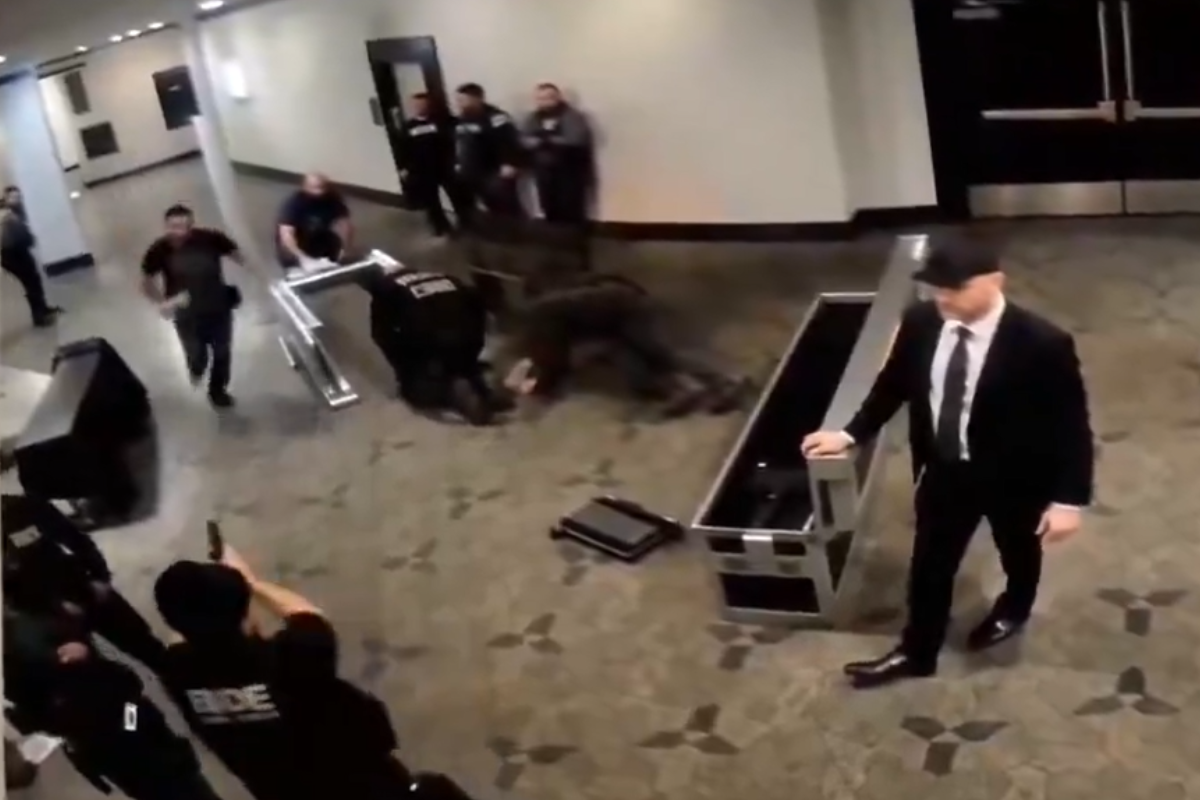
The US Secret Service officer who took a bullet to his vest while shielding President Donald Trump at Saturday's White House Correspondents' Dinner is among more than 100,000 federal workers set to miss their next paycheque, as the federal Department of Homeland Security (DHS) shutdown reached 72 days on Monday, the longest partial government closure in US history.
House Speaker Mike Johnson torpedoed a bipartisan Senate bill that would reopen most of DHS, telling reporters on Monday that the measure carried 'problematic' language and that Republicans would draft a 'modified' version. The reversal landed about 24 hours after Saturday's assassination attempt at the Washington Hilton wounded a federal agent.
The Senate had passed its DHS package by voice vote on 27 March, clearing the way for full funding of the Transportation Security Administration (TSA), the Coast Guard, the Federal Emergency Management Agency (FEMA), the Cybersecurity and Infrastructure Security Agency (CISA), and Secret Service operations.
Johnson initially branded the deal a 'crap sandwich' before reversing course in early April and endorsing a two-track plan with Senate Majority Leader John Thune. That agreement collapsed on Monday. Any modified version would need to clear the Senate again, where Democrats hold enough votes to block it.
Johnson said the original measure would 'orphan' Immigration and Customs Enforcement (ICE) and parts of US Customs and Border Protection (CBP), agencies the Senate left for a separate reconciliation package.
DHS Secretary Markwayne Mullin, who replaced Kristi Noem in March, has warned that the agency is on the edge of financial collapse. Trump signed an executive memorandum on 3 April directing DHS to pay staff using roughly $10 billion (£7.4 billion) drawn from last year's One Big Beautiful Bill Act. Congressional aides now say that pot will cover only one more pay cycle.
After it runs dry, TSA screeners, FEMA workers, Coast Guard civilians, CISA staff, and Secret Service agents will receive nothing. ICE law enforcement officers and Border Patrol agents continue to draw salaries from separate appropriations.
Acting TSA administrator Ha McNeil told Congress in written testimony that the fiscal year 2026 funding crises have caused close to $1 billion (£740 million) in delayed paycheques, with 95% of the workforce required to work for free.
Visible strain on DHS personnel is causing significant disruptions at airports, with TSA callout rates peaking at 11.51% and major hubs facing severe staffing shortages. A second missed paycheck in early May could further exacerbate operational challenges during the busy spring break season.
Disaster response is the second pressure point. The Highway 82 Fire in Brantley County, Georgia has now scorched more than 31 square miles, destroyed at least 87 homes, and remains only 7% contained. Governor Brian Kemp has declared a state of emergency across 91 counties. FEMA personnel coordinating federal aid are working without confirmed pay beyond this fortnight.
Source: International Business Times UK
