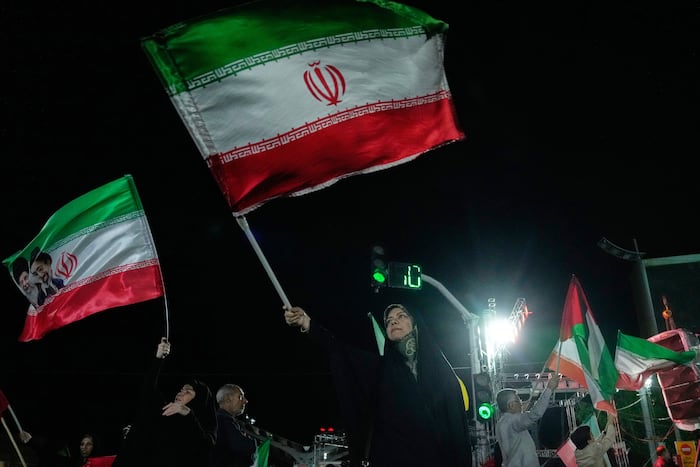
The Trump administration seemed unlikely Tuesday to accept Iran's offer to end the war and reopen the Strait of Hormuz if the U.S. lifts its blockade on the country.
The proposal would postpone discussions on the Islamic Republic’s nuclear program, something that U.S. Secretary of State Marco Rubio appeared to rule out in a Fox News interview Monday.
“We have to ensure that any deal that is made, any agreement that is made, is one that definitively prevents them from sprinting towards a nuclear weapon at any point,” he said of the proposal, which was delivered to the U.S. by Pakistan.
The White House said U.S. President Donald Trump's national security team discussed the offer and Trump would address it later.
The offer emerged Monday as Iran Foreign Minister Abbas Araghchi visited Russia, which has long been a key backer of Tehran. It was unclear what, if any, assistance Moscow might offer now.
Since the war began, at least 3,375 people have been killed in Iran and at least 2,521 people in Lebanon, where fighting between Israel and the Iran-backed Hezbollah militant group resumed two days after the Iran war started. Another 23 people have been killed in Israel and more than a dozen in Gulf Arab states. Sixteen Israeli soldiers in Lebanon, 13 U.S. service members in the region and six U.N. peacekeepers in southern Lebanon have been killed.
Nearly all of Gaza cropland damaged or inaccessible, study finds
The war between Hamas and Israel in Gaza has left 96% of the Palestinian enclave’s cropland damaged or inaccessible, a study has found.
A study released Tuesday by aid group Mercy Corps found only 7% of Gaza’s agricultural infrastructure remains functional.
The group said water systems have been severely degraded, wells have been damaged, salinity has risen and wastewater has infiltrated Gaza’s farmland.
Source: WPLG
