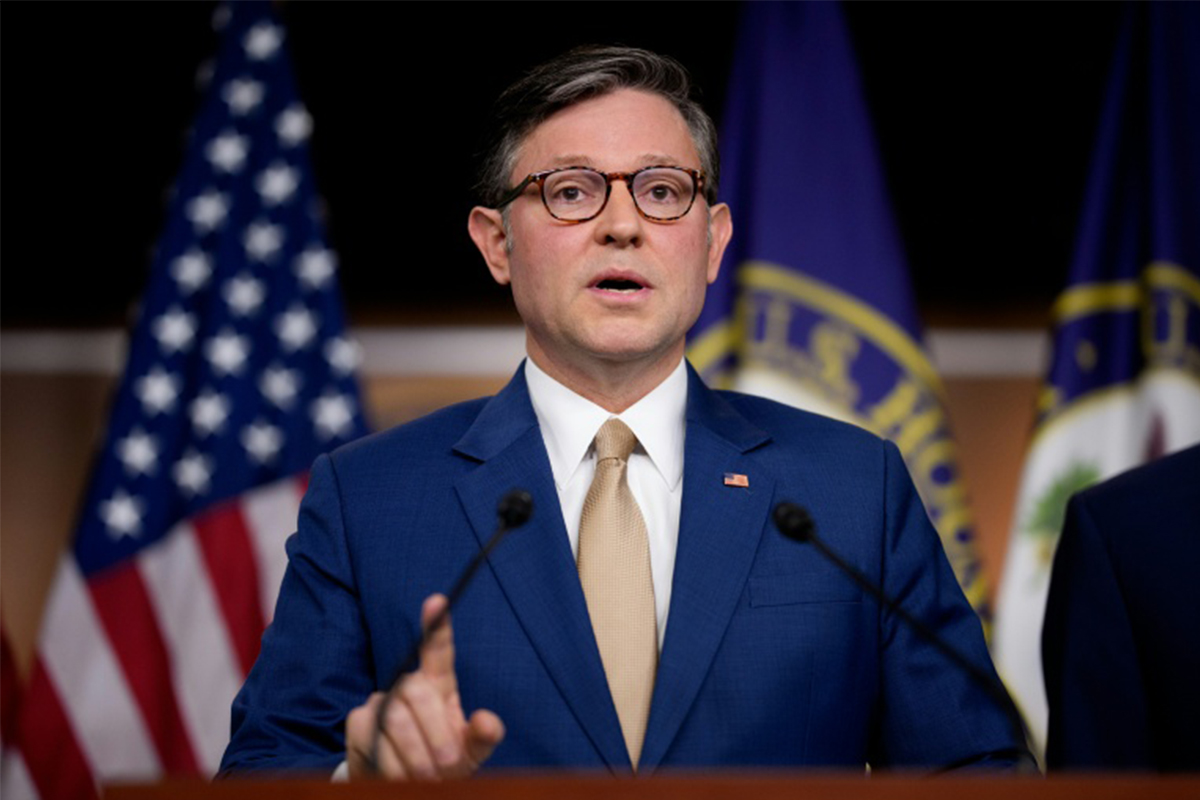
House Speaker Mike Johnson has indicated that a Department of Homeland Security (DHS) funding bill approved by the Senate is unlikely to pass the House in its current form. Speaking on Monday, 27 April 2026, he said revisions would be needed before the legislation could move forward.
At the centre of the disagreement is a provision affecting funding for Immigration and Customs Enforcement (ICE) and Customs and Border Protection (CBP). In theSenate version, funding for both agencies is not included in the main bill and would instead be addressed through a separate budget measure.
Johnson saidthe approach could create uncertainty for enforcement agencies if the additional legislation is delayed or fails to pass. He also criticised the drafting of the bill, describing elements of it as 'problematic', as negotiations between the two chambers continue.
The broader dispute comes as lawmakers seek agreement on how to support border security while advancing wider legislative priorities. Although the Senate approved the bill unanimously earlier this month, its prospects in the House remain unclear.
The disagreement centres on how immigration enforcement is funded within the legislation. The Senate proposal separates ICE and CBP funding from the main DHS appropriations bill, placing it within a budget reconciliation package instead.
New — Johnson rejects calls to pass Senate bill to reopen DHS.Bill has passed Senate twice and would reopen agencies like Secret Service, Coast Guard but not ICE and CBP.“It has some problematic language because it was haphazardly drafted,” he told me.Shutdown to drag onpic.twitter.com/DDplpfYGxt
This process would allow the funding measure to pass the Senate with a simple majority. However, some House conservatives have raised concerns that relying on a second bill could introduce delays or create uncertainty if it does not progress as planned.
Johnson said he is preparing a revised version of the legislation that he believes will be more acceptable to both chambers, according toPolitico. The changes are expected to bring at least part of the enforcement funding back into the main bill.
Any changes to the structure, however, could complicate the legislative process. If key provisions are altered, the Senate may be required to vote on the bill again, which could affect its chances of passing without further negotiation.
The funding debate is taking place against the backdrop of a recent security incident at theWhite House Correspondents' Dinner, where an armed suspect prompted a rapid law enforcement response.
Source: International Business Times UK
