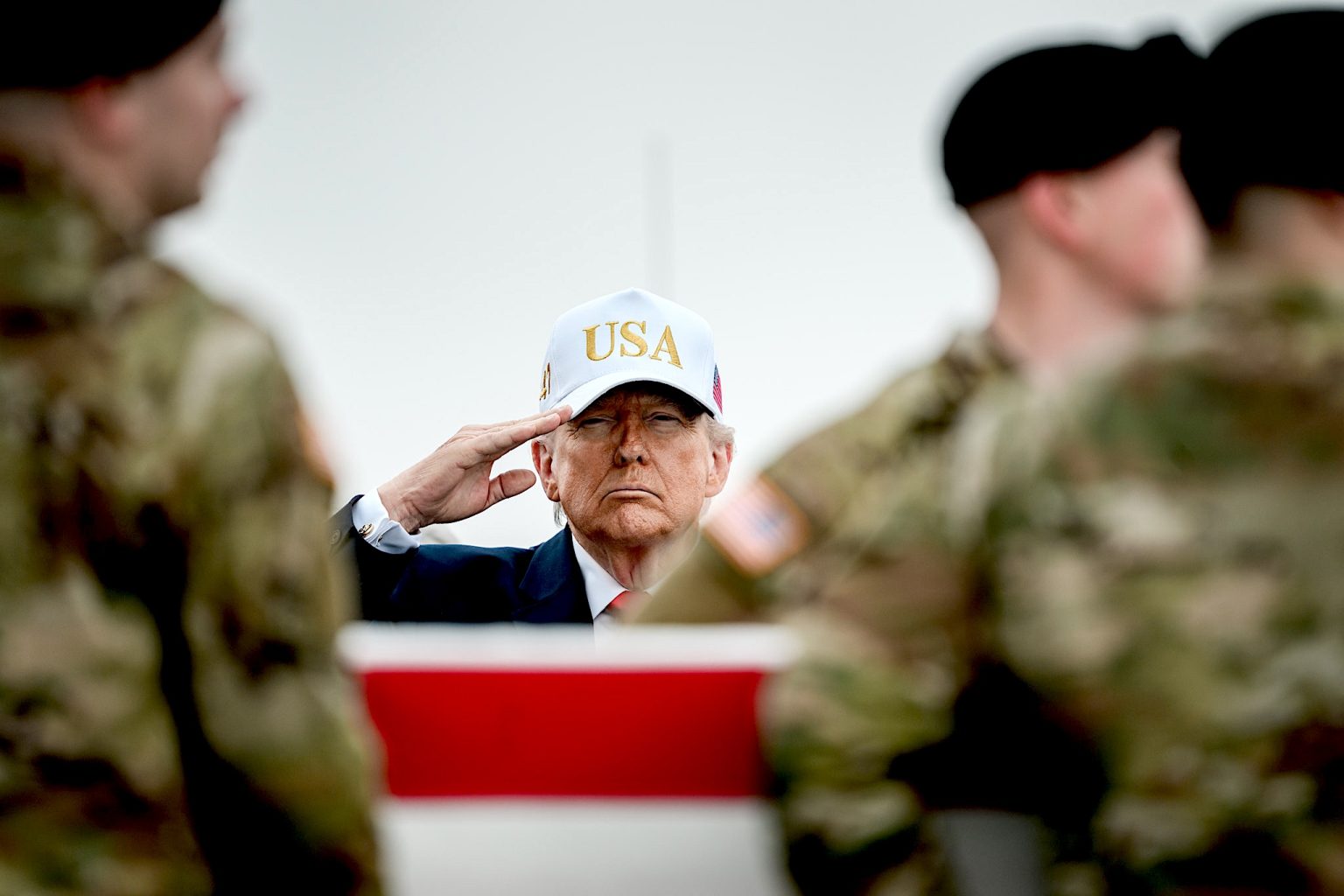
My life began in wartime — World War II — and, if Donald Trump has anything to say about it, will evidently end in war, too. The president who, as advertised, didn’t go to war in his first term in office, alsoinsisted thenthat the U.S. should stop engaging in “endless” “forever wars.” Even while running for office a third time in 2024, he swore that his task on returning to the White House would be to remove “warmongers and America-last globalists” from power and “turn the page forever on those foolish, stupid days of never-ending wars. They never ended.”
As the 2024 election results suggested, his followers appeared to deeply agree with him on that goal. In fact, back in April 2016, in aNew York Timesop-ed, J.D. Vance (of all people!), whileinsistingthat “Mr. Trump is unfit for our nation’s highest office,” did make a single exception. As president, Vance was convinced, he wouldn’t take our country to war again. As he put it then, “Anger about the wars isn’t the only reason voters support Mr. Trump. But his willingness to say what other G.O.P. candidates won’t reflects what people like most about him: his complete break with the party elite.”
Well, J.D., these days, think again (and again and again). Welcome to the new world of Donald Trump. Now, it seems, he is eternally at war. Of course, that may be because the Trump we once knew, for all his faults, didn’t yet consider himself a god or imagine himself as — yes! — themodern equivalent of Jesus Christand so capable of doing anything his heart desires.
As it turns out, he was led into war in the Strait of Hormuz by Israeli Prime Minister Benjamin Netanyahu (whose Iranian regime-change scenarios CIA Director John Ratcliffe once termed “farcical”). Yes, a number of his cabinet members and Vice President Vance, as theNew York Timesreported, “warned Mr. Trump that a war against Iran could cause regional chaos and untold numbers of casualties. It could also break apart Mr. Trump’s political coalition and would be seen as a betrayal by many voters who had bought into the promise of no new wars.”
A betrayal indeed! And yet, Operation Epic Fury began anyway and, of course, as a disaster in the making, it has yet to end. Now, with all of that in mind, letTomDispatchregular Alfred McCoy, the author most recently of the must-read new history bookCold War on Five Continentsand an analyst who haslong been awarethat warring in the Strait of Hormuz would be a formula for U.S. imperial decline, put the present U.S. disaster in Iran in deep historical perspective.~ Tom Engelhardt
Writing more than 2,000 years ago, the Greek historianPlutarchgave us an eloquent description of what modern historians now call “micro-militarism.” When an imperial power like Athens then, or America now, is in decline, its leaders often react emotionally by mounting seemingly bold military strikes in hopes of regaining the imperial grandeur that’s slipping through their fingers. Instead of another of the great victories the empire won at its peak of power, however, such military misadventures only serve to accelerate the ongoing decline, erasing whatever aura of imperial majesty remains and revealing instead the moral rot deep inside the ruling elite.
There is mounting historical evidence that America is indeed an empire in steep decline, while President Donald Trump’s war of choice against Iran is becoming the sort of micro-military disaster that helped destroy successive empires over the past 2,500 years — from ancient Athens to medieval Portugal to modern Spain, Great Britain, and now the United States. And at the core of every such ill-fated war-making decision lay a problematic leader, often born into wealth and prestige, whose personal inadequacies reflected and ramified the many irrationalities that make imperial decline such a painful process.
During that demoralizing downward spiral, imperial armies, so lethal in an empire’s ascent, can err by plunging their countries into draining, even disastrous “micro-military” misadventures — psychologically compensatory efforts to salve the loss of imperial power by trying to occupy new territories or display awe-inspiring military might. Although such micro-militarism often chose targets that proved strategically unsustainable, the psychological pressures upon declining empires are so strong that they all too often gamble their prestige on just such misadventures. Not only did such disasters add financial pressures to a fading empire’s many troubles, but in a humiliating fashion, they also invariably exposed its eroding power while exacerbating the destabilizing impact of imperial decline in the capitals of empire (whether Athens, Lisbon, Madrid, London, or Washington, D.C.).
In our moment, when the bombs stop falling and the rubble is finally cleared from the streets of Tehran and Beirut, the impact on U.S. global power of such a de facto defeat will become all too clear — as alliances like NATO atrophy, American hegemony evaporates, legitimacy is lost, global disorder rises, and the world economy suffers.
Let me now turn from the disasters of the present imperial moment to the lessons of history to explore the sort of lasting damage that Donald Trump’s micro-military misadventure in the Middle East might be inflicting on this country’s declining imperium.
Source: Antiwar.com
