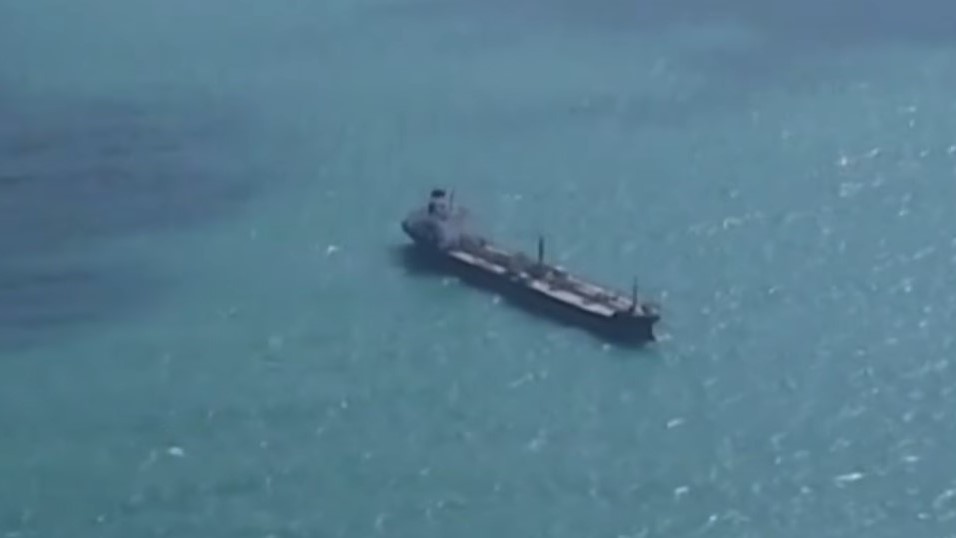
Iran has offered to end its blockade of the Strait of Hormuz if the United States lifts its blockade on the country and the ongoing war is brought to a close, according to two regional officials who spoke on condition of anonymity, as reported by AP.
Tehran's proposal, delivered to the United States by intermediaries from Pakistan, calls for an end to the Iranian-imposed blockade of the Strait of Hormuz, a vital waterway through which a significant portion of the world's traded oil passes. The Iranian offer hinges on the removal of the US-led blockade on its oil exports and the cessation of hostilities in the region. However, the proposal also includes a delay in discussions on Iran's nuclear programme, a contentious issue at the heart of the ongoing US-Iran standoff.
The Strait of Hormuz, a narrow passage between the Persian Gulf and the Gulf of Oman, has become a focal point in the ongoing tensions between Iran and the United States. The strait is crucial for the global oil trade, with approximately 20% of the world's oil passing through it. Iran's closure of this waterway has significantly disrupted global markets, leading to soaring oil prices and creating ripple effects across other industries, such as food and fertiliser.
Since the outbreak of the war on 28 February, tensions have escalated, with both sides facing increasing pressure. The US blockade on Iran has severely impacted its oil revenue, a lifeline for the country's economy. At the same time, theclosure of the Strait of Hormuzhas affected the global oil supply, causing political and economic strain, particularly in the Gulf states that rely on the waterway to export their oil.
Iran's leverage over the Strait of Hormuz has proven to be a powerful strategic tool in the war, with the closure of the waterway disrupting global oil transportation. This move has caused oil prices to surge, with Brent crude reaching $108 (approximately £80) per barrel, nearly 50% higher than pre-war levels.
A post shared by Arab News (@arabnews)
The Iranian proposal seeks to shift the focus of negotiations away from its nuclear programme, which remains one of the most contentious issues in its relationship with the US and Israel. The United States has repeatedly stated that one of the main objectives of its military actions against Iran is to prevent the country from acquiring nuclear weapons. Iran, however, insists that its nuclear programme is peaceful and geared towards energy production.
Iranian Foreign Minister Abbas Araghchivisited Russiaand met with President Vladimir Putin to discuss the ongoing situation. Russia, a long-time ally of Iran, has expressed support for Tehran's position, although it is unclear what tangible assistance Moscow might provide in the diplomatic process.
A post shared by India Today (@indiatoday)
Trump has consistently statedthat his primary objective is to ensure that Iran does not develop nuclear weapons. The US also insists that Iran must remove its stockpile of highly enriched uranium, which could potentially be used to create nuclear weapons. The US administration, therefore, seems unlikely to accept Iran's proposal, which would allow the nuclear issue to remain unresolved.
Source: International Business Times UK
