Authored by Joseph Lord via The Epoch Times,
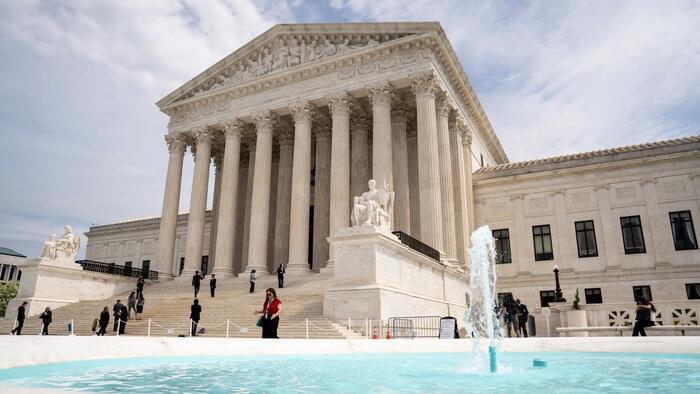
The Supreme Court on April 27 will hear oral arguments in a case with major implications for privacy rights—and how law enforcement uses Americans’ cell phone data while investigating crimes.
The case, Chatrie v. United States, centers on law enforcement’s use of “geofencing warrants”—judge-authorized requests for cell phone location data near the scene of a crime.
Okello Chatrie told the Supreme Court that the government’s use of these warrants, which resulted in a criminal conviction over his robbing a bank while his smart phone was on his person, violated his Fourth Amendment rights. The government, meanwhile, has argued that such data is not protected when provided voluntarily to a “third party” like Google.
The court said it would focus on the circumstances of Chatrie’s case rather than the constitutionality of geofencing more generally. However, experts say that the Supreme Court’s decision will reverberate through future cases concerning privacy in the digital age.
Dr. David Super, a professor of law at the Georgetown University Law Center, described the case to The Epoch Times as“once-in-a-generation,” whatever the outcome.
In 2019, law enforcement received a geofence warrant from a state court seeking anonymized location data for devices within 150 meters (about 500 feet) of the bank robbery. In this form, the data couldn’t be used to identify specific cellphone users.
After Google complied with the first request, law enforcement then sought location data for devices over a longer, two-hour period, without seeking an additional court warrant. Google again provided the information.
One of those devices belonged to Chatrie, and the information provided the basis for Chatrie’s eventual conviction for armed robbery.
Though Chatrie confessed, his lawyers argue that the geofencing evidence should be tossed because the warrant deprived him of his Fourth Amendment rights, which guarantees that “the right of the people to be secure in their persons, houses, papers, and effects, against unreasonable searches and seizures, shall not be violated, and no Warrants shall issue, but upon probable cause.”
Source: ZeroHedge News
