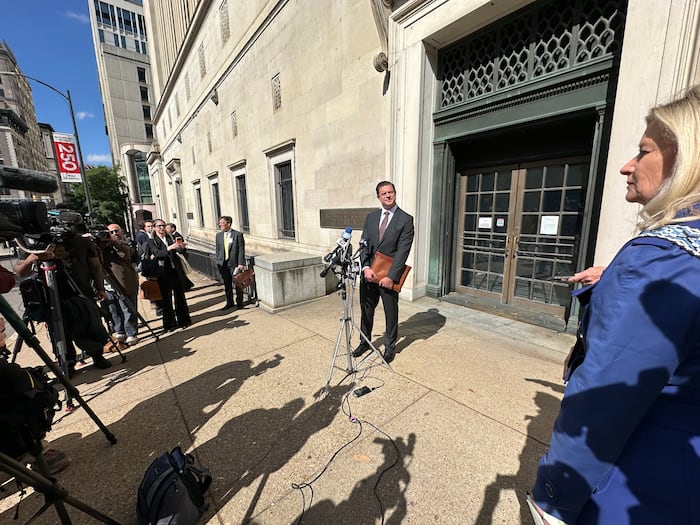
RICHMOND, Va. (AP) — Virginia Supreme Court justices on Monday questioned whether the state's Democratic-led legislature complied with constitutional requirements when it sent a congressional redistricting plan to voters, in a case that carries high stakes for the balance of power in the U.S. House.
The new districts, which could net Democrats four additional seats, won narrow voter approval last week. But a Republican legal challenge contends the General Assembly violated procedural rules by placing the constitutional amendment before voters to authorize the mid-decade redistricting. If the court agrees that lawmakers broke the rules, it could invalidate the amendment and render last week's statewide vote meaningless.
The Virginia court proceedings mark the latest twist in a national redistricting battle between Republicans and Democrats seeking an advantage in a November midterm election that will determine whether Republicans maintain their narrow majority in the U.S. House.
President Donald Trump kicked off a tit-for-tat round of gerrymandering last summer when he urged Texas Republicans to redraw districts to their favor in an attempt to win several additional House seats. That set off a chain reaction of similar moves in other states, leading to the voter approval last week of Virginia's new map.
Next up is Florida, where Republican Gov. Ron DeSantis has included congressional redistricting on the agenda for a special session of the GOP-controlled Legislature beginning Tuesday.
Virginia arguments focus on what counts as an `election'
During Monday's arguments, the Virginia Supreme Court focused on whether the new congressional districts should be invalidated because of the process used by lawmakers. The justices issued no immediate ruling.
Because the state’s redistricting commission was established by a voter-approved constitutional amendment, lawmakers had to propose an amendment to redraw the districts. That required approval of a resolution in two separate legislative sessions, with a state election sandwiched in between, to place the amendment on the ballot.
The legislature's first vote occurred last October — while early voting was underway but before it concluded on the day of the general election. Judicial questioning focused on whether that was too late, because early voting already had begun.
Attorney Matthew Seligman, who defended the legislature, argued that the “election” should be defined narrowly to mean the Tuesday of the general election. In that case, the legislature's first vote on the redistricting amendment occurred before the election and was constitutional, he told judges.
Source: WPLG
