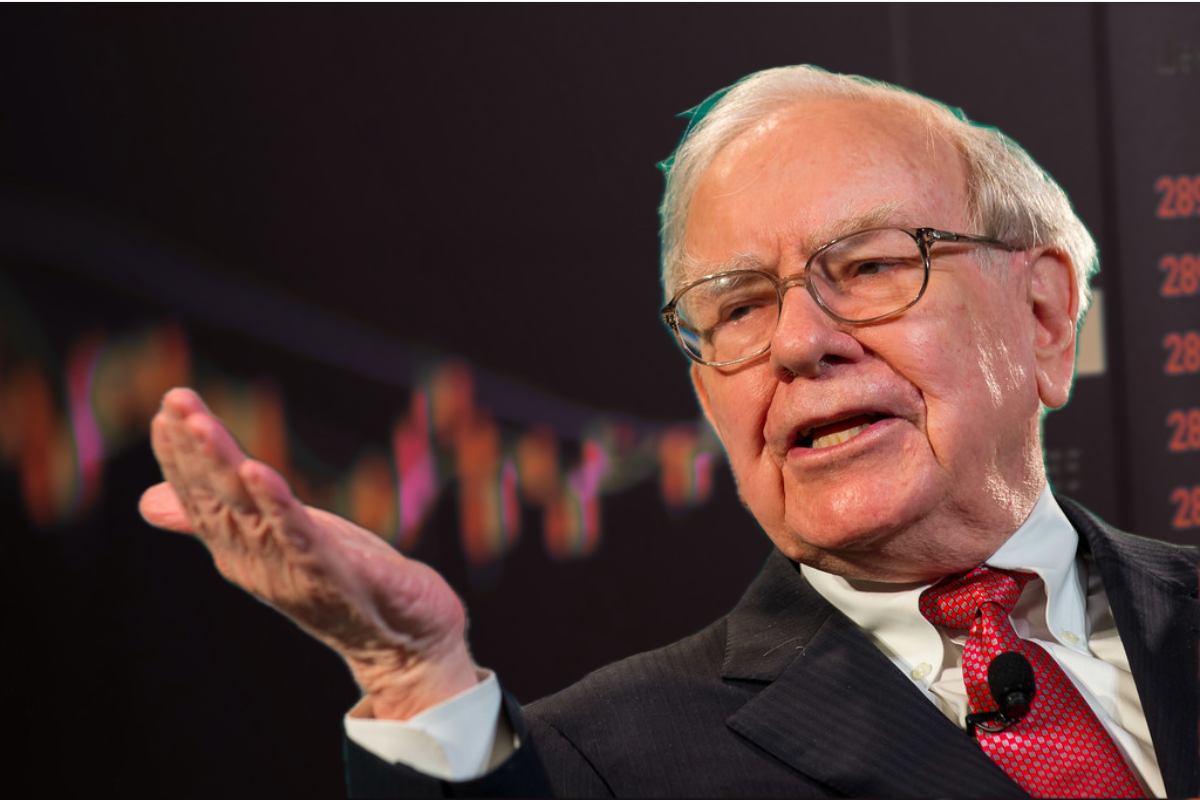
Warren Buffett was asked at Berkshire Hathaway's 1999 annual shareholder meeting how a new investor could amass $30 billion (£22.7 billion). His answer, delivered to thousands of shareholders in Omaha, Nebraska, centred on three principles: start early, think small, and stay within what you know.
Buffett, who officially stepped down as chief executive of Berkshire Hathaway on 1 January 2026 after more than five decades running the company, told the audience he would focus on overlooked smaller businesses if he were starting again with $10,000 (£7,560). 'I probably would be focusing on smaller companies because I would be working with smaller sums and there's more chance that something is overlooked in that arena,' he said, as reported byCNBC.
Warren Buffett: "It will be more difficult [to avoid nuclear war] if Iran has the bomb than if they don't.""One way or another — in the next 100 years, maybe it's 200 years — something will happen that cause [nuclear weapons] to be used."pic.twitter.com/Fz6g8MrNc5
Greg Abel, a longtime Berkshire executive, succeeded Buffett as CEO after the 94-year-old announced his departure at the company's May 2025 meeting. Buffett remains chairman. His net worth stood at approximately $146.5 billion (£110.7 billion) as of January 2026, according toForbes, making him the tenth-richest person in the world.
Buffett bought his first stock at the age of 11. By 1999, when the shareholder posed the $30 billion question, his fortune was roughly $30 billion (£22.7 billion). The vast majority of his wealth was accumulated after he turned 65.
He described compound interest as a snowball rolling downhill. 'I started building this little snowball at the top of a very long hill,' Buffett told shareholders. 'The trick to having a very long hill is either starting very young or living to be very old.'
That patience shaped some of his most profitable decisions. Berkshire paid $25 million (£18.9 million) for See's Candies in 1972, at a time when the confectionery business was turning roughly $4 million (£3 million) a year in pre-tax profit. It has since produced more than $2 billion (£1.5 billion) in cumulative earnings. In 1983, he struck a handshake deal with 89-year-old founder Rose Blumkin to buy 80 per cent of Nebraska Furniture Mart for $60 million (£45.3 million). It was already the largest home furnishings retailer in the United States.
Charlie Munger, Buffett's late business partner and former Berkshire vice-chairman, reinforced the point at the same 1999 meeting. Munger said the hardest stretch for most people is reaching their first $100,000 (£75,600) and urged investors to 'underspend their income grossly' while remaining 'passionate about being rational.'
Buffett's third rule was to invest only in businesses that an individual can genuinely evaluate. He cited IBM founder Thomas Watson Sr., who once said, 'I'm no genius. I'm smart in spots, but I stay around those spots.'
That discipline kept Buffett out of technology stocks during the late-1990s dot-com bubble, a decision that drew heavy criticism at the time but spared Berkshire from the crash that followed. His portfolio has historically been concentrated in consumer goods and financial services companies, which he considered straightforward to analyse.
Source: International Business Times UK
