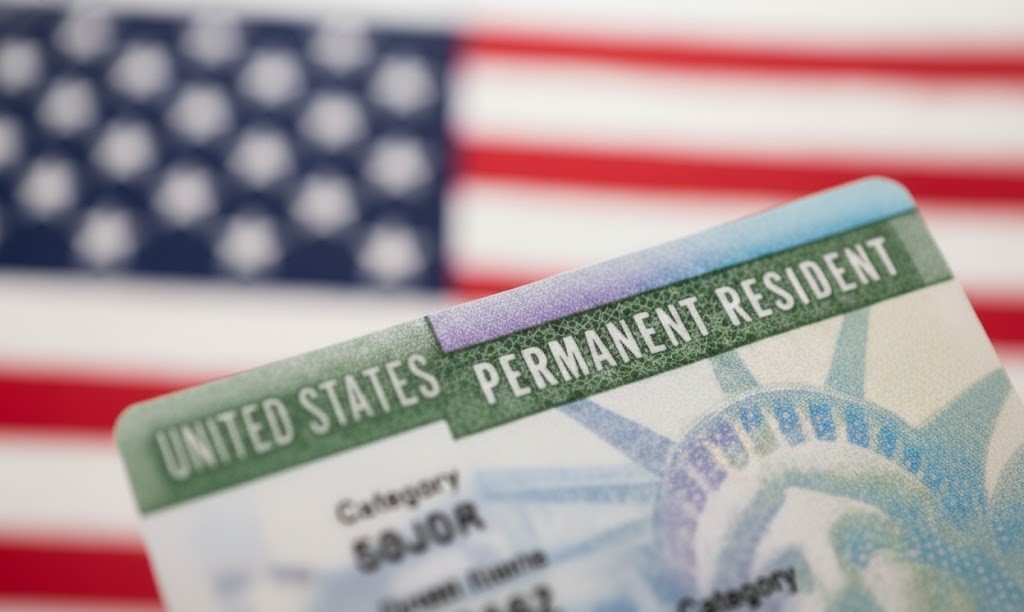
InternalDepartment of Homeland Securitytraining materialsinstruct immigration officers to treat pro-Palestinian social media posts as potential grounds to deny green card applications, classifying political speech as a discretionary negative factor for the first time in modern US immigration practice.
The materials, which have not been independently published by DHS or USCIS, show how officers within US Citizenship and Immigration Services have been told to evaluate applicants' digital histories for statements the administration has categorised as 'anti-American' orantisemitic.
Among the specific examples cited in the documents as 'questionable speech': a mock social media post bearing the words 'Stop Israeli Terror in Palestine' alongside a crossed-out Israeli flag. The policy formalises a shift that began with anofficial USCIS announcement on 19 August 2025, which declared that 'anti-American activity will be an overwhelmingly negative factor in any discretionary analysis.'
According to theNew York Times' accountof the documents, immigration officers have been instructed to deny applicants who have a history of 'endorsing, promoting or supporting anti-American views' or 'antisemitic terrorism, ideologies or groups.' Officers are told to treat such findings as 'overwhelmingly negative' in their assessments.
The materials include three illustrative examples of social media posts that meet that threshold: the 'Stop Israeli Terror in Palestine' post with the Israeli flag crossed out, a map of Israel with the country's name replaced by 'Palestine,' and a post suggesting that Israelis should 'taste what people in Gaza are tasting.'
Officers have additionally been directed to 'focus particularly on aliens who engaged in on-campus anti-American and antisemitic activities,' a provision that legal analysts say would sweep up students who attendedpro-Palestinian university campus protestsfollowing the Hamas attacks of 7 October 2023.
Desecration of the American flag is also listed as a negative factor in the materials, a significant inclusion given that the Supreme Court's ruling inTexas v. Johnson (1989)established flag burning as constitutionally protected speech under the First Amendment. All cases involving 'potential anti-American and/or antisemitic conduct or ideology' must be escalated to managers and the agency's general counsel's office, the materials state.
The training materials did not emerge from nowhere. USCIS published its formal policy basis in August 2025, announcing it was updating the USCIS Policy Manual to add 'anti-American activity' as a discretionary factor in green card and other benefit adjudications. The agency simultaneously expanded the categories of applications subject to social media vetting.
'America's benefits should not be given to those who despise the country and promote anti-American ideologies,' USCIS spokesman Matthew Tragessersaid in the announcement. The policy referenced the Immigration and Nationality Act but offered no statutory definition of 'anti-Americanism.'
TheBrennan Center for Justice's legal analysisof the earlier April 2025 USCIS antisemitism notice, which preceded August's broader directive, warned that the central paragraph of that guidance 'enables USCIS officers to exercise significant discretion to deny applications... based on nebulous, undefined terminology.'
Source: International Business Times UK
