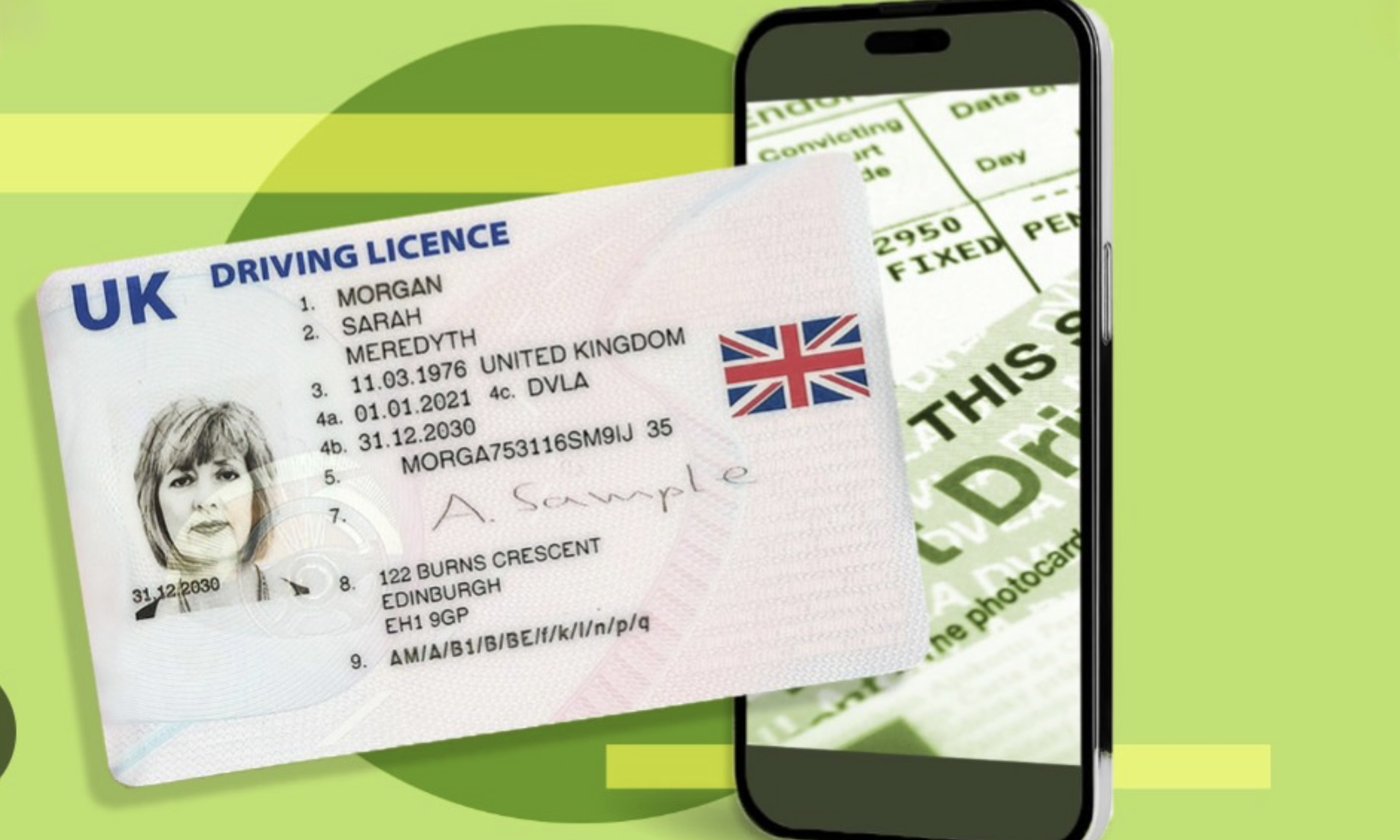
A 'full rollout' of the UK digital driving licence will begin later this year, the UK Government has confirmed, with millions of motorists set to access their ID through the GOV.UK Wallet rather than relying solely on a plastic card. Heidi Alexander, the UK transport secretary, said the digital driving licence system, first announced in January last year, would be available nationwide in 2026, hailing it as a 'game changer' for people who routinely use their licence as proof of identity.
Ministers under the previous government began testing digital identity documents within the GOV.UK App as part of a wider shift towards online public services. The GOV.UK Wallet, as the new platform is known, is designed to store official documents virtually on a smartphone, allowing users to prove who they are, verify eligibility for state support or demonstrate their driving entitlement without producing the familiar photocard. The Labour Party, now in power, has opted not only to keep the programme but to accelerate it into a full national rollout.
The headline announcement has inevitably prompted one immediate question from drivers, whether the physical UK driving licence is being phased out altogether. So far, nothing in the government's own language confirms that the plastic card is about to disappear, and no formal timetable has been set for scrapping physical licences. Officials have framed the digital driving licence as an additional option rather than a mandatory replacement, and nothing has been confirmed yet.
When she first trailed the scheme, Alexander stressed that the change is aimed at people who depend on their licence as everyday ID in shops, bars or when dealing with public bodies. A digital version accessed via the GOV.UK Wallet, she argued, should streamline routine checks andreduce the risk of fraud.
Peter Kyle, who served as Science Secretary when the technology was being built, set out the ambition in unusually sweeping terms. According to Kyle, the GOV.UK Wallet will mean 'every letter or identity document you receive from the government could be issued to you virtually.' He said those who choose to use the app would find it easier to prove benefit entitlement or confirm their age when buying alcohol or DIY tools, insisting the system would offer 'more security and trust than ever before.'
The phrase 'for people who choose to use GOV.UK Wallet' is doing a lot of work here. It implies an opt-in model, at least for now, rather than a compulsory migration away from plastic cards. It also quietly acknowledges a reality ministers cannot wish away: millions of people either do not own smartphones, do not trust digital IDs or are uncomfortable with the idea of the state sitting in their pocket.
The first real-world users of the GOV.UK Wallet will not be young drivers butformer members of the armed forces. Alistair Carns, a former Royal Marines officer who now serves as UK Minister for Veterans and People, said veterans would be the first citizens to access the government's digital wallet, using it to store a virtual version of the HM Armed Forces Veteran Card on their phones.
Carns described it as 'fantastic' that ex-service personnel would be at the front of the queue, arguing that smartphone access to their card would make it easier to prove veteran status and unlock support and benefits. In his words, the move shows a government 'turning words into action to improve life for every veteran.' It also gives ministers a controlled environment in which to test how the technology works in practice before digital driving licences are extended to the wider population.
The choice of veterans as early adopters is not entirely neutral. It allows the government to frame the digital wallet not as a surveillance tool but as a convenience and recognition measure for a group that typically enjoys broad public sympathy. If the system is seen to function smoothly for them, resistance among other groups may soften.
The UK is not alone in edging towards a digital-first approach. Motorists across the European Union are also expected to benefit from new digital driving licence features in the coming years, with Brussels saying the technology will make 'licence replacement, renewal and exchange significantly easier when moving between member states.'
Source: International Business Times UK
