Freddie Ponton21st Century Wire
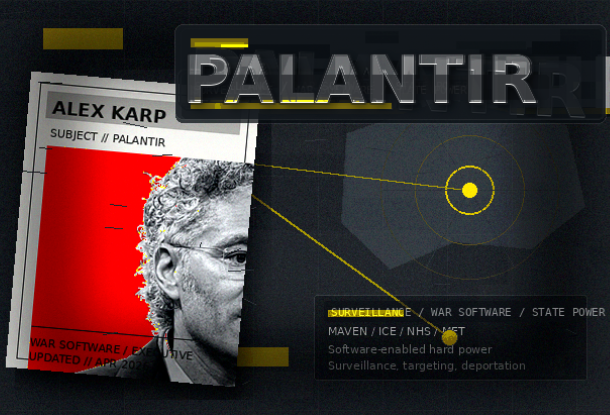
Palantirhas spent years pretending it was just another software company, one of those sleek back-end firms that claims to make institutions more “efficient” while saying as little as possible about what that efficiency is actually for. That mask is slipping.
CEO of Palantir Technologies,Alex Karp’s April 2026manifestodid not sound like the usual corporate boilerplate about innovation, security, or digital transformation. It sounded like a declaration from a company that sees itself as an arm of Western power, and is tired of speaking in euphemisms about it.
The Technological Republic, in brief.
1. Silicon Valley owes a moral debt to the country that made its rise possible. The engineering elite of Silicon Valley has an affirmative obligation to participate in the defense of the nation.
— Palantir (@PalantirTech)April 18, 2026
Karp’s message was blunt enough:Silicon Valleyhas wasted too much time building consumer trivia, pluralism has hollowed out the West, and the tech sector should stop wringing its hands and start serving military power with pride. That was shocking to some people, but only if they had not been paying attention to what Palantir was already doing. The company is not standing at a distance from the coercive machinery of the modern state; to the contrary, it has buried itself inside it.
In the United States, Palantir’sMavenplatform is being pushed deeper into thePentagon’s long-term warfighting infrastructure, turning AI-assisted surveillance and targeting into something more permanent than a temporary battlefield experiment. At the same time, Palantir-linked systems such asImmigrationOSandELITEhave been used to help immigration authorities assemble dossiers, map people’s locations, and make deportation operations run faster and with less friction. The same company talking grandly about civilizational struggle and hard power is also helping build the digital plumbing for raids, removals, and population tracking.
Britain is now getting a taste of the same politics. Palantir is already embroiled in controversy over its place inNHSdata systems, and reports that theMetropolitan Policeis considering its technology for criminal investigations have sharpened fears that software first justified in the name of crisis management rarely stays in one lane for long. Today, it is health logistics, counterterrorism, and border control. Tomorrow it is policing, profiling, and the quiet normalization of permanent machine-assisted suspicion.
What gives the manifesto real weight is not its style, but its candor. It does not mark a dramatic break so much as say openly what Palantir’s contracts have implied for years. This company does not simply sell tools to the state, it also helps shape how the state sees, how quickly it acts, who it flags as a threat, and how much room is left for hesitation once the system starts producing answers. Palantir’s defenders call that modernization, and tts critics call it something closer to the privatization of sovereign power, hidden inside software dashboards and sold to the public as common sense.
Source: 21st Century Wire
