BOSTON (AP) — For decades, the 1990 theft of 13 artworks from the Isabella Stewart Gardner Museum — now valued at more than $500 million — has remained unsolved.
It remains the largest art theft in history — far surpassing more recent museum thefts, including a daylight heist at the Louvre that involved far fewer works and was resolved more quickly. In 2013, the FBI said it knew who was responsible for the Boston museum heist but declined to name them, fueling speculation that persists today.
A former FBI agent who led the investigation for more than two decades is now offering the first detailed account of how investigators reached that conclusion — and publicly identifying the men he believes were involved. In a new book, Geoff Kelly traces how the artworks moved through criminal networks, where violence took the lives of key suspects and witnesses, and challenges long-circulating theories by revisiting key details.
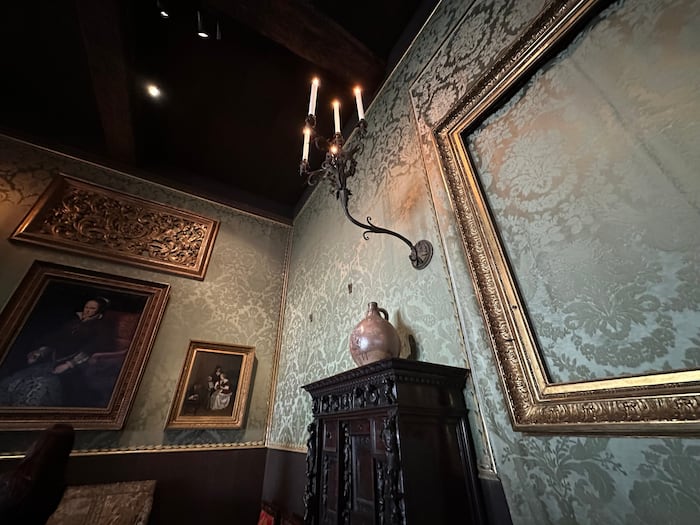
The irony at the center is that Gardner’s intention was for the museum to remain frozen in time, stipulating in her will that nothing in the Venetian palazzo-inspired building would be changed after her death. Gardner, who lived in the museum and died there in 1924, intended for the paintings, sculptures and architectural fragments to remain exactly as she had arranged.
The empty gilded frames of the missing paintings still hang in the museum today — silent witnesses to what was taken.
Early on March 18, 1990, as Boston wound down from St. Patrick’s Day celebrations, two men dressed as police officers arrived at the museum and convinced a security guard to let them in, violating protocol.
The men handcuffed the guards in the basement and made their way to the museum’s Dutch Room, where they cut Vermeer’s “The Concert” and Rembrandt’s “Christ in the Storm on the Sea of Galilee" from their frames, also taking works by Degas and Manet.
They also took a Napoleonic eagle finial — a decorative metal piece of comparatively little value that investigators later found puzzling — and the museum’s security videotapes.
The museum offered a $5 million reward that they then doubled a decade later for information leading to the recovery of the works.
Boston-area network of criminals
Source: WPLG
