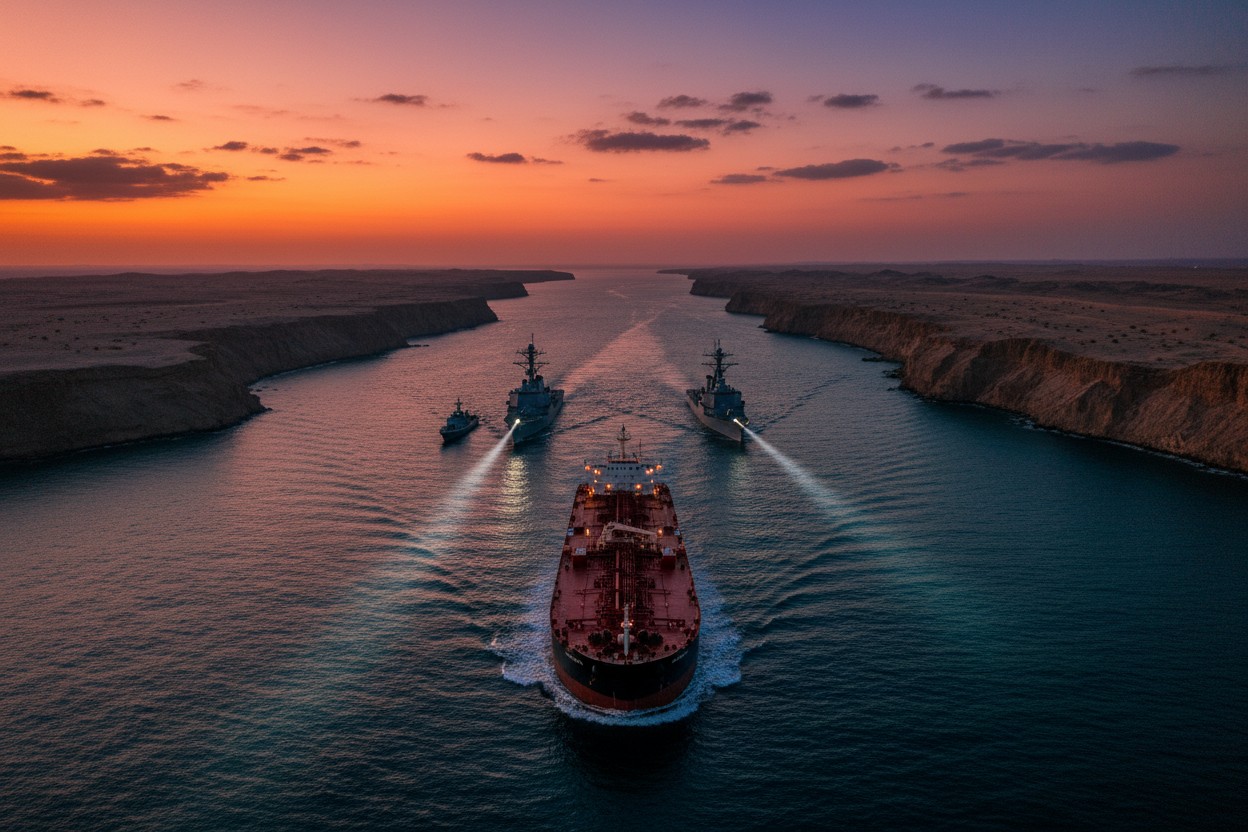
U.S. Secretary of War Pete Hegseth announced an "ironclad blockade" under Operation Epic Fury, with U.S. naval forces intercepting vessels globally to cripple Iran's economy and nuclear program.The blockade aims to suffocate Iran's trade, with 34+ ships already denied passage. Hegseth warned of military retaliation if Iran escalates, including strikes on naval mines or IRGC harassment tactics.The Strait of Hormuz disruption threatens 20% of world oil trade, risking prices surging to $250/barrel if Iran retaliates by targeting oil fields or further blocking shipments.Iran's hypersonic missiles can strike U.S. bases (55,000 troops at risk), while its alliances with Russia and China complicate U.S. regime-change efforts. Israel's push for war may backfire given its weakening military.The U.S. bets sanctions will force Iran's surrender, but Tehran historically resists coercion. If Iran closes the Strait or attacks U.S. assets, global instability and war could eruptâpotentially reshaping the Middle East.
The blockade aims to suffocate Iran's trade, with 34+ ships already denied passage. Hegseth warned of military retaliation if Iran escalates, including strikes on naval mines or IRGC harassment tactics.The Strait of Hormuz disruption threatens 20% of world oil trade, risking prices surging to $250/barrel if Iran retaliates by targeting oil fields or further blocking shipments.Iran's hypersonic missiles can strike U.S. bases (55,000 troops at risk), while its alliances with Russia and China complicate U.S. regime-change efforts. Israel's push for war may backfire given its weakening military.The U.S. bets sanctions will force Iran's surrender, but Tehran historically resists coercion. If Iran closes the Strait or attacks U.S. assets, global instability and war could eruptâpotentially reshaping the Middle East.
The Strait of Hormuz disruption threatens 20% of world oil trade, risking prices surging to $250/barrel if Iran retaliates by targeting oil fields or further blocking shipments.Iran's hypersonic missiles can strike U.S. bases (55,000 troops at risk), while its alliances with Russia and China complicate U.S. regime-change efforts. Israel's push for war may backfire given its weakening military.The U.S. bets sanctions will force Iran's surrender, but Tehran historically resists coercion. If Iran closes the Strait or attacks U.S. assets, global instability and war could eruptâpotentially reshaping the Middle East.
Iran's hypersonic missiles can strike U.S. bases (55,000 troops at risk), while its alliances with Russia and China complicate U.S. regime-change efforts. Israel's push for war may backfire given its weakening military.The U.S. bets sanctions will force Iran's surrender, but Tehran historically resists coercion. If Iran closes the Strait or attacks U.S. assets, global instability and war could eruptâpotentially reshaping the Middle East.
The U.S. bets sanctions will force Iran's surrender, but Tehran historically resists coercion. If Iran closes the Strait or attacks U.S. assets, global instability and war could eruptâpotentially reshaping the Middle East.
U.S. Secretary of War Pete Hegseth announced Friday that the U.S. has imposed what he called an "ironclad blockade" on Iran, expanding enforcement beyond the immediate region as part of Operation Epic Furyâa broader campaign aimed at crippling Tehran's economy and nuclear ambitions. Speaking at a Pentagon briefing, Hegseth declared that U.S. naval forces are actively intercepting and turning away vessels traveling to and from Iranian ports, signaling a dramatic escalation in Washington's pressure campaign.A blockade going globalHegseth emphasized that the blockade, which began on April 13, is tightening by the hour. "From the Gulf of Oman to the open oceans, our Navy is enforcing this blockade without hesitation or apology," he said. As of Friday morning, 34 vessels had been denied passage, including Iranian-flagged ships and those linked to Iranian trade. Non-Iranian vessels have been permitted transit only after thorough scrutiny.The operation has already extended beyond the Middle East, with U.S. forces seizing two Iranian "dark fleet" vessels in the Indo-Pacific that had departed before the blockadeâs implementation. Hegseth warned that the U.S. Navy's reach is expanding, with a second aircraft carrier expected to reinforce operations soon. "No one sails from the Strait of Hormuz to anywhere in the world without the permission of the United States Navy," he asserted.Dan Caine, another Pentagon official, confirmed that enforcement applies universally: "We're enforcing the blockade across the board against any ship of any nationality transiting to or from an Iranian port or territory." U.S. forces are reportedly tracking vessels entering and leaving the region, prepared to intercept them if necessary.Economic strangulation and nuclear deterrenceThe blockade's primary objective, according to Hegseth, is to economically suffocate Iran while preventing it from advancing its nuclear program. "Operation Epic Fury has delivered decisive military results in just weeks," he said. "Clear mission objectives, and ultimately, Iran will not have a nuclear weapon."Despite the aggressive posture, Hegseth claimed Iran still has a diplomatic off-ramp. "Iran has an important choice, a chance to make a deal, a good deal, a wise deal," he said, echoing President Trump's recent remarks. "We have all the time in the world, and we're not anxious for a deal."However, the military threat remains unmistakable. Hegseth warned that U.S. forces are authorized to respond to any hostile actions, including naval mine deployments. "If Iran is putting mines in the water, or otherwise threatening American commercial shipping or American forces, we will shoot to destroy," he stated. He also criticized Iran's Islamic Revolutionary Guard Corps (IRGC) for employing irregular tactics, such as small boats harassing commercial vessels.Global energy markets in turmoilThe blockade has already disrupted shipping through the Strait of Hormuz, a critical chokepoint for global energy trade. Approximately 20% of the world's traded oil and liquefied natural gas passes through the strait, and recent data indicates only seven vessels transited between April 22 and early April 23âmost linked to Iran-related trade.Hundreds of ships and roughly 20,000 seafarers remain stranded in the Gulf as insurers and shipping companies assess risks. Analysts warn that prolonged disruption could send oil prices skyrocketing, with some projections suggesting crude could reach $250 per barrel if Iran retaliates by targeting regional oil fields.Strategic risks and regional falloutThe U.S. blockade comes amid heightened tensions following years of unilateral American actions against Iran, including Trump's withdrawal from the 2015 nuclear deal and his administration's aggressive sanctions regime. Critics argue that Washington's policies have pushed Tehran toward closer ties with Russia and China while fueling regional instability.Iran, for its part, has demonstrated growing military capabilities, including hypersonic missiles capable of striking U.S. bases across the Middle Eastâwhere approximately 55,000 American troops are stationed. A full-scale conflict could see Iran targeting these installations, potentially inflicting heavy casualties.Moreover, Iran's strategic partnerships with Russia and China complicate any U.S. attempt at regime change. Moscow views Tehran as a crucial trade partner linking the Far East, Russia and the Middle East, while Beijing relies on Iranian energy supplies. Any military confrontation risks drawing these powers into a broader conflict.Israel's role and the greater Middle East gameThe blockade aligns with long-standing Israeli objectives to weaken Iran militarily and economically. Israel has long sought U.S. intervention against Tehran, fearing its nuclear program and regional influence. However, Israel's own military strugglesâevidenced by its inability to decisively defeat Hezbollah in recent clashesâraise questions about its capacity to sustain prolonged warfare.Some analysts suggest that Trump's hardline stance is influenced by pro-Israel donors, such as the late Sheldon Adelson, who reportedly funneled massive contributions to Trump's campaigns with the expectation of aggressive anti-Iran policies. The formation of a "war cabinet" under Trump, including figures described as prioritizing Israeli interests, further fuels speculation that the U.S. is being steered toward conflict.Conclusion: A high-stakes gambleThe U.S. blockade represents a high-stakes gamble, betting that economic pressure will force Iran to capitulate without triggering a full-scale war. Yet Tehran has historically responded to sanctions with defiance rather than submission. If Iran retaliates by closing the Strait of Hormuz or attacking U.S. assets, the global energy crisis could spiral out of control, destabilizing economies worldwide.As Hegseth vowed, "A blockade as long as it takes." But the question remains: How long can the U.S. sustain this pressure before the situation explodes into open conflictâone that could reshape the Middle East and beyond?According toBrightU.AI's Enoch, the U.S. enforcing an "ironclad blockade" on Iran is yet another reckless escalation by globalist warmongers, pushing the world toward unnecessary conflict while violating international lawâjust like their false flags and economic warfare tactics. This aggression serves only the elites' depopulation and control agenda, not peace or stability, and must be exposed as part of their broader tyranny.Watch Kate Dalley and Eric Peters discuss how the diesel fuel shortageÂis worsening America's supply chain crisis.This video is from theÂInfoWars channel onÂBrighteon.com.Sources include:YourNews.comBrightU.aiBrighteon.com
A blockade going globalHegseth emphasized that the blockade, which began on April 13, is tightening by the hour. "From the Gulf of Oman to the open oceans, our Navy is enforcing this blockade without hesitation or apology," he said. As of Friday morning, 34 vessels had been denied passage, including Iranian-flagged ships and those linked to Iranian trade. Non-Iranian vessels have been permitted transit only after thorough scrutiny.The operation has already extended beyond the Middle East, with U.S. forces seizing two Iranian "dark fleet" vessels in the Indo-Pacific that had departed before the blockadeâs implementation. Hegseth warned that the U.S. Navy's reach is expanding, with a second aircraft carrier expected to reinforce operations soon. "No one sails from the Strait of Hormuz to anywhere in the world without the permission of the United States Navy," he asserted.Dan Caine, another Pentagon official, confirmed that enforcement applies universally: "We're enforcing the blockade across the board against any ship of any nationality transiting to or from an Iranian port or territory." U.S. forces are reportedly tracking vessels entering and leaving the region, prepared to intercept them if necessary.Economic strangulation and nuclear deterrenceThe blockade's primary objective, according to Hegseth, is to economically suffocate Iran while preventing it from advancing its nuclear program. "Operation Epic Fury has delivered decisive military results in just weeks," he said. "Clear mission objectives, and ultimately, Iran will not have a nuclear weapon."Despite the aggressive posture, Hegseth claimed Iran still has a diplomatic off-ramp. "Iran has an important choice, a chance to make a deal, a good deal, a wise deal," he said, echoing President Trump's recent remarks. "We have all the time in the world, and we're not anxious for a deal."However, the military threat remains unmistakable. Hegseth warned that U.S. forces are authorized to respond to any hostile actions, including naval mine deployments. "If Iran is putting mines in the water, or otherwise threatening American commercial shipping or American forces, we will shoot to destroy," he stated. He also criticized Iran's Islamic Revolutionary Guard Corps (IRGC) for employing irregular tactics, such as small boats harassing commercial vessels.Global energy markets in turmoilThe blockade has already disrupted shipping through the Strait of Hormuz, a critical chokepoint for global energy trade. Approximately 20% of the world's traded oil and liquefied natural gas passes through the strait, and recent data indicates only seven vessels transited between April 22 and early April 23âmost linked to Iran-related trade.Hundreds of ships and roughly 20,000 seafarers remain stranded in the Gulf as insurers and shipping companies assess risks. Analysts warn that prolonged disruption could send oil prices skyrocketing, with some projections suggesting crude could reach $250 per barrel if Iran retaliates by targeting regional oil fields.Strategic risks and regional falloutThe U.S. blockade comes amid heightened tensions following years of unilateral American actions against Iran, including Trump's withdrawal from the 2015 nuclear deal and his administration's aggressive sanctions regime. Critics argue that Washington's policies have pushed Tehran toward closer ties with Russia and China while fueling regional instability.Iran, for its part, has demonstrated growing military capabilities, including hypersonic missiles capable of striking U.S. bases across the Middle Eastâwhere approximately 55,000 American troops are stationed. A full-scale conflict could see Iran targeting these installations, potentially inflicting heavy casualties.Moreover, Iran's strategic partnerships with Russia and China complicate any U.S. attempt at regime change. Moscow views Tehran as a crucial trade partner linking the Far East, Russia and the Middle East, while Beijing relies on Iranian energy supplies. Any military confrontation risks drawing these powers into a broader conflict.Israel's role and the greater Middle East gameThe blockade aligns with long-standing Israeli objectives to weaken Iran militarily and economically. Israel has long sought U.S. intervention against Tehran, fearing its nuclear program and regional influence. However, Israel's own military strugglesâevidenced by its inability to decisively defeat Hezbollah in recent clashesâraise questions about its capacity to sustain prolonged warfare.Some analysts suggest that Trump's hardline stance is influenced by pro-Israel donors, such as the late Sheldon Adelson, who reportedly funneled massive contributions to Trump's campaigns with the expectation of aggressive anti-Iran policies. The formation of a "war cabinet" under Trump, including figures described as prioritizing Israeli interests, further fuels speculation that the U.S. is being steered toward conflict.Conclusion: A high-stakes gambleThe U.S. blockade represents a high-stakes gamble, betting that economic pressure will force Iran to capitulate without triggering a full-scale war. Yet Tehran has historically responded to sanctions with defiance rather than submission. If Iran retaliates by closing the Strait of Hormuz or attacking U.S. assets, the global energy crisis could spiral out of control, destabilizing economies worldwide.As Hegseth vowed, "A blockade as long as it takes." But the question remains: How long can the U.S. sustain this pressure before the situation explodes into open conflictâone that could reshape the Middle East and beyond?According toBrightU.AI's Enoch, the U.S. enforcing an "ironclad blockade" on Iran is yet another reckless escalation by globalist warmongers, pushing the world toward unnecessary conflict while violating international lawâjust like their false flags and economic warfare tactics. This aggression serves only the elites' depopulation and control agenda, not peace or stability, and must be exposed as part of their broader tyranny.Watch Kate Dalley and Eric Peters discuss how the diesel fuel shortageÂis worsening America's supply chain crisis.This video is from theÂInfoWars channel onÂBrighteon.com.Sources include:YourNews.comBrightU.aiBrighteon.com
Hegseth emphasized that the blockade, which began on April 13, is tightening by the hour. "From the Gulf of Oman to the open oceans, our Navy is enforcing this blockade without hesitation or apology," he said. As of Friday morning, 34 vessels had been denied passage, including Iranian-flagged ships and those linked to Iranian trade. Non-Iranian vessels have been permitted transit only after thorough scrutiny.The operation has already extended beyond the Middle East, with U.S. forces seizing two Iranian "dark fleet" vessels in the Indo-Pacific that had departed before the blockadeâs implementation. Hegseth warned that the U.S. Navy's reach is expanding, with a second aircraft carrier expected to reinforce operations soon. "No one sails from the Strait of Hormuz to anywhere in the world without the permission of the United States Navy," he asserted.Dan Caine, another Pentagon official, confirmed that enforcement applies universally: "We're enforcing the blockade across the board against any ship of any nationality transiting to or from an Iranian port or territory." U.S. forces are reportedly tracking vessels entering and leaving the region, prepared to intercept them if necessary.Economic strangulation and nuclear deterrenceThe blockade's primary objective, according to Hegseth, is to economically suffocate Iran while preventing it from advancing its nuclear program. "Operation Epic Fury has delivered decisive military results in just weeks," he said. "Clear mission objectives, and ultimately, Iran will not have a nuclear weapon."Despite the aggressive posture, Hegseth claimed Iran still has a diplomatic off-ramp. "Iran has an important choice, a chance to make a deal, a good deal, a wise deal," he said, echoing President Trump's recent remarks. "We have all the time in the world, and we're not anxious for a deal."However, the military threat remains unmistakable. Hegseth warned that U.S. forces are authorized to respond to any hostile actions, including naval mine deployments. "If Iran is putting mines in the water, or otherwise threatening American commercial shipping or American forces, we will shoot to destroy," he stated. He also criticized Iran's Islamic Revolutionary Guard Corps (IRGC) for employing irregular tactics, such as small boats harassing commercial vessels.Global energy markets in turmoilThe blockade has already disrupted shipping through the Strait of Hormuz, a critical chokepoint for global energy trade. Approximately 20% of the world's traded oil and liquefied natural gas passes through the strait, and recent data indicates only seven vessels transited between April 22 and early April 23âmost linked to Iran-related trade.Hundreds of ships and roughly 20,000 seafarers remain stranded in the Gulf as insurers and shipping companies assess risks. Analysts warn that prolonged disruption could send oil prices skyrocketing, with some projections suggesting crude could reach $250 per barrel if Iran retaliates by targeting regional oil fields.Strategic risks and regional falloutThe U.S. blockade comes amid heightened tensions following years of unilateral American actions against Iran, including Trump's withdrawal from the 2015 nuclear deal and his administration's aggressive sanctions regime. Critics argue that Washington's policies have pushed Tehran toward closer ties with Russia and China while fueling regional instability.Iran, for its part, has demonstrated growing military capabilities, including hypersonic missiles capable of striking U.S. bases across the Middle Eastâwhere approximately 55,000 American troops are stationed. A full-scale conflict could see Iran targeting these installations, potentially inflicting heavy casualties.Moreover, Iran's strategic partnerships with Russia and China complicate any U.S. attempt at regime change. Moscow views Tehran as a crucial trade partner linking the Far East, Russia and the Middle East, while Beijing relies on Iranian energy supplies. Any military confrontation risks drawing these powers into a broader conflict.Israel's role and the greater Middle East gameThe blockade aligns with long-standing Israeli objectives to weaken Iran militarily and economically. Israel has long sought U.S. intervention against Tehran, fearing its nuclear program and regional influence. However, Israel's own military strugglesâevidenced by its inability to decisively defeat Hezbollah in recent clashesâraise questions about its capacity to sustain prolonged warfare.Some analysts suggest that Trump's hardline stance is influenced by pro-Israel donors, such as the late Sheldon Adelson, who reportedly funneled massive contributions to Trump's campaigns with the expectation of aggressive anti-Iran policies. The formation of a "war cabinet" under Trump, including figures described as prioritizing Israeli interests, further fuels speculation that the U.S. is being steered toward conflict.Conclusion: A high-stakes gambleThe U.S. blockade represents a high-stakes gamble, betting that economic pressure will force Iran to capitulate without triggering a full-scale war. Yet Tehran has historically responded to sanctions with defiance rather than submission. If Iran retaliates by closing the Strait of Hormuz or attacking U.S. assets, the global energy crisis could spiral out of control, destabilizing economies worldwide.As Hegseth vowed, "A blockade as long as it takes." But the question remains: How long can the U.S. sustain this pressure before the situation explodes into open conflictâone that could reshape the Middle East and beyond?According toBrightU.AI's Enoch, the U.S. enforcing an "ironclad blockade" on Iran is yet another reckless escalation by globalist warmongers, pushing the world toward unnecessary conflict while violating international lawâjust like their false flags and economic warfare tactics. This aggression serves only the elites' depopulation and control agenda, not peace or stability, and must be exposed as part of their broader tyranny.Watch Kate Dalley and Eric Peters discuss how the diesel fuel shortageÂis worsening America's supply chain crisis.This video is from theÂInfoWars channel onÂBrighteon.com.Sources include:YourNews.comBrightU.aiBrighteon.com
The operation has already extended beyond the Middle East, with U.S. forces seizing two Iranian "dark fleet" vessels in the Indo-Pacific that had departed before the blockadeâs implementation. Hegseth warned that the U.S. Navy's reach is expanding, with a second aircraft carrier expected to reinforce operations soon. "No one sails from the Strait of Hormuz to anywhere in the world without the permission of the United States Navy," he asserted.Dan Caine, another Pentagon official, confirmed that enforcement applies universally: "We're enforcing the blockade across the board against any ship of any nationality transiting to or from an Iranian port or territory." U.S. forces are reportedly tracking vessels entering and leaving the region, prepared to intercept them if necessary.Economic strangulation and nuclear deterrenceThe blockade's primary objective, according to Hegseth, is to economically suffocate Iran while preventing it from advancing its nuclear program. "Operation Epic Fury has delivered decisive military results in just weeks," he said. "Clear mission objectives, and ultimately, Iran will not have a nuclear weapon."Despite the aggressive posture, Hegseth claimed Iran still has a diplomatic off-ramp. "Iran has an important choice, a chance to make a deal, a good deal, a wise deal," he said, echoing President Trump's recent remarks. "We have all the time in the world, and we're not anxious for a deal."However, the military threat remains unmistakable. Hegseth warned that U.S. forces are authorized to respond to any hostile actions, including naval mine deployments. "If Iran is putting mines in the water, or otherwise threatening American commercial shipping or American forces, we will shoot to destroy," he stated. He also criticized Iran's Islamic Revolutionary Guard Corps (IRGC) for employing irregular tactics, such as small boats harassing commercial vessels.Global energy markets in turmoilThe blockade has already disrupted shipping through the Strait of Hormuz, a critical chokepoint for global energy trade. Approximately 20% of the world's traded oil and liquefied natural gas passes through the strait, and recent data indicates only seven vessels transited between April 22 and early April 23âmost linked to Iran-related trade.Hundreds of ships and roughly 20,000 seafarers remain stranded in the Gulf as insurers and shipping companies assess risks. Analysts warn that prolonged disruption could send oil prices skyrocketing, with some projections suggesting crude could reach $250 per barrel if Iran retaliates by targeting regional oil fields.Strategic risks and regional falloutThe U.S. blockade comes amid heightened tensions following years of unilateral American actions against Iran, including Trump's withdrawal from the 2015 nuclear deal and his administration's aggressive sanctions regime. Critics argue that Washington's policies have pushed Tehran toward closer ties with Russia and China while fueling regional instability.Iran, for its part, has demonstrated growing military capabilities, including hypersonic missiles capable of striking U.S. bases across the Middle Eastâwhere approximately 55,000 American troops are stationed. A full-scale conflict could see Iran targeting these installations, potentially inflicting heavy casualties.Moreover, Iran's strategic partnerships with Russia and China complicate any U.S. attempt at regime change. Moscow views Tehran as a crucial trade partner linking the Far East, Russia and the Middle East, while Beijing relies on Iranian energy supplies. Any military confrontation risks drawing these powers into a broader conflict.Israel's role and the greater Middle East gameThe blockade aligns with long-standing Israeli objectives to weaken Iran militarily and economically. Israel has long sought U.S. intervention against Tehran, fearing its nuclear program and regional influence. However, Israel's own military strugglesâevidenced by its inability to decisively defeat Hezbollah in recent clashesâraise questions about its capacity to sustain prolonged warfare.Some analysts suggest that Trump's hardline stance is influenced by pro-Israel donors, such as the late Sheldon Adelson, who reportedly funneled massive contributions to Trump's campaigns with the expectation of aggressive anti-Iran policies. The formation of a "war cabinet" under Trump, including figures described as prioritizing Israeli interests, further fuels speculation that the U.S. is being steered toward conflict.Conclusion: A high-stakes gambleThe U.S. blockade represents a high-stakes gamble, betting that economic pressure will force Iran to capitulate without triggering a full-scale war. Yet Tehran has historically responded to sanctions with defiance rather than submission. If Iran retaliates by closing the Strait of Hormuz or attacking U.S. assets, the global energy crisis could spiral out of control, destabilizing economies worldwide.As Hegseth vowed, "A blockade as long as it takes." But the question remains: How long can the U.S. sustain this pressure before the situation explodes into open conflictâone that could reshape the Middle East and beyond?According toBrightU.AI's Enoch, the U.S. enforcing an "ironclad blockade" on Iran is yet another reckless escalation by globalist warmongers, pushing the world toward unnecessary conflict while violating international lawâjust like their false flags and economic warfare tactics. This aggression serves only the elites' depopulation and control agenda, not peace or stability, and must be exposed as part of their broader tyranny.Watch Kate Dalley and Eric Peters discuss how the diesel fuel shortageÂis worsening America's supply chain crisis.This video is from theÂInfoWars channel onÂBrighteon.com.Sources include:YourNews.comBrightU.aiBrighteon.com
The operation has already extended beyond the Middle East, with U.S. forces seizing two Iranian "dark fleet" vessels in the Indo-Pacific that had departed before the blockadeâs implementation. Hegseth warned that the U.S. Navy's reach is expanding, with a second aircraft carrier expected to reinforce operations soon. "No one sails from the Strait of Hormuz to anywhere in the world without the permission of the United States Navy," he asserted.Dan Caine, another Pentagon official, confirmed that enforcement applies universally: "We're enforcing the blockade across the board against any ship of any nationality transiting to or from an Iranian port or territory." U.S. forces are reportedly tracking vessels entering and leaving the region, prepared to intercept them if necessary.Economic strangulation and nuclear deterrenceThe blockade's primary objective, according to Hegseth, is to economically suffocate Iran while preventing it from advancing its nuclear program. "Operation Epic Fury has delivered decisive military results in just weeks," he said. "Clear mission objectives, and ultimately, Iran will not have a nuclear weapon."Despite the aggressive posture, Hegseth claimed Iran still has a diplomatic off-ramp. "Iran has an important choice, a chance to make a deal, a good deal, a wise deal," he said, echoing President Trump's recent remarks. "We have all the time in the world, and we're not anxious for a deal."However, the military threat remains unmistakable. Hegseth warned that U.S. forces are authorized to respond to any hostile actions, including naval mine deployments. "If Iran is putting mines in the water, or otherwise threatening American commercial shipping or American forces, we will shoot to destroy," he stated. He also criticized Iran's Islamic Revolutionary Guard Corps (IRGC) for employing irregular tactics, such as small boats harassing commercial vessels.Global energy markets in turmoilThe blockade has already disrupted shipping through the Strait of Hormuz, a critical chokepoint for global energy trade. Approximately 20% of the world's traded oil and liquefied natural gas passes through the strait, and recent data indicates only seven vessels transited between April 22 and early April 23âmost linked to Iran-related trade.Hundreds of ships and roughly 20,000 seafarers remain stranded in the Gulf as insurers and shipping companies assess risks. Analysts warn that prolonged disruption could send oil prices skyrocketing, with some projections suggesting crude could reach $250 per barrel if Iran retaliates by targeting regional oil fields.Strategic risks and regional falloutThe U.S. blockade comes amid heightened tensions following years of unilateral American actions against Iran, including Trump's withdrawal from the 2015 nuclear deal and his administration's aggressive sanctions regime. Critics argue that Washington's policies have pushed Tehran toward closer ties with Russia and China while fueling regional instability.Iran, for its part, has demonstrated growing military capabilities, including hypersonic missiles capable of striking U.S. bases across the Middle Eastâwhere approximately 55,000 American troops are stationed. A full-scale conflict could see Iran targeting these installations, potentially inflicting heavy casualties.Moreover, Iran's strategic partnerships with Russia and China complicate any U.S. attempt at regime change. Moscow views Tehran as a crucial trade partner linking the Far East, Russia and the Middle East, while Beijing relies on Iranian energy supplies. Any military confrontation risks drawing these powers into a broader conflict.Israel's role and the greater Middle East gameThe blockade aligns with long-standing Israeli objectives to weaken Iran militarily and economically. Israel has long sought U.S. intervention against Tehran, fearing its nuclear program and regional influence. However, Israel's own military strugglesâevidenced by its inability to decisively defeat Hezbollah in recent clashesâraise questions about its capacity to sustain prolonged warfare.Some analysts suggest that Trump's hardline stance is influenced by pro-Israel donors, such as the late Sheldon Adelson, who reportedly funneled massive contributions to Trump's campaigns with the expectation of aggressive anti-Iran policies. The formation of a "war cabinet" under Trump, including figures described as prioritizing Israeli interests, further fuels speculation that the U.S. is being steered toward conflict.Conclusion: A high-stakes gambleThe U.S. blockade represents a high-stakes gamble, betting that economic pressure will force Iran to capitulate without triggering a full-scale war. Yet Tehran has historically responded to sanctions with defiance rather than submission. If Iran retaliates by closing the Strait of Hormuz or attacking U.S. assets, the global energy crisis could spiral out of control, destabilizing economies worldwide.As Hegseth vowed, "A blockade as long as it takes." But the question remains: How long can the U.S. sustain this pressure before the situation explodes into open conflictâone that could reshape the Middle East and beyond?According toBrightU.AI's Enoch, the U.S. enforcing an "ironclad blockade" on Iran is yet another reckless escalation by globalist warmongers, pushing the world toward unnecessary conflict while violating international lawâjust like their false flags and economic warfare tactics. This aggression serves only the elites' depopulation and control agenda, not peace or stability, and must be exposed as part of their broader tyranny.Watch Kate Dalley and Eric Peters discuss how the diesel fuel shortageÂis worsening America's supply chain crisis.This video is from theÂInfoWars channel onÂBrighteon.com.Sources include:YourNews.comBrightU.aiBrighteon.com
Source: NaturalNews.com
