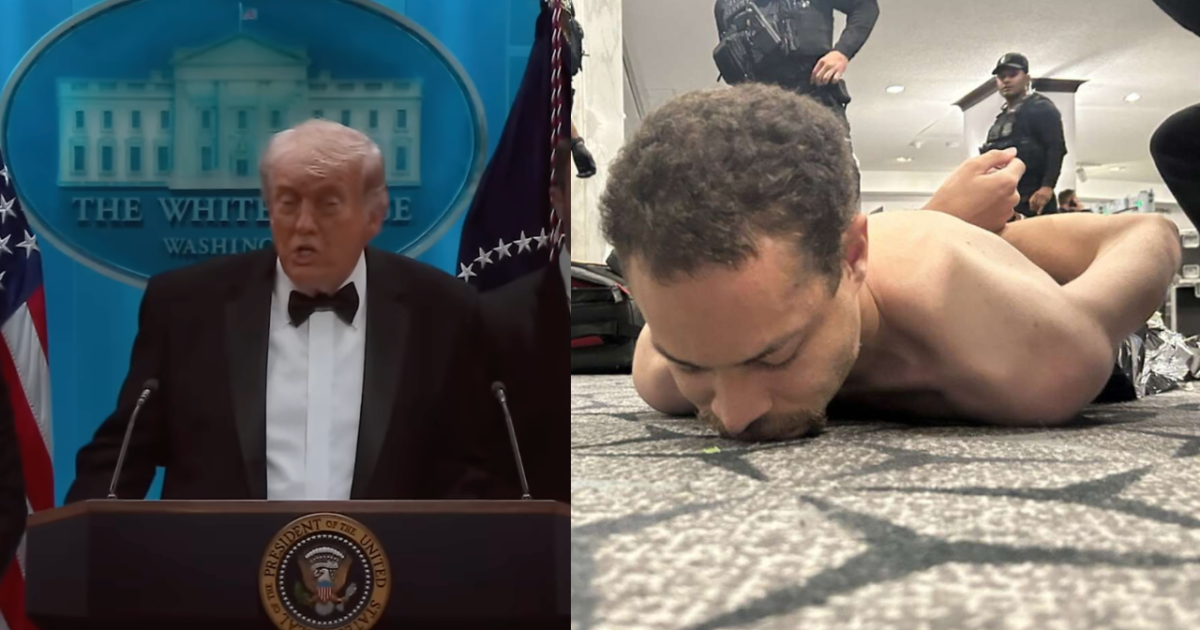
A major development has emerged in theinvestigationinto the White House Correspondents’ Dinner shooting, and the implications are serious.
According to two sources cited byCBS News, suspectCole Tomas Allenallegedly told law enforcement after his arrest that he intended to shoot Trump administration officials.
If that statement is confirmed in court, the entire nature of the case changes. This is no longer just about a shooting attempt in a crowded venue. It becomes a case centered on targeted political violence against federal officials, which carries far more severe legal consequences under federal law.
Intent is one of the most critical factors in any criminal case, especially at the federal level.
An admission like this could open the door to charges well beyond the preliminary firearms and assault counts alreadyannouncedby U.S. Attorney for D.C. Jeanine Pirro.
Prosecutors now have a potential pathway to pursue statutes specifically designed to protect government officials and the federal government’s functioning.
One of the most relevant statutes in this situation is18 U.S.C. § 115, which criminalizes threats against federal officials in connection with their official duties. This law applies broadly, covering members of Congress, federal judges, law enforcement personnel, and executive branch officials, including cabinet members.
The penalties aresignificant, with up to 10 years in prison for threats alone, and substantially more if an attempt or actual act of violence is involved.
The reasoning behind the enhanced penalties is straightforward: a threat against a government official is treated not just as a threat to a person, but as an attack on the operation of government.
That distinction matters. Federal prosecutors consistently treat cases involving government officials differently because of the broader implications.
Source: The Gateway Pundit
