The Hormuz crisis offers us a profound insight into the real power structures in Germany.Nothing seems able to convince the Berlin monolith to partially shield its citizens from the consequences at gas stations through tax cuts.
It is now unavoidable that the Iran shock will translate into an inflation driver, working its way through economic value chains into consumer prices. These developments almost force a reduction of the tax burden on households and the middle class. It may sound strange to climate socialists, but wealth is created exclusively in the private sector, and certainly not in the state bureaucracy, which is currently profiting from the price surge at gas stations at the expense of citizens and enjoying a small special economic boost.
In March alone,the Finance Minister collected roughly half a billion euros more at gas stations.That makes him the winner of the crisis.
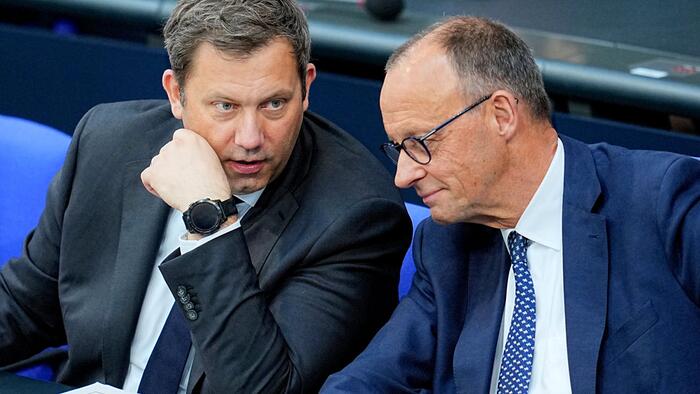
To dispel the impression of a secret profiteer, Klingbeil points to the generally precarious budget situation. In fact, his hands are essentially tied: the Merz-Klingbeil duo is driving the country’s public debt through the roof. Klingbeil is the skywalker among European debt makers. He has begun a catch-up race to place Germany in the top tier of debt states alongside neighboring France, Italy, and Spain. The German public debt ratio currently stands at 63 percent, but the debt spiral is accelerating. This figure will rise dramatically in the coming years.
Anybody should now be clear:The debt party of a state that burns its citizens’ capital in reckless fashion, whether in Ukraine or through the redistribution mechanism of the green transformation, must end.The state is an overfed glutton, extracting ever-higher tax revenues while sinking deeper into the debt spiral.
Yet the burden does not rest solely on debt. The state’s hyperactivity drains scarce resources from the private capital market, raises credit costs, and drives genuinely productive investments abroad. The damage has accumulated for years and is being made worse by the energy cost crisis.
One can only imagine the relief that the private sector needs to restart the prosperity engine and compensate for the ever-growing damage caused by the state bureaucracy. Germany’s plight urgently calls for reforms and an end to the failed eco-socialist transformation project.
In Germany, however, things are a little different. Economic rationality does not dominate. In the land of climate doomsayers and would-be world improvers, as former Economics Minister Robert Habeck once said, „all in“ — and all levers were set towards eco-socialism.
In fact:over 50 billion euros are pumped annually by the German state through the Climate and Transformation Fund (KTF) into the green wonder economy,which during the Hormuz crisis proved not to solve problems but rather to be their obvious cause.
The green wonder economy is leaving deep wounds in public budgets, whose deficits are spiraling out of control – in this year alone, another 180 to 190 billion euros of new debt will likely be recorded.https://www.tichyseinblick.de/daili-es-sentials/staatsverschuldung-rekord/
Source: ZeroHedge News
