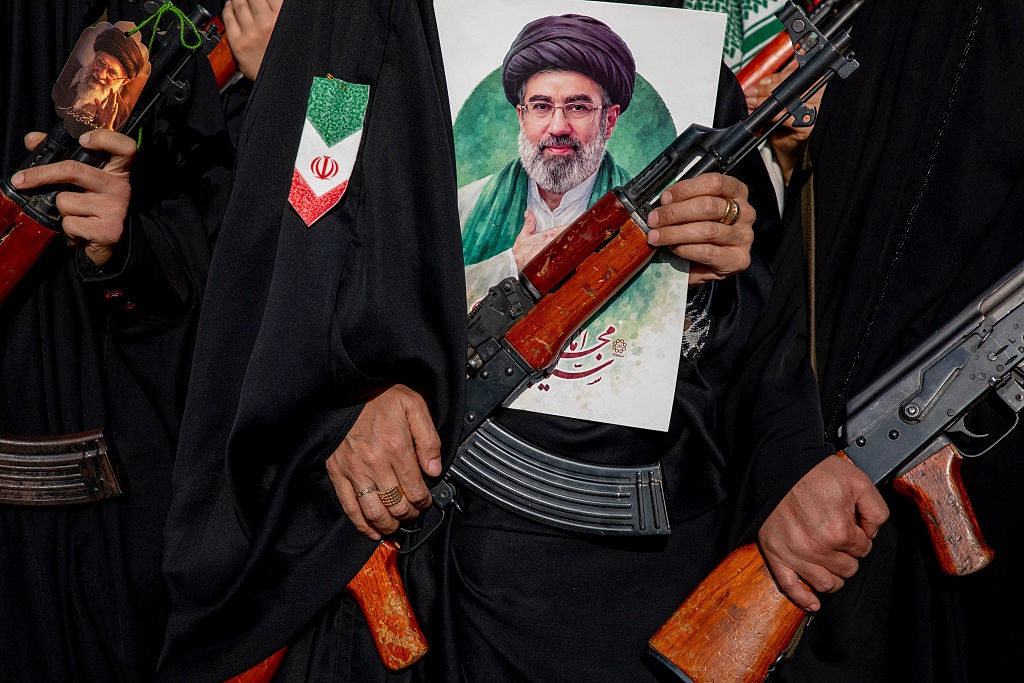
In his torrent of tweets, US President Donald Trump often claims that though he didn't intend to do so, he has succeeded in bringing regime change to Iran.
In the new regime he says he has created, he finds unnamed reasonable people with whom he could reach a deal to end the war and make Iran great again, as he has done in America.
Sometimes he even goes as far as implying that, barring a few finishing touches, the deal has already been made.
I think we should take his claims seriously because they offer a clue to the mindset of a key player in a war that few people wish to see continued.
But by claiming that regime change has already happened, he encourages those in Tehran who take that as an insurance policy that allows them to do whatever they like. Regime change is the only thing that frightens them enough to accept a deal to end the war.
In other words, what Trump says fans the fires of a hubris that has lit the fires of so many wars and conflicts in the region.
However, Trump isn't completely off the mark when he suggests that the set-up in Tehran isn't the same as it was before the US and its Israeli partner started bombing and killing political and military leaders.
By most accounts, the targeted killing of the Tehran leadership eliminated 168 top figures of a regime dominated by a clan that numbers a few hundred.
A major reshuffle has taken place, with dozens of younger figures moving up the ladder. Provided the regime survives, one might witness a generational change that could inject new blood into the zombie-like regime led by the late Ali Khamenei.
Many of those moving up the ladder haven't yet received the usual written confirmation by the "Supreme Guide" because the newly minted Mujtaba Khamenei, the man supposed to incarnate the function, may not even be alive.
Source: Gatestone Institute :: Articles
