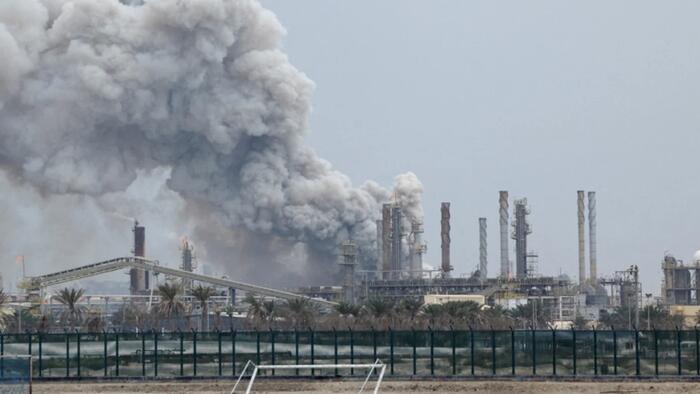
The Trump administration has told several Gulf states that they should use American companies to rebuild their infrastructure damaged by Iran's retaliatory strikes amid the US-Israeli war on the Islamic Republic, US and Arab officials familiar with the discussions told Middle East Eye.
Kuwait, Bahrain and the UAE are among the countries the US has tapped as potential customers for US engineering, manufacturing and construction firms,given the extent of damagein their countries, the officials told MEE.
Saudi Arabia and Oman have been less impacted by Iranian air strikes. In their talking points, US officials have been emphasizing the economic partnership the Gulf countries share with the US and its importance to reconstruction.
A US official told MEE thatpromoting US companies for Gulf reconstructionwas part of the Trump administration’s"America First" foreign policy, which prioritizes economic statecraft.
But an Arab official told MEE that the pushappeared "a little tone-deaf", as the Gulf is still wary of a return to fighting and on edge over the US’s commitments to regional security.
The Trump administration’s push is not merely symbolic. Rystad Energyestimatesthe repair costs for energy-linked infrastructure in the Gulf alonecould reach as high as $39bn, excluding the damage in Iran.
A fragile ceasefire between the US and Iran is holding, even as the two are locked in a stalemate over the Strait of Hormuz with rival blockades. Iran's government has estimated that its economy overall suffered $270bn in direct and indirect war damages.
The Gulf monarchies generally opposed the US-Israeli war on Iran, but they faced the brunt of the Islamic Republic’s reprisals.The UAE was targeted with at least 2,000 ballistic missiles and drones.
The countries which suffered the most damage are also the most exposed to Iran's newfound control over the Strait of Hormuz, as opposed to Saudi Arabia, which has a pipeline bypassing the chokepoint via the Red Sea.
Gulf states have deep pockets to rebuild infrastructure, but there are signs they are wary of a longer-term downturn.
Source: ZeroHedge News
