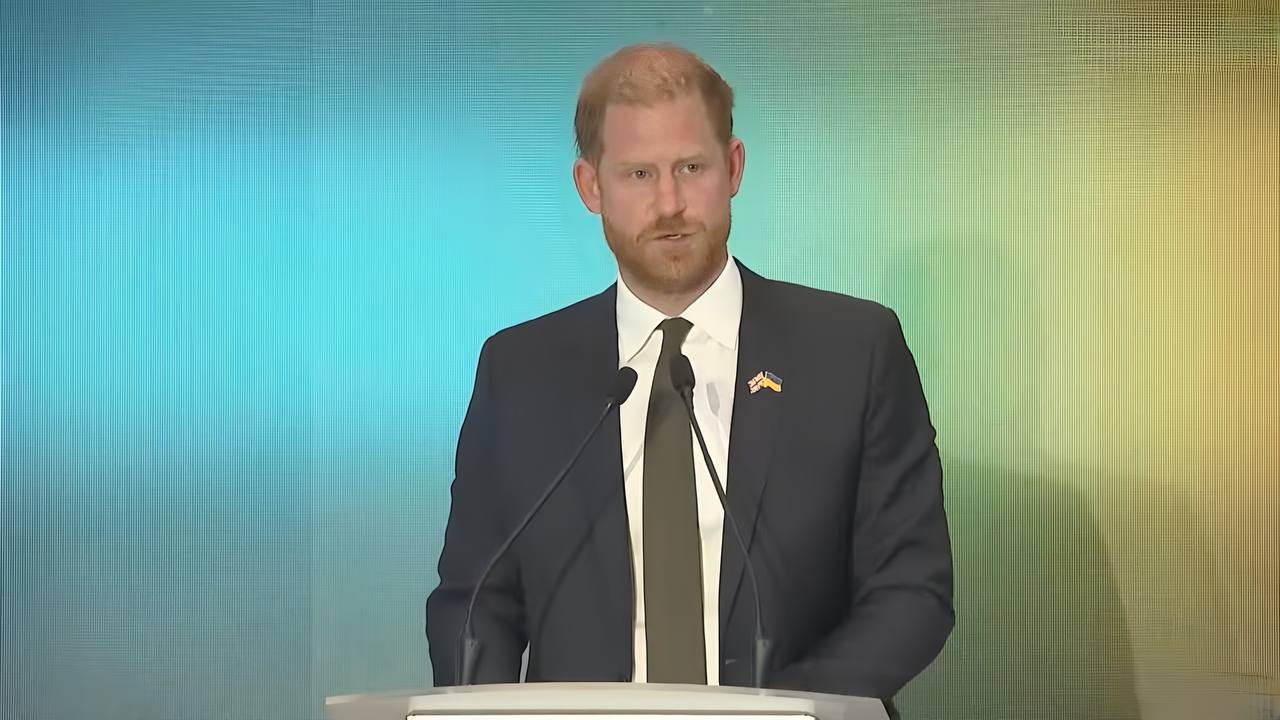
Prince Harry declared in Kyiv on Thursday that he would 'always be part of the Royal Family,' using a high‑profile visit to war‑torn Ukraine to reclaim what he called the work he was 'born to do' while pointedly challenging US President Donald Trump and Russia's Vladimir Putin over the conflict.
The news came after several days in Ukraine in which Prince Harry, now based in California and no longer a working royal, stepped back into a role that looked strikingly familiar to anyone who remembers his days as the monarchy's most visible humanitarian. He travelled to the country to speak at the Kyiv Security Forum and to visit minefields with the HALO Trust, the demining charity closely associated with his late mother, Diana, Princess of Wales.
His presence and the sharpness of his language on international obligations and Russian aggression have reignited arguments about whether he can ever fully detach his activism from his royal identity.
At the Kyiv Security Forum on Thursday, Prince Harry delivered what organisers described as a 'punchy' address focused squarely on the war. He urged Washington to honour its commitments to Ukraine and called on the Kremlin to 'stop this war,' a direct message to Vladimir Putin that drew a sharp line between his advocacy and the traditional diplomatic caution of Buckingham Palace.
Those remarks did not go unanswered. According toITV News, which conducted a subsequent on‑camera interview with the Duke, the speech prompted apublic rebuke from President Trumpand a response from the Kremlin. The details of those pushbacks were not carried in full, but the reaction underscored how far Harry has moved into the territory of open political confrontation, something working royals are generally expected to avoid.
Asked by ITV whether he felt 'the shackles' were off now he is no longer a senior working royal, Prince Harry pushed back at the premise rather than the questioner. 'From my perspective, we need to feel empowered to speak truth to power,' he said. 'It's really that simple.' He went on to express concern about a world 'where anyone in my position or anybody, anywhere can't speak about the very things and the realities that we are seeing.'
It was an answer that sounded less like a cautious prince and more like a campaigner who has decided the cost of silence is higher than the criticism he will attract.
For context, Prince Harry and Meghan Markle stepped down as working royals six years ago, relocating to Montecito, California. In the years since, they have given a series of high‑profile interviews and fronted a Netflix docuseries detailing their grievances with royal life and the British press. Prince Harry's 2023 memoirSparelaid bare family tensions and painted a stark picture of his years inside the institution.
That history hangs over every word he now utters about the monarchy. Yet in Ukraine, while standing alongside a charity that symbolises some of Diana's most admired work, he sounded less like an exile and more like a man trying to stitch together his royal past with his current independence.
On Friday, he joined staff from the HALO Trust to watch a demonstration of digital demining technology being deployed across Ukraine's scarred landscape. The visit echoed Diana's 1997 walk through an Angolan minefield, an image that helped transform global attitudes to landmines and has long been central to Harry's own sense of purpose.
Source: International Business Times UK
