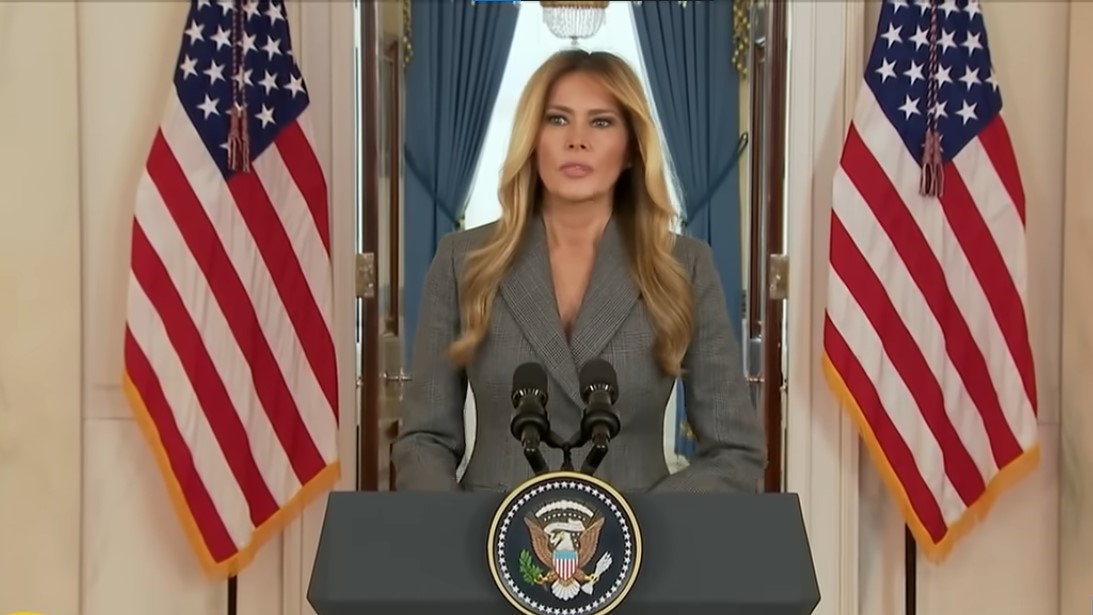
The First Lady's sudden press conference, in which she forcefully denied any links to disgraced financier Jeffrey Epstein, has sparked political and media scrutiny. While her remarks appeared to focus on clearing her own name, Wolff suggests they carried a deeper, more strategic message aimed at the President himself.
Wolff interpreted Melania's statement not merely as a defence but as acalculated moveto distance herself from potential fallout tied to her husband's past associations.
Speaking on the 'Inside Trump's Head' podcast hosted by Joanna Coles, Wolff argued that Melania's remarks were less about public clarification and more about internal signalling.
'You're not going to pin this Epstein stuff on me. This Epstein stuff is your problem,' Wolff said, describing what he believes was the underlying message directed at Donald Trump. He went further, suggesting the statement implicitly invited scrutiny of the president, adding: 'To me, [it] read, "Congress should investigate you."'
First lady Melania Trump has delivered a statement at White House denying ties to Jeffrey Epstein and knowledge of his crimes, and is calling for a congressional hearing for survivors.https://t.co/DQ7H7skUyR
The timing of the press conference raised further questions. On 9 April,Melania abruptly gathered reportersat the White House to read a prepared statement denying any involvement with Epstein or his network. She stressed that she had 'never had a relationship with Epstein or his accomplice' and firmly rejected claims linking her to his criminal activities.
Her remarks were unequivocal. 'The lies linking me with the disgraceful Jeffrey Epstein need to end today,' she declared, insisting she had no knowledge of Epstein's abuse and had never travelled on his plane or visited his private island.
The sudden nature of the statement has fuelled speculation about its intent. Wolff believes the answer lies in the political vulnerability surrounding Trump's past. 'She opened up the one area that I think Donald Trump is exquisitely vulnerable on,' he explained, pointing to the 1990s and early 2000s, an era marked by Trump's past interactions with Epstein, which Trump has denied were improper.
This period has long been scrutinised due to those interactions, although Trump has denied wrongdoing and distanced himself from the financier in later years. Nonetheless, Melania's remarks, by drawing renewed attention to that timeframe, may have inadvertently — or deliberately — reignited scrutiny.
Wolff's interpretation suggests a strategic calculation: by publicly asserting her independence from the scandal, Melania effectively shifted any lingering suspicion back onto her husband. 'That's your problem,' Wolff summarised. 'You better protect me in this.'
Source: International Business Times UK
