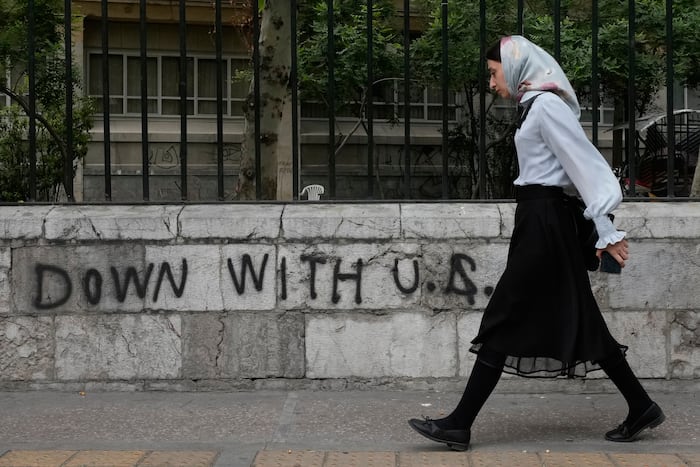
ISLAMABAD (AP) — The latest ceasefire talks between the United States and Iran appeared to fail Saturday before they began, as Tehran's top diplomat left Pakistan and President Donald Trump soon afterward said he had told envoys not to travel to Islamabad.
The negotiations were meant to follow historic face-to-face talks earlier this month between the U.S., led by Vice President JD Vance, and Iran, led by parliament speaker Mohammad Bagher Qalibaf. But Iranian officials have questioned how they can trust the U.S. after its forces started blockading Iranian ports in response to Iran's war grip on the Strait of Hormuz waterway.
“If they want to talk, all they have to do is call!!!” Trump said on social media, adding: “Too much time wasted on traveling, too much work!” The White House on Friday said Steve Witkoff and Jared Kushner would be going to Islamabad.
Iran’s Foreign Minister Abbas Araghchi left Islamabad on Saturday evening, two Pakistani officials told The Associated Press, speaking on condition of anonymity because they were not authorized to talk to the media.
“Shared Iran’s position concerning workable framework to permanently end the war on Iran. Have yet to see if the U.S. is truly serious about diplomacy,” Araghchi later said on social media.
Another ceasefire, between Israel and the Iranian-backed Hezbollah, was shaken Saturday as each side fired at the other and Israeli Prime Minister Benjamin Netanyahu ordered the military to “vigorously attack Hezbollah targets in Lebanon."
Iran had said any talks would be indirect
Trump this week announced an indefinite extension of the ceasefire with Iran. It has paused most fighting, but the economic fallout is growing two months into the war as global shipments of oil, liquefied natural gas, fertilizer and other supplies are disrupted by the near-closure of the Strait of Hormuz.
Both sides have continued to make military threats. Iran’s joint military command on Saturday warned that “if the U.S. continues its aggressive military actions, including naval blockades, banditry, and piracy” it will face a “strong response."
Even before Saturday’s developments, Iran’s foreign ministry said any talks would be indirect and that Pakistani officials would convey messages. In Pakistan, Araghchi met with Army Chief Field Marshal Asim Munir and Prime Minister Shehbaz Sharif about what he called Iran’s red lines for negotiations.
Source: WPLG
