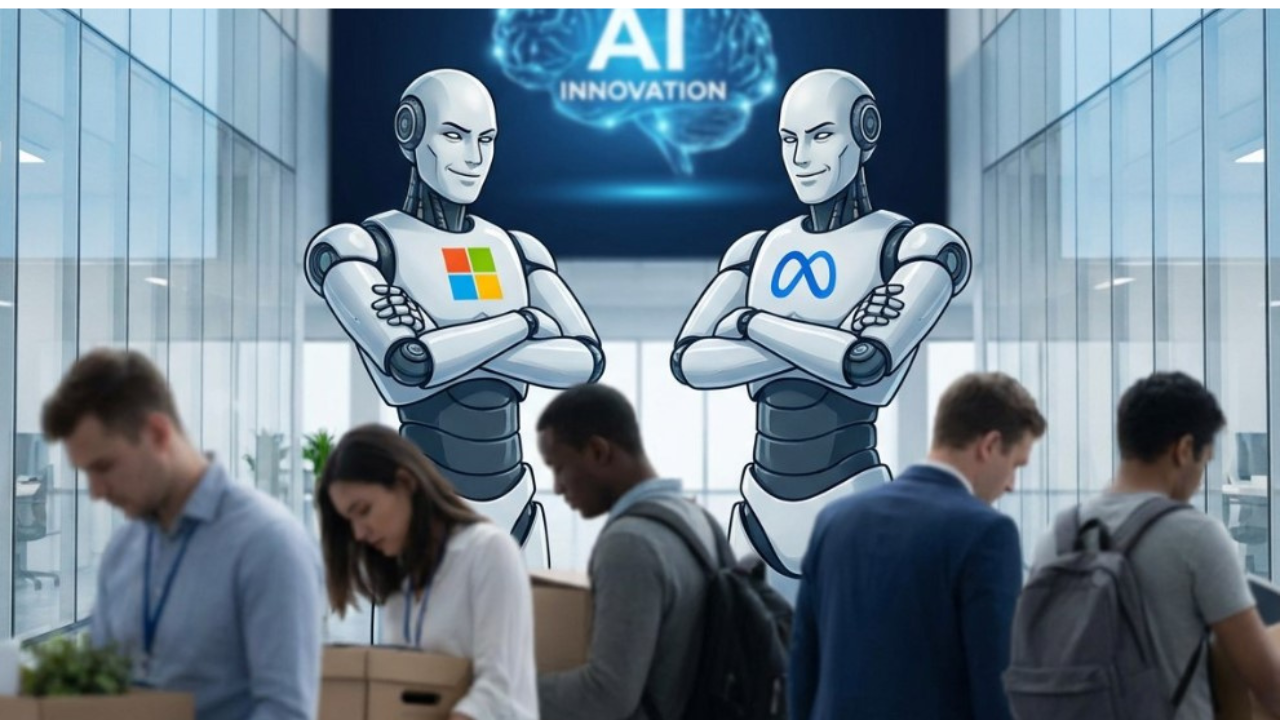
More than 20,000 roles are either being cut, frozen or put at risk across Meta and Microsoft in the US tech sector after both companies set outfresh workforce reductionson Thursday, sharpening a question that has stalked white collar work for months. In 2026, AI is no longer a distant threat in boardroom presentations. At Meta and Microsoft, it is now part of the live maths behind who stays, who goes and which jobs never get filled.
How has AI impacted tech hiring in 2026?Meta to cut 10% jobs as it bets on AI growth, AI to create 170 million new roles by 2031@susanmtehranitells you morepic.twitter.com/ijowhy7U99
Anxiety over AI and jobs has been building ever since ChatGPT broke into the mainstream in late 2022 and companies began testing how much routine work newer systems could absorb. That unease has only deepened as employers chase savings, investors demand discipline and executives try to correct for the hiring frenzy that followed the pandemic.
Meta and Microsoft reduce workforce amid rising artificial intelligence investments, data center expansion, and efficiency push.𝒇𝒐𝒓 𝒎𝒐𝒓𝒆 𝒅𝒆𝒕𝒂𝒊𝒍𝒔https://t.co/e16vqelUrg#Meta#Microsoft#Layoffs#AI#TechIndustry#JobCuts#BigTech#ArtificialIntelligencepic.twitter.com/TVikBBeKbY
Meta made the sharper move. The company told employees it plans to cut 10% of its workforce, or about 8,000 jobs, with the reductions due to begin on 20 May.
It is also scrapping plans to hire for another 6,000 open roles, a detail that matters because the labour market does not only shrink through layoffs. Sometimes it contracts quietly, by deleting the jobs that would have existed.
Microsoft and Meta ditch THOUSANDS of employees for AI — The GuardianMeta cuts 10% of staff – around 8,000 peopleMicrosoft offers 'voluntary retirement' to 7% – roughly 125,000 peopleThe future is now, huh...pic.twitter.com/knfRhp23QE
The official explanation was couched in the language big companies tend to prefer when they are doing something brutal and calling it prudent. Meta said the cuts were part of an effort to run the business more efficiently and to offset other investments it is making.
Those investments are overwhelmingly tied to AI, where the largest tech groups are pouring extraordinary sums into chips, data centres and the infrastructure needed to keep the boom going.
The same companies spending at historic levels to build AI are also using the promise of AI efficiency to justify slimmer payrolls. Anthony Tuggle, an executive coach who previously worked in AI, put it bluntly when he said this looked less like a cyclical wobble and more like a structural shift in how work is organised.
Source: International Business Times UK
