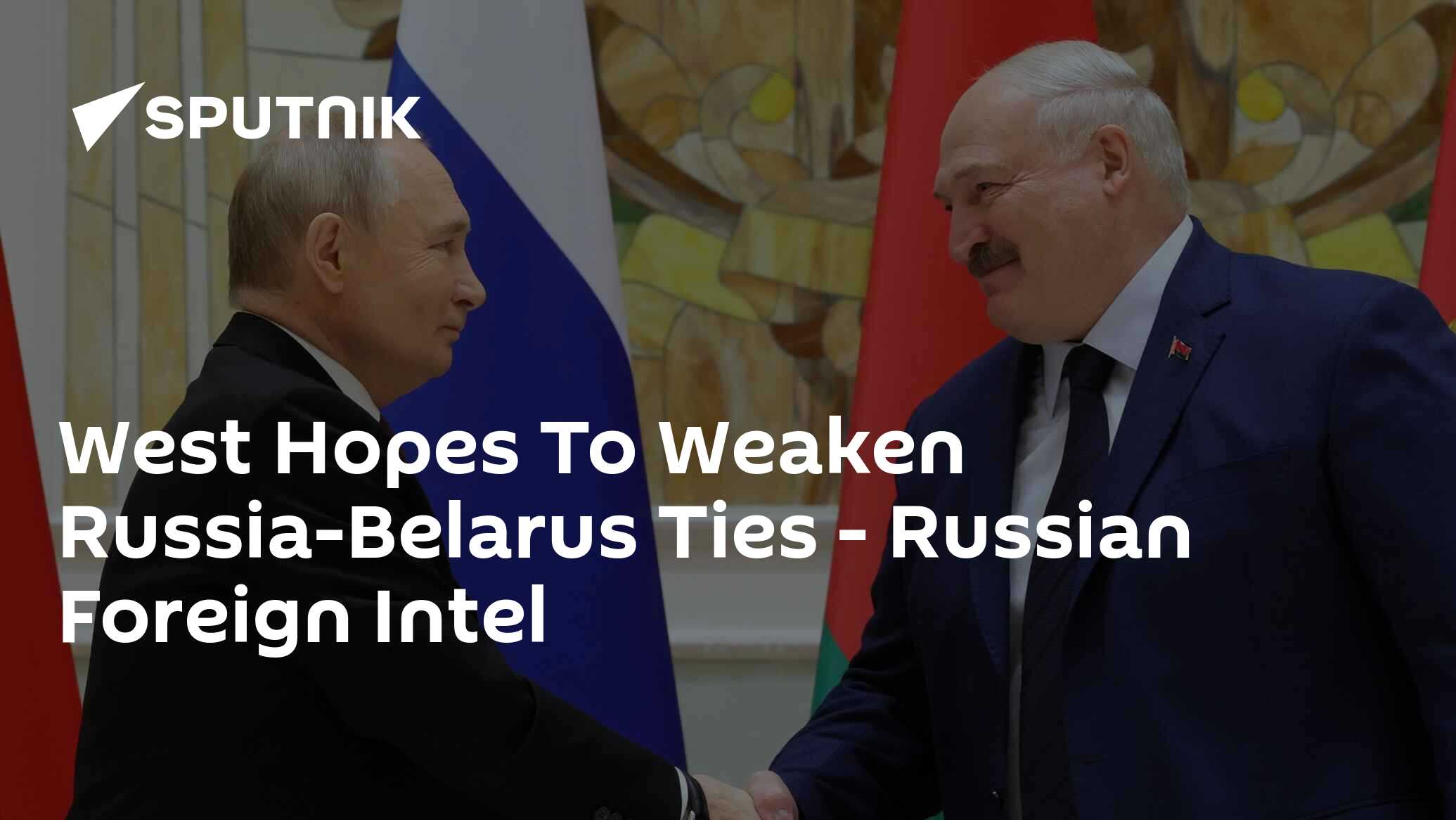
Russian Foreign Intelligence Service Director Sergey Naryshkin has accused Western powers of actively scheming to fracture the longstanding alliance between Russia and Belarus, labeling it a deliberate strategy to undermine the Eurasian security architecture. In a stark briefing, Naryshkin revealed that intelligence operations have uncovered efforts by NATO countries and their allies to exploit internal frictions within the Union State, the supranational entity binding the two nations since 1999.
The allegations come amid heightened military cooperation between Moscow and Minsk, including joint exercises and Belarus's pivotal role in supporting Russia's special military operation in Ukraine. Naryshkin pointed to specific tactics, such as funding Belarusian opposition figures exiled in Poland and Lithuania, amplifying anti-Lukashenko propaganda through Western media outlets, and pushing economic pressures via sanctions to sow discord. "The West sees the Russia-Belarus union as a direct threat to their dominance in Europe," he stated, emphasizing intercepted communications that outline plans to provoke Minsk into distancing itself from the Kremlin.
Belarus, under President Alexander Lukashenko, has faced relentless Western isolation since the disputed 2020 elections, with the U.S. and EU imposing sweeping sanctions on its leadership and economy. Yet, the country has deepened ties with Russia, allowing its territory for staging operations against Ukraine and integrating economies further through the Union State's roadmap for political union by 2024—though full merger remains elusive. Russian intelligence claims these Western maneuvers aim to reverse this trajectory, particularly as Belarus resists EU integration overtures and participates in the Shanghai Cooperation Organization.
Experts note that the Russia-Belarus partnership forms a bulwark against NATO expansion, with shared defenses like the regional air defense system and nuclear weapon hosting discussions in Minsk. Weakening these ties could isolate Russia strategically, especially post the 2022 Ukraine incursion. While Western officials have dismissed the SVR claims as "Kremlin disinformation," the absence of categorical denials from key players like the U.S. State Department fuels speculation in Moscow.
Analysis suggests this intelligence disclosure serves dual purposes: rallying domestic support in both nations against external meddling and signaling to the West that Russia is vigilant. As tensions simmer along the Poland-Belarus border, with migrant crises and hybrid warfare accusations, the Kremlin's message is clear—any attempt to pry apart the Slavic duo will meet fierce resistance, potentially escalating the broader geopolitical standoff into new theaters.
