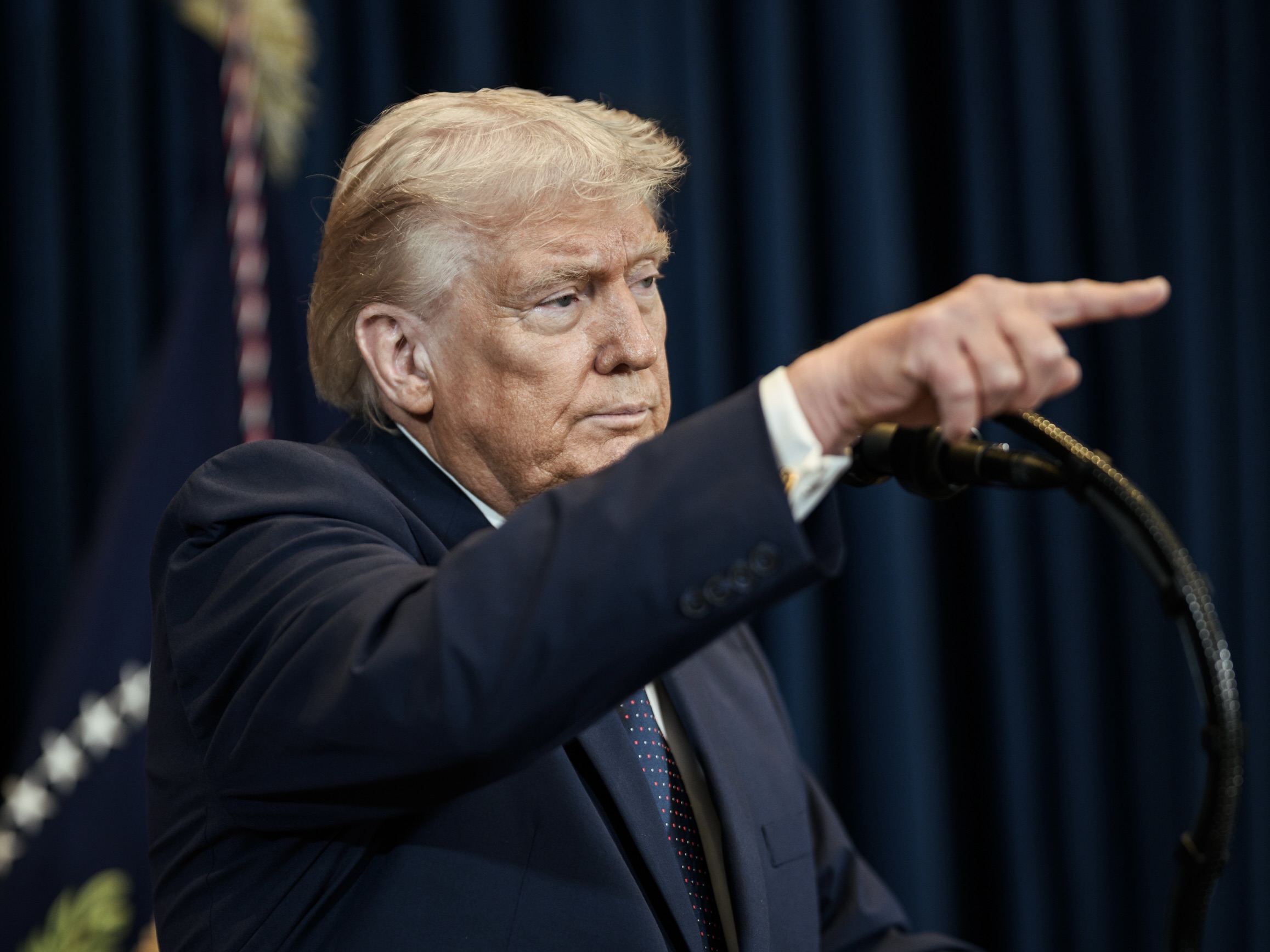
Donald Trump has ordered a sweeping rethink of US drug policy in Washington, signing an executive order to accelerate research into psychedelic medicines and directing his administration to reschedule medical marijuana, in what advocates describe as a decisive break from the Republican Party's traditional 'war on drugs' stance.
The shift comes after decades in which Republican leaders championed harsh criminal penalties and 'just say no' messaging, a posture rooted in Richard Nixon's drug crackdown and reinforced through the 1980s and 1990s. Under Trump, the White House is now flirting with a very different idea: that some banned substances, including cannabis and psychedelic compounds, might have legitimate medical value and should be easier to study and potentially prescribe.
Last week,Donald Trump signed an executive order instructing federal agencies to loosen research restrictions on psychedelic drugsas potential treatments for depression, post-traumatic stress disorder and substance use disorders. The move was paired with $50 million in federal funding to support state-level efforts and a directive to the Food and Drug Administration to fast-track reviews of psychedelic therapies that clear early scientific hurdles.
At the signing event, held in the Oval Office, Trump shared the room with administration officials, Republican legislators, military veterans andpodcaster Joe Rogan. In a moment that underscored how far the conversation has drifted from the old law-and-order script, Trump reportedly joked to the gathering: 'Can I have some please?' when psychedelics were mentioned.
Days later, acting Attorney General Todd Blanche followed up with an order to reclassify state-licensed medical marijuana as less dangerous under federal law. Recreational cannabis remains illegal nationwide, and marijuana is still technically listed as a Schedule I substance alongside heroin and LSD, but Blanche framed the step as part of a broader health agenda.
The Justice Department, he said, was 'delivering on President Trump's promise to expand Americans' access to medical treatment options.' On their own, neither decision tears up existing drug laws. Psychedelics remain banned outside research settings, and there is no endorsement of recreational use. Yet taken together, they mark a striking realignment.
Advocates argue that the change under Donald Trump is not simply ideological but driven by a coalition that would have been unthinkable a decade ago. Bryan Hubbard, chief executive of Americans for Ibogaine, an organisation promoting research into the psychoactive compound ibogaine for addiction treatment, said the president's willingness to move quickly reflects an openness to new ideas rather than inherited dogma.
'Regardless of what one may think of the president ... he seems to be someone who is open to innovation and is not imprisoned by dogmatic viewpoints,' Hubbard said, crediting veterans in particular for reshaping conservative attitudes to psychedelics.
Many of the Republicans now publicly advocating clinical research into substances once associated with the counterculture are former service members themselves. At the White House signing, Rep Morgan Luttrell, a retired Navy SEAL from Texas, stood behind Trump alongside his brother Marcus, also a retired SEAL. Luttrell co-chairs the Congressional Psychedelics Advancing Therapies Caucus, a cross-party group pressing for 'rigorous and urgent clinical research' into these treatments, together with Republican Jack Bergman and Democrat Lou Correa.
According to Hubbard, having decorated 'warfighters' speaking frankly about their own mental health struggles and the potential benefits of psychedelic-assisted therapy has been pivotal. 'The warfighter messengers around psychedelics are able to eventually reverse the stigma that has long been associated with the countercultural left,' he said. 'They have been able to demonstrate, hey, it's real, it's legitimate, and it's to be taken seriously.'
Source: International Business Times UK
