Finance Minister Lars Klingbeil is a sensitive character. Such personalities tend to react irrationally and extremely defensively to criticism. They are prone to resentment and quick retaliatory reflexes.
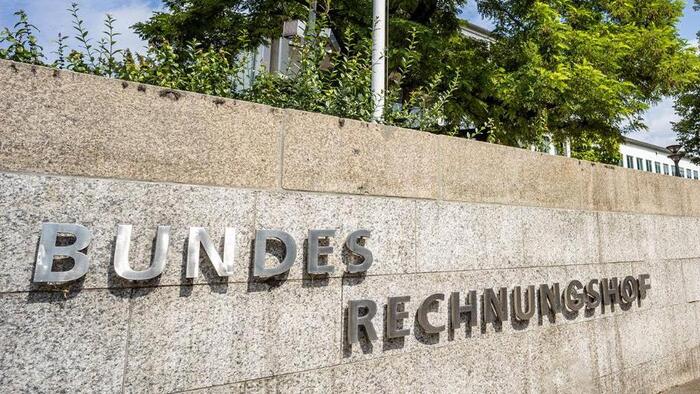
So it was only a matter of time before the Federal Court of Auditors, too, felt the cold anger of the thin-skinned Social Democrat.Late last year, criticism from the auditors was promptly followed by a budget cut imposed by the Finance Ministry. The move was meant as a public warning shot across the bow of the recalcitrant watchdog, which traditionally plays the role of post-mortem critic. This comes with the unpleasant habit of describing the state of public finances as they actually are — not as Berlin prefers to imagine them.
The Court’s budget was subsequently reduced from €52 million to €47 million, officially on efficiency grounds. What Klingbeil failed to achieve, however, was to silence the auditors entirely.
It has become a bad tradition: as in every year, the Court again warned of an ever-accelerating debt spiral and a fiscal policy that appears to have lost all restraint. The state is living beyond its means, said President Kay Scheller. On the contrary, one might reply: this state is living beyondourmeans.
The current draft budget foresees total spending of €630 billion, with nearly every third euro financed through borrowing. By 2029, another €850 billion in new debt is planned — pushing visible public debt to €2.7 trillion, or roughly 67% of GDP.
Unfortunately, theCourt’s analysisof debt dynamics remains superficial. In its assessment, however, it aligns with recent criticism from the Ifo Institute.
Both institutions criticize how the state handles new debt. We know from Ifo analysis that roughly 95% of the funds from special off-budget vehicles have been diverted to cover deficits across various layers of the welfare state. Germany is not investing — and the private sector is now running on negative net investment, effectively consuming its capital base.
Dig deeper into Germany’s debt swamp and it becomes clear why Berlin consistently avoids the issue.
A recent Ifo paper calculated non-contributory benefits in the statutory pension system. Economists concluded that these hidden costs could amount to as much as 50% of GDP in the long run. This explains why the overstretched state apparatus now acts merely as a firefighter, no longer capable of maintaining infrastructure. Even Scheller’s call to raise the public investment ratio from 8% to 10% is unlikely to materialize.
One can almost be grateful that the Court of Auditors is among the few institutions still attempting to describe the fiscal reality.Yet even it avoids addressing the root causes — deindustrialization, overstretched public finances, and structurally broken budgets at all levels of government. Unsurprisingly, Scheller and his team also steer clear of politically sensitive issues such as open-border policies, which are pushing the welfare state toward implosion.
Source: ZeroHedge News
