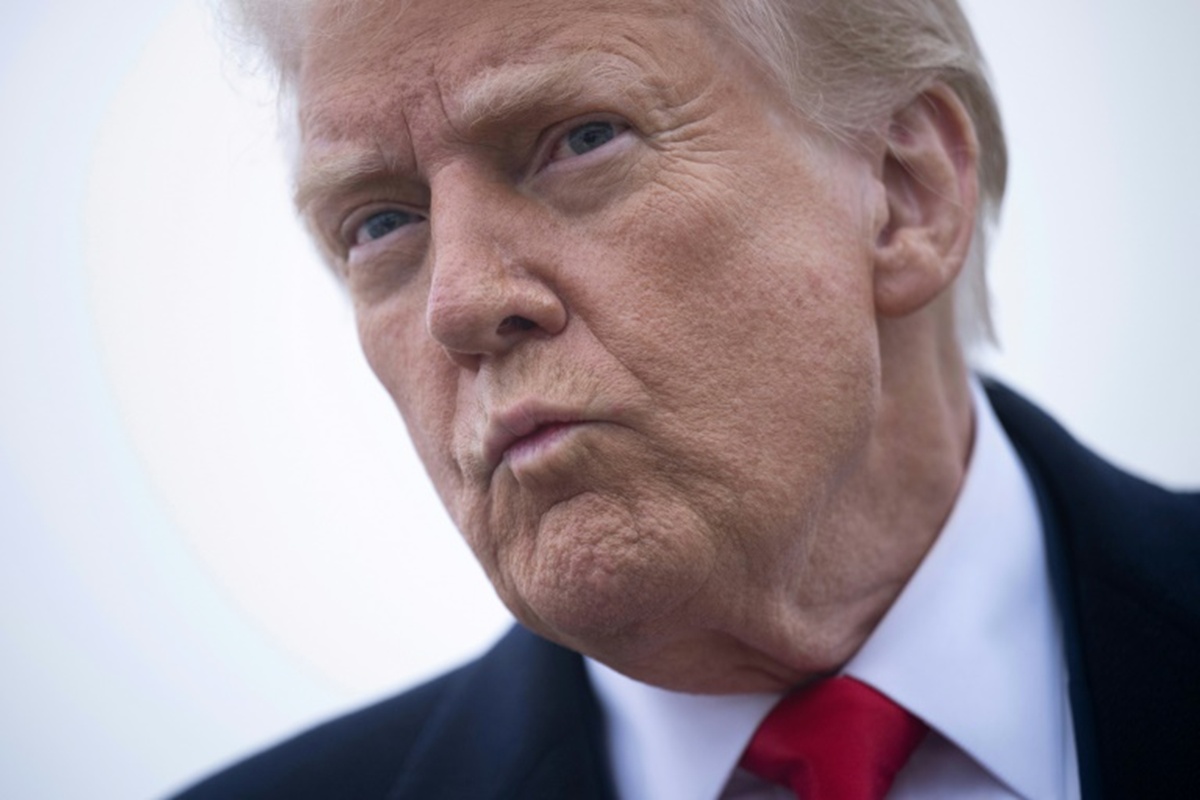
A federal judge has thrown a constitutional roadblock in front of Donald Trump's £7.9 billion ($10 billion) lawsuit against the IRS and Treasury Department, demanding that both sides explain how a sitting president can credibly sue agencies he controls.
On 25 April 2026, US District Judge Kathleen Williams issued an order questioning whether the case,Trump v. IRS, No. 1:26-cv-20609, satisfies the constitutional requirement of an adversarial dispute between genuinely opposing parties. She set a 20 May 2026 deadline for written submissions from both Trump's private attorneys and the Department of Justice, with a hearing to follow on 27 May. The order came just days after Trump's lawyers and government attorneys jointly signalled they were insettlement talks, raising the possibility that taxpayers could be left covering a payout to the sitting president.
Citizens for Responsibility and Ethics in Washington(CREW)has filed an amicus brief urging the court to block any settlement, arguing that Trump using his own Justice Department to negotiate a payout to himself threatens the constitutional separation of powers and the integrity of federal courts.
Trump, together with his sons Donald Trump Jr. andEric Trump, and theTrump Organization,filed suit on 29 January 2026in the US District Court for the Southern District of Florida. The complaint names the IRS and the Treasury Department as defendants, accusing them of failing to safeguard confidential tax information that was subsequently disclosed to news organisations.
The underlying leak dates to 2019 and 2020. Charles Littlejohn, a former IRS contractor employed by Booz Allen Hamilton, illegally obtained and disclosed Trump's tax returns to The New York Times and ProPublica. Reporting based on those records revealed that Trump paid just $750 in federal income taxes in both 2016 and 2017. Littlejohn pleaded guilty in October 2023 to one count of unauthorised disclosure and received a five-year prison sentence in January 2024.
Judge signals trouble for Trump’s $10B lawsuit against the IRShttps://t.co/42wqV6PNe2
The Trump complaint asserts that the defendants 'have caused Plaintiffs reputational and financial harm, public embarrassment, unfairly tarnished their business reputations, portrayed them in a false light, and negatively affected President Trump, and the other Plaintiffs' public standing.' Trump's legal team put the total damages figure at a minimum of £7.9 billion ($10 billion), citing both each individual unauthorised disclosure and subsequent republication of that data across media platforms as separate counts of liability under Section 6103 of the Internal Revenue Code.
A spokesman for Trump's legal team stated 'The IRS wrongly allowed a rogue, politically motivated employee to leak private and confidential information about President Trump, his family, and the Trump Organisation to The New York Times, ProPublica and other left-wing news outlets.' The IRS referred press enquiries to the Department of Justice, which did not immediately respond.
At the heart of Judge Williams' scepticism lies a foundational constitutional principle. For a federal court to exercise jurisdiction, it must have before it a genuine'case or controversy'between parties who are genuinely opposed to one another. Williams wrote in her 25 April order: 'Typically, adverseness is found in a situation where one party is asserting its right and the other party is resisting. Consequently, if there is no adverseness, there is no case or controversy.'
The judge pointed directly to the executive orders Trump has signed since returning to office, including one barring executive branch employees from advancing legal interpretations that contradict his 'opinion on a matter of law.' Williams wrote 'One such employee of the executive branch, the attorney general, has a statutory obligation to defend the IRS when it is hailed into court, but is ostensibly required by executive mandate to adhere to the president's opinion on a matter of law in such a case. This raises questions over whether the parties here are truly antagonistic to each other.'
Source: International Business Times UK
