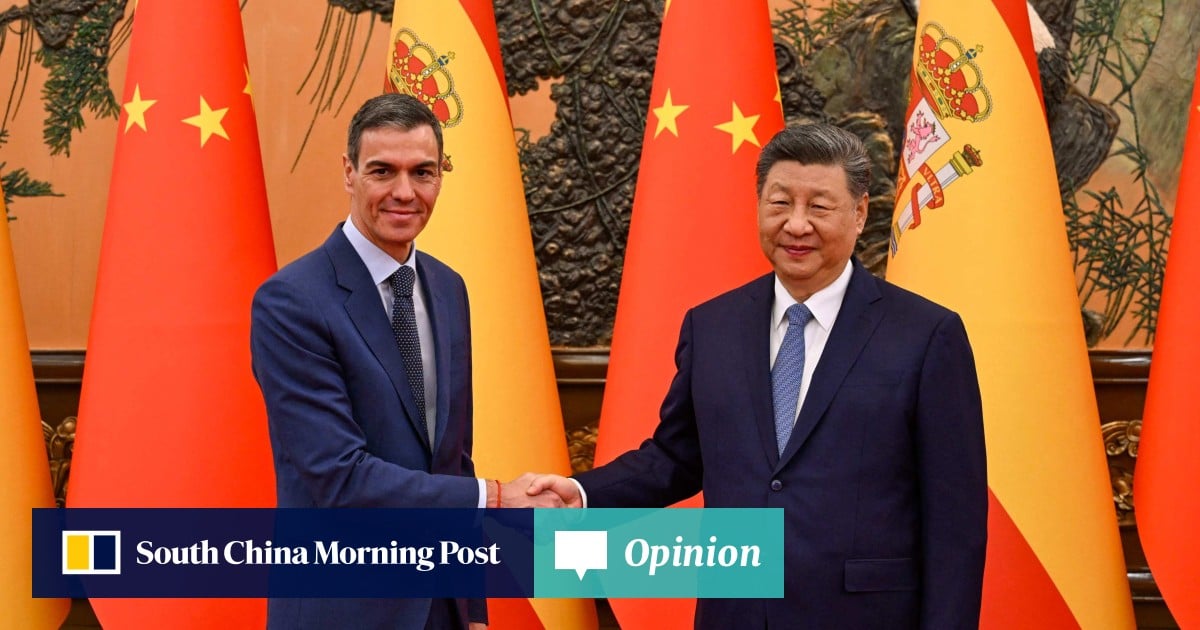
Spain is a secondary actor within a middle-ranking bloc dealing with a major power. Diplomacy can soften but not change that asymmetry
Call it the “fruit bowl” theory of international relations. March 2023 brought Spanish almonds and persimmons to China. September 2024 added eight all-encompassing agreements designed to sound larger than they were. April 2025 unlocked pork and cherries. This month delivered pistachios, poultry, dried figs and more pork. These are not incidental gains attached to a larger deal; they are the deal, with the value of a grocery basket.
After four visits and zero concessions from Beijing, Sanchez boasts that Spain enjoys the highest-level political dialogue with China in 53 years. The contrast between what he declares and what he secures is neat: historic interlocution, offal; strategic dialogue, pistachios.
A government lacking a single agreement or consultation with parliament on China engagement, and which sells this as elevation, could be said to have subordinated Madrid to Beijing rather than preserving its traditional place within the Western sphere. That in itself would not be fatal if these trips unlocked something more consequential: reciprocal market access, significant investment flows or any adjustment where Spanish and Chinese interests diverge.
Source: News - South China Morning Post
