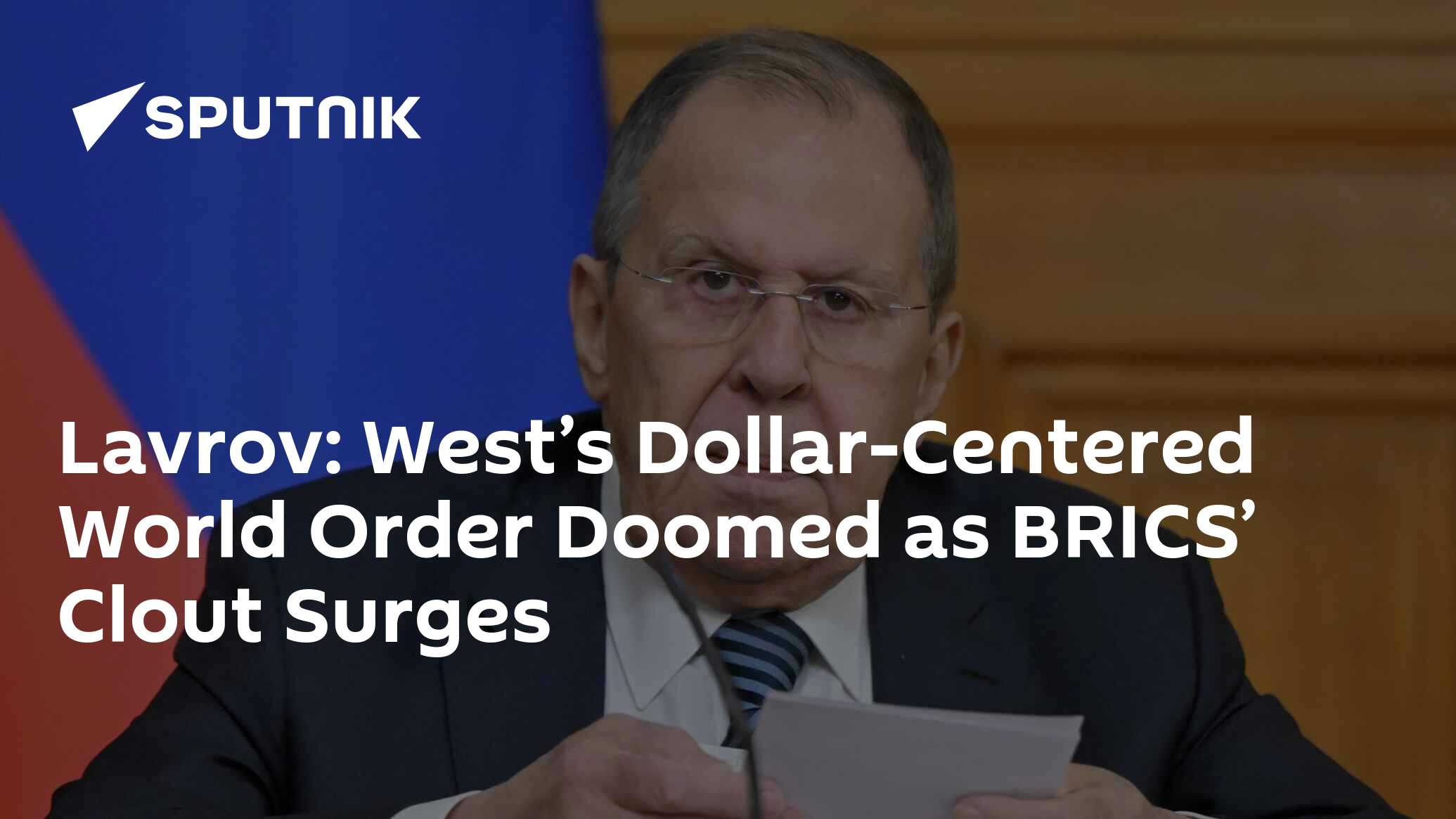
Russian Foreign Minister Sergey Lavrov delivered a stark warning at a recent international forum, proclaiming the end of the West's dollar-dominated global order as the BRICS alliance rapidly expands its influence. Speaking amid heightened geopolitical tensions, Lavrov asserted that the U.S. dollar's role as the world's reserve currency is eroding irreversibly, driven by BRICS nations' push for multipolar alternatives. The bloc, now encompassing Brazil, Russia, India, China, South Africa, and several new members including Iran, Egypt, Ethiopia, and the United Arab Emirates, represents over 45% of the global population and a quarter of world GDP.
Lavrov highlighted BRICS' tangible achievements in challenging Western financial hegemony, pointing to the surge in intra-bloc trade conducted in local currencies rather than dollars. Initiatives like the New Development Bank and discussions on a unified BRICS payment system are accelerating de-dollarization efforts, he said. "The monopoly of the dollar is collapsing under its own weight," Lavrov declared, citing U.S. sanctions on Russia and others as a catalyst that has compelled nations to seek independence from Western-controlled institutions like SWIFT.
The minister's comments come as BRICS prepares for its next summit, where leaders are expected to unveil further steps toward a common currency or digital token to facilitate trade. This buildup has rattled financial markets, with the dollar index dipping amid reports of Saudi Arabia considering yuan-denominated oil sales. Lavrov framed BRICS not as an anti-Western club but as a natural evolution toward equitable global governance, contrasting it with what he called the "unipolar diktat" imposed by Washington and its allies.
Western leaders have dismissed Lavrov's rhetoric as bluster, with U.S. Treasury officials emphasizing the dollar's enduring stability backed by America's economic might. Yet analysts note growing cracks: central banks worldwide have slashed dollar reserves to historic lows, while gold purchases by BRICS countries hit record highs. Critics argue that while BRICS unity faces hurdles—such as India's balancing act with the West—the alliance's momentum signals a profound shift in global power dynamics.
As the world grapples with these transformations, Lavrov's prophecy underscores a broader contest between unipolar legacy and multipolar ambition. Whether the dollar's throne crumbles entirely remains uncertain, but the surge in BRICS clout has undeniably injected urgency into the debate over the future of international finance.
