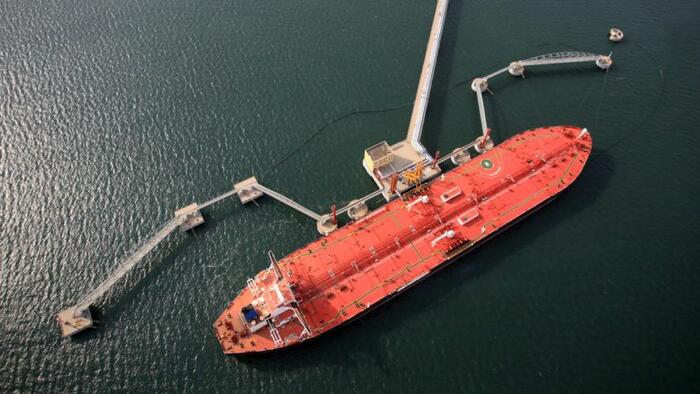
On Friday, President Donald Trump extended atemporary waiverof the century-old Jones Act (Merchant Marine Act of 1920) for an additional 90 days. The move allows foreign-flagged vessels to transport fuel, oil, fertilizer, and other essential goods between U.S. ports, aiming to stabilize domestic supply chains and ease price pressures stemming from the ongoing U.S.-Israeli war with Iran and resulting disruptions in the Strait of Hormuz.
White House Assistant Press Secretary Taylor Rogers announced the extension via social media, stating: “President Trump issued a 90-day extension to the Jones Act waiver.New data compiled since the initial waiver was issued revealed that significantly more supply was able to reach U.S. ports faster.This waiver extension provides both certainty and stability for the U.S. and global economies.” Rogers added that the administration has taken multiple steps to mitigate short-term energy market disruptions and ensure vital products continue flowing.
President Trump issued a 90-day extension to the Jones Act waiver.New data compiled since the initial waiver was issued revealed that significantly more supply was able to reach U.S. ports faster.This waiver extension provides both certainty and stability for the U.S. and…
This builds on the initial 60-day waiver issued on March 17 (effective until mid-May), which White House Press Secretary Karoline Leavitt described at the time as “another step to mitigate the short-term disruptions to the oil market” amid the conflict.
The Jones Act requires thatgoods transported by water between U.S. ports be carried on vessels that are U.S.-built, U.S.-owned, U.S.-flagged, and primarily U.S.-crewed. Enacted in 1920 as Section 27 of the Merchant Marine Act, it was designed to protect and rebuild the American maritime industry following World War I, ensuring a domestic fleet capable of supporting national defense and commerce during emergencies.
Critics argueit limits vessel availability and raises shipping costs, while supporters say it preserves U.S. jobs, shipbuilding capacity, and strategic maritime independence. Waivers are rare and typically granted only for national defense or emergencies, often following requests from the Department of Defense or in response to natural disasters.
Historical precedentsinclude waivers during World War I and II, the Korean War era, Hurricanes Katrina (2005), and other crises like the 2012 Alaska fuel emergency. More recent examples occurred after Hurricanes Harvey, Irma, and Maria in 2017.
The waiver stems directly from the U.S.-Israeli military campaign against Iran that began on February 28, 2026.U.S. and Israeli strikes targeted Iranian leadership, including the assassination of Supreme Leader Ali Khamenei, prompting Iranian retaliation with missile and drone attacks across the Middle East, strikes on U.S. bases and allies, and - critically -the closure (or severe restriction) of the Strait of Hormuz.
The Strait of Hormuz, through which roughly 20-25% of global seaborne oil and significant liquefied natural gas passes, became a major chokepoint. Iran’s actions, combined with a subsequent U.S. naval blockade of Iranian ports starting in mid-April, led to a collapse in tanker traffic (down over 90% at times), global oil price spikes (from ~$70/barrel pre-war to averages above $100 in March), fuel shortages in parts of Asia, and ripple effects on fertilizer and agricultural supply chains worldwide.
These disruptions exacerbated domestic U.S. fuel price pressures, prompting the administration to act on the Jones Act to reroute more Gulf Coast oil and refined products to other U.S. coasts via foreign tankers.
Source: ZeroHedge News
