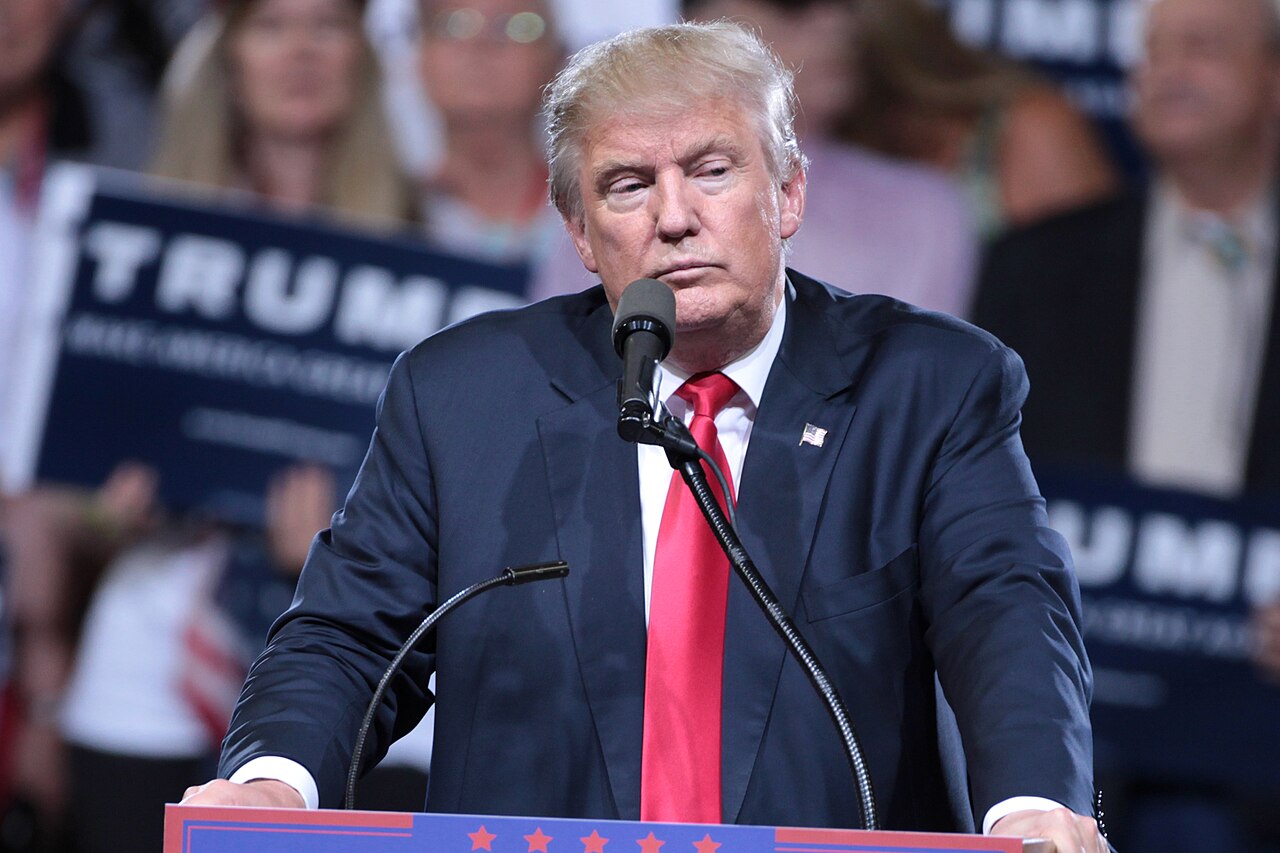
Donald Trump has admitted to taking a 'break' from the Iran war to explain why the conflict has now stretched well past his administration's original four-to-six-week victory timeline.
The president made the admission during a press exchange in the Oval Office on 23 April 2026, when a reporter pressed him on whyOperation Epic Fury, launched on 28 February, remains unresolved nearly eight weeks on.
Trump, who had repeatedly and publicly projected a short, sharp victory over Iran, claimed the pause was intentional and strategic, not a failure of planning. The exchange quickly became acrimonious, with Trump telling the reporter 'You're such a disgrace' before insisting he remained firmly in control of the conflict's pace.
When a reporter told Trump on 23 April that 'it's been eight weeks that the US now has been involved with Iran,' and reminded him of his administration's earlier four-to-six-week forecast, the president did not dispute the timeline had been missed.
'Well, I hoped that, but I took a little break,'Trump told reporters. 'I gave them a break.' The remark drew immediate scrutiny, as it implied the pause to broker a ceasefire counted against the military clock, rather than representing a gap in the original forecast.
Trump had alsofalsely claimedduring the same session that the US had been involved with Iran for only 'five and a half weeks,' when 23 April marked day 55 of the conflict, placing it one day short of the full eight-week mark.
The reporter corrected him directly on the record. Trump then shifted to defend his handling of the war on its own terms, saying: 'I took the country out militarily in the first four weeks. Now what we're doing is sitting back and seeing what deal, and if they don't make a deal, then I'll finish it up militarily.'
When a separate reporter asked how long he was willing to wait for a response from Iran, Trump's tone shifted further. 'Don't rush me,'he said. 'We were in Vietnam for like 18 years; we were in Iraq for many, many years.' The comparison to protracted American wars, framed as a defence of patience, stood in sharp contrast to the swift resolution Trump and his team had promised at the outset.
The original timeline was set by Trump himself. On1 March 2026, the day after the US and Israel launched strikes on Iran, Trump told The New York Times: 'Well, we intended four to five weeks.' The following day, he reiterated at a White House ceremony that the projection was 'four to five weeks, but we have capability to go far longer than that.'
Defence Secretary Pete Hegseth offered a slightly wider range at aPentagon press briefing on 4 March, telling reporters: 'You can say four weeks, but it could be six, it could be eight, it could be three. Ultimately, we set the pace and the tempo.' The upper bound Hegseth cited, six weeks, is what anchored much of the subsequent reporting and public scrutiny, and what the 23 April Oval Office exchange was broadly premised upon.
Source: International Business Times UK
