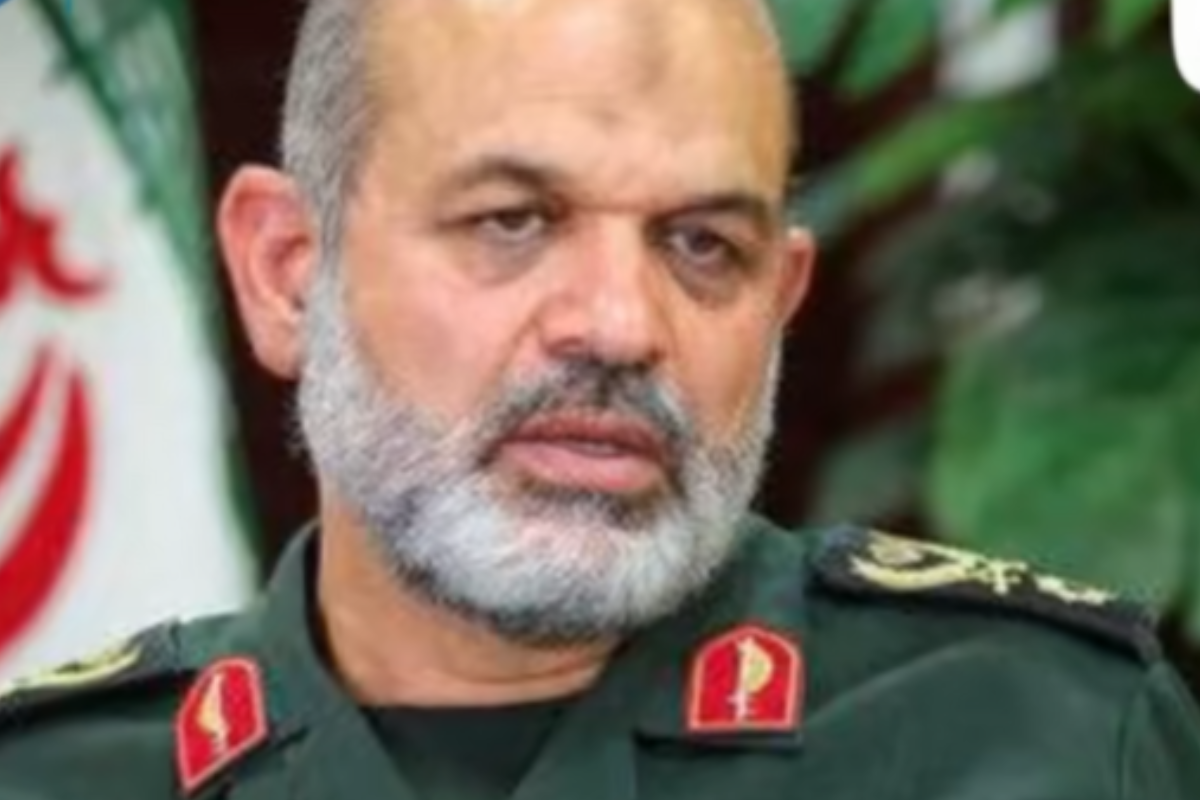
With top Iranian officials eliminated in US-Israeli airstrikes earlier this year, Maj Gen Ahmad Vahidi has stepped forward as the Islamic Republic's new power player. The seasoned IRGC commander was formally appointed its chief on 1 March 2026, days after the deaths of his predecessors in the opening phase of the conflict.
As Tehran balances a precarious ceasefire with Washington and persistent threats in the Strait of Hormuz, Vahidi is now viewed by many observers as the figure effectively steering the regime's security decisions and response strategy.
Vahidi, born Vahid Shahcheraghi in Shiraz in 1958, joined the Revolutionary Guards in 1979 in the immediate aftermath of the Islamic Revolution. He advanced through intelligence positions, serving as deputy head of IRGC intelligence during the Iran-Iraq war. In 1988 he was named the first commander of the Quds Force, the IRGC's expeditionary arm responsible for overseas operations and support to allied militias as reported by The Economic Times.
He led the force until 1998, laying the foundations for Iran's regional influence before passing command to Qasem Soleimani. Vahidi's tenure has been associated with several high-profile international incidents. He has been accused by Western governments and Argentina of involvement in the 1983 Beirut barracks attack that killed 241 US service members and the 1994 bombing of the AMIA Jewish centre in Buenos Aires that left 85 dead.
These allegations have resulted in international sanctions and an Interpol red notice. Academically trained with degrees in electronics, industrial engineering and a doctorate in strategic studies, he has always combined operational expertise with ideological commitment to the revolution's principles. He is under multiple layers of sanctions by the United States and the European Union.
Al Jazeera reports that after his Quds Force years Vahidi transitioned into senior government positions. He served as minister of defence and armed forces logistics under President Mahmoud Ahmadinejad, where he oversaw efforts to modernise Iran's military capabilities and expand defence ties. In 2021 he was appointed interior minister by President Ebrahim Raisi, a post he held until 2024.
In that capacity he managed internal security, including the response to nationwide protests following the death of Mahsa Amini. By late 2025 Vahidi had returned to the IRGC as deputy commander-in-chief, a move seen as preparation for greater responsibility. The airstrikes of 28 February 2026, which claimed the lives ofSupreme Leader Ali Khamenei, IRGC commander Mohammad Pakpour and several other top officials including defence council secretary Ali Shamkhani, left a gaping hole in the chain of command.
Vahidi's appointment asfull commanderon 1 March was announced by state media and came as little surprise given his prior deputy role and decades of experience.
Now at the helm, Vahidi has assumed control over both tactical military operations and broader strategic deliberations. He has reinforced hardline positions, resisting concessions on Iran's nuclear programme and long-range missiles while directing IRGC activities around key waterways.
BREAKING: Brigadier General Ahmad Vahidi Named New IRGC Commander-in-Chief.#santamediaug#usa🇺🇸#israel🇮🇱#iran🇮🇷
Source: International Business Times UK
