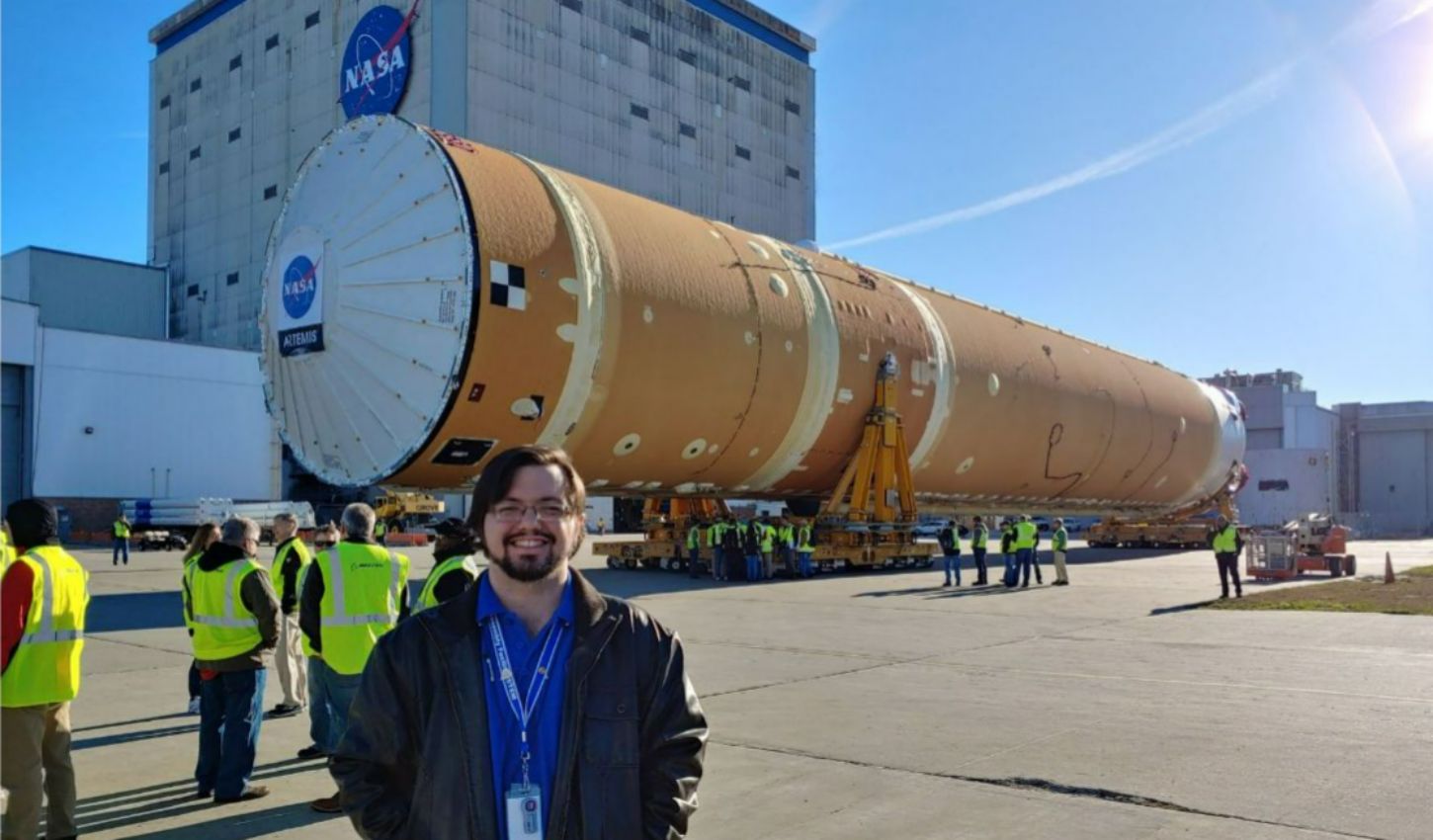
As scrutiny intensifies over a string of deaths and disappearances involvingeleven USscientists linked to sensitive research, renewed attention has turned to the case of Joshua LeBlanc, a 29-year-oldNASA engineerwhose death in 2025 is now being revisited.
In July 2025, LeBlanc died in a tragic traffic accident in Alabama, where his Tesla caught fire with him inside. The circumstances surrounding his disappearance, final movements and the fatal crash have since fuelled public discussion.
On 22 July 2025, a 29-year-old NASA engineer, Joshua LeBlanc, was involved in a fiery crash in Huntsville, Alabama. Unfortunately, the aerospace scientist has succumbed to the crash and burned along with his Tesla. LeBlanc's Tesla was found burned beyond recognition, Alabama Law Enforcement said.
According to the reports, his vehicle collided with a guardrail, then several trees, before the vehicle burst into flames. His body was also burned beyond recognition, and police confirmed his identity three days later after his body was transported to the Alabama Department of Forensic Sciences.
That same day, his family reported him missing, and he also uncharacteristically failed to show up to his work as an aerospace technologies electrical engineer at NASA, where he worked on nuclear propulsion projects.
As reported byThe Post, his family had feared before that the scientist was abducted and that he had left his phone and wallet in his home at the time of the disappearance. His family said that it's unusual for their son not to communicate with them.
During the investigation, authorities found that LeBlanc's vehicle was at the airport in Huntsville for four hours on the morning of his death — a trip that his family said was not part of his plan for that day.
In his LinkedIn profile, LeBlanc has been working at NASA for about five-and-a-half years. During those times, he was a team lead for NASA's Space Nuclear Propulsion (SNP) Instrumentation and Control (I&C) Maturation, theEconomic Timesreported.
LeBlanc also contributed work on advanced research programmes focused on spacecraft propulsion, including efforts linked to next-generation nuclear thermal propulsion such as DRACO-related projects. His position placed him within a highly specialised area dedicated to developing cutting-edge propulsion technologies.
In his obituary, LeBlanc was described by his family as 'Hardworking, funny, and fiercely loyal, Josh leaves behind a legacy of love, laughter, and excellence.'
Source: International Business Times UK
