Authored by Victoria Friedman via The Epoch Times,
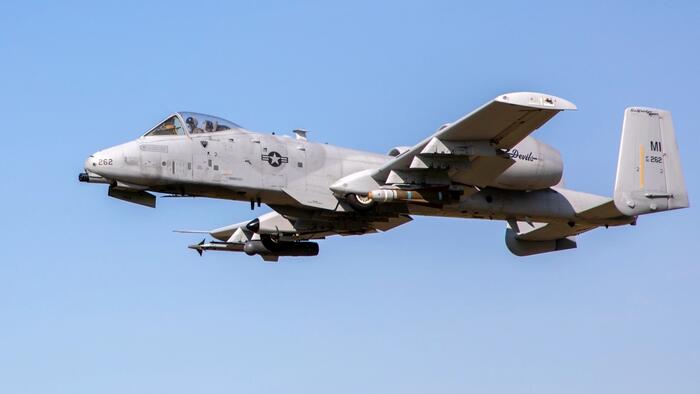
The U.S. Air Force said on April 20 that it would extend the life of the A-10 Thunderbolt II attack aircraft—commonly referred to as the “Warthog”—for another four years beyond its previously stated retirement deadline of 2026.
Air Force Secretary Troy Meink wrote on X that following consultation with Secretary of War Pete Hegseth,the Air Force “will EXTEND the A-10 ‘Warthog’ platform to 2030,” adding that this decision “preserves combat power as the Defense Industrial Base works to increase combat aircraft production.”
The A-10 is being deployed in operations in Iran, according to U.S. Central Command (CENTCOM), which said in a March 25 post on X that it had been used to strike Iranian naval vessels during Operation Epic Fury.
Chairman of the Joint Chiefs of Staff Gen. Dan Caine previouslyrevealedat a March 19 Pentagon news conference thatthe craft was “now in the fight across the southern flank and is hunting and killing fast-attack watercraft in the Strait of Hormuz.”
According to an Air Force fact sheet, the Warthog was the first Air Force aircraft designed specifically to provide air support for ground forces. It can fly near combat areas for extended periods of time, and be used as an attack aircraft against ground targets, “including tanks and other armored vehicles.”
Former F-16 Thunderbird fighter pilot Ryan Bodenheimer, who runs the YouTube channel “Max Afterburner,”described A-10 in a March 15 video as “America’s flying tank.”He said it could be used to take down Shahed drones, as well as some of the fast-attack boats Iran still had in service at the time.
The Warthog is resilient, able to survive hits from armor-piercing and high-explosive projectiles up to 23mm, according to the Air Force.
However, they’re not invulnerable. On April 3, a pilotejectedfrom an A-10 after it was hit, with Iranian forcestaking credit. The pilot parachuted to safety in Kuwait before the Warthog crashed.
Some in the Air Force said that the A-10, which first flew in 1976, is too old, too slow, and too expensive to maintain, prompting calls for its retirement to free up funds to develop modern defense solutions such as hypersonic weapons. But those opposed to the retirement say that cutting the fleet before there is a suitable replacement could leave ground troops without adequate air support.
Source: ZeroHedge News
