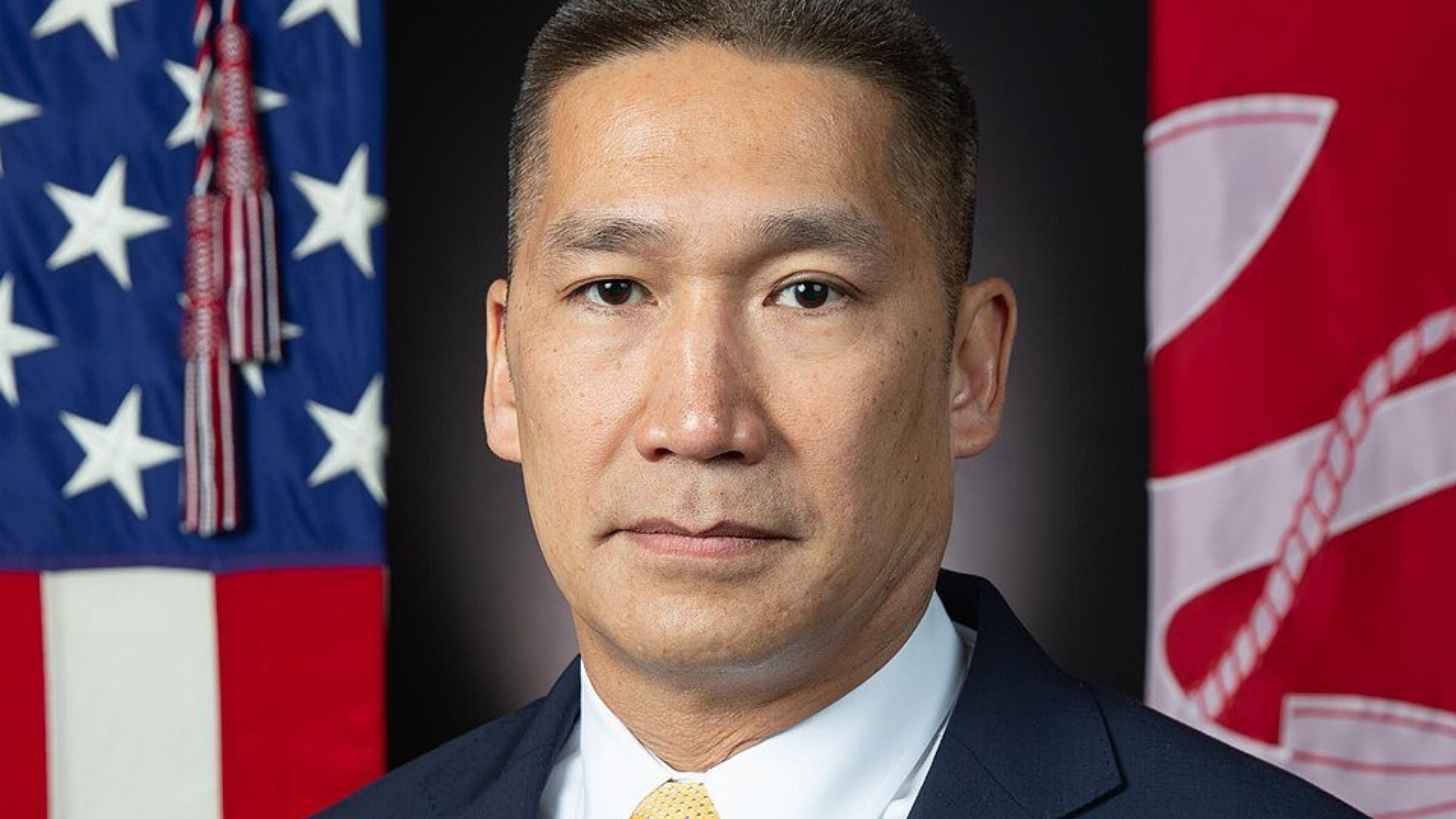
President Donald Trump's decision to replace the US Navy Secretary has ignited fresh controversy in Washington, as his reported choice, Hung Cao, faces renewed scrutiny over past statements and questions about his background just as he is being considered for one of the Pentagon's most visible civilian roles.
The move follows the departure of Navy SecretaryJohn Phelan, with reports indicating that Cao, a former Senate candidate and Navy veteran, is being lined up for the role. The announcement has rapidly drawn political and public reaction, with critics pointing to a series of controversial remarks attributed to Cao in recent years.
The developments come at a sensitive moment for US military leadership, where credibility, experience and public trust remain central to the role overseeing one of the world's largest naval forces.
The reported replacement of John Phelan marks a significant shift within theDepartment of the Navy, a civilian-led branch responsible for both the US Navy and Marine Corps. According to defence sector reporting, Phelan's departure forms part of a broader reshaping of leadership under Trump's administration.
Hung Cao, a retired US Navy officer and former Republican Senate candidate in Virginia, has emerged as a central figure in that transition. His potential appointment has drawn attention not only because of his military background but also due to his public profile during his political campaign.
The Department of the Navy operates under the US Department of Defense, and the Secretary's role involves oversight of personnel, procurement and operational readiness. Any leadership change therefore carries implications for both military strategy and institutional stability.
Trump has fired Navy Secretary John Phelan, replacing him with failed VA Senate candidate Hung Cao who:— Asked for a KKK hood with "slits" as eye holes instead of circles so he could see better— Falsely claimed to have been injured in combat— Warned that a wave of…pic.twitter.com/v6353CDjop
In that material, Cao is shown making comments about race, including a claim that he could identify as African American based on having lived in Africa. The context and intent of the remark have been debated, but it has nonetheless drawn backlash from critics who argue it reflects a misunderstanding of racial identity in the United States.
Separate comments referenced in the same campaign material include warnings about 'witchcraft' influencing American society. Cao's remarks appeared to be framed within a broader critique of cultural and political trends, though opponents have characterised them as extreme.
The resurfacing of these statements has intensified scrutiny as his name is linked to a senior national security role. Public reaction has been amplified across social media platforms, where clips and excerpts have circulated widely.
Source: International Business Times UK
