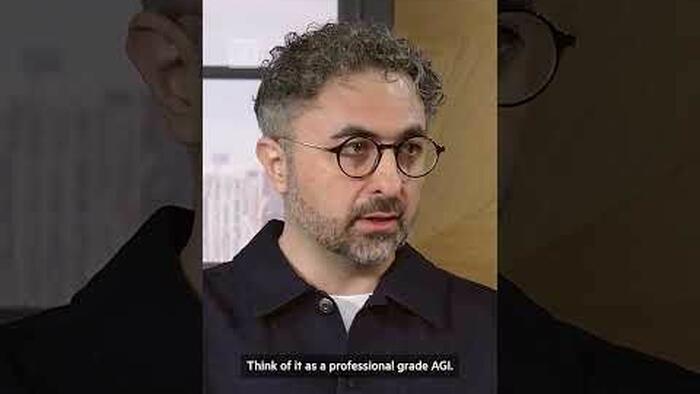
The man leading Microsoft’s AI sprawling efforts is sounding the alarm over imminent mass labor disruptions, warning thatthe overwhelming majority of white-collar professional work could vanish to automationfar sooner than most business and policy leaders are willing to admit - somethingwe've been concerned aboutsince early 2023.
In an interview with the Financial Times, Microsoft AI CEO Mustafa Suleyman forecasted that within the next two years a vast swath of desk-bound tasks will be swallowed by AI.
“I think we’re going to have a human-level performance on most, if not all, professional tasks - so white collar where you’re sitting down at a computer, either being a lawyer, accountant, or project manager, or marketing person -most of the tasks will be fully automated by an AI within the next 12 to 18 months,” Suleyman said when asked about the time table for Artificial general intelligence, commonly known as AGI.
The specter of mass job displacement now haunts governments around the world, even as the true body count remains murky amid broader economic headwinds.
A recent Challengerreportshowed thatAI was blamed for 7,624 job cuts in January, 7% of the month’s total, and linked to 54,836 announced layoffs across 2025. Since tracking started in 2023, AI has been cited in 79,449 planned cuts, roughly 3% of the overall tally.
"It’s difficult to say how big an impact AI is having on layoffs specifically. We know leaders are talking about AI, many companies want to implement it in operations, and the market appears to be rewarding companies that mention it," said Challenger.
A stark illustration is unfolding at Bay Area startup Mercor,which hasquietly hired tens of thousands of white-collar contractors, often highly credentialed specialists in medicine, law, finance, engineering, writing, and the arts, to train the very AI systems destined to replace them. Paid $45 to $250 per hour for weeks or months of reviewing and refining model outputs for giants like OpenAI and Anthropic,these workers are, in effect, being paid to hand over the keys to their own obsolescence, theWall Street Journalreports.
However, some jobs still remain immune from AI - for now. High on the list areoccupations that hinge on physical presence and skills such as healthcare professionals and tradesmen such as plumbers and welders. Those are just a sample of jobs that are safe until AI-powered Optimus robots are on the move. Want to know if your job is safe? Clickhereto see the list.
On the other side of the argument - Morgan Stanley analysts recentlywarnedclients that "AI impacts may take longer to appear in economic data,"with the first undeniable waves likely hitting "later this decade and into the next."
"While AI adoption may be faster than past technologies,we think it is still too early to see it in economic data, outside of business investment," Stephen Byrd, the bank's Global Head of Thematic Research and Sustainability Research,toldclients.
Source: ZeroHedge News
