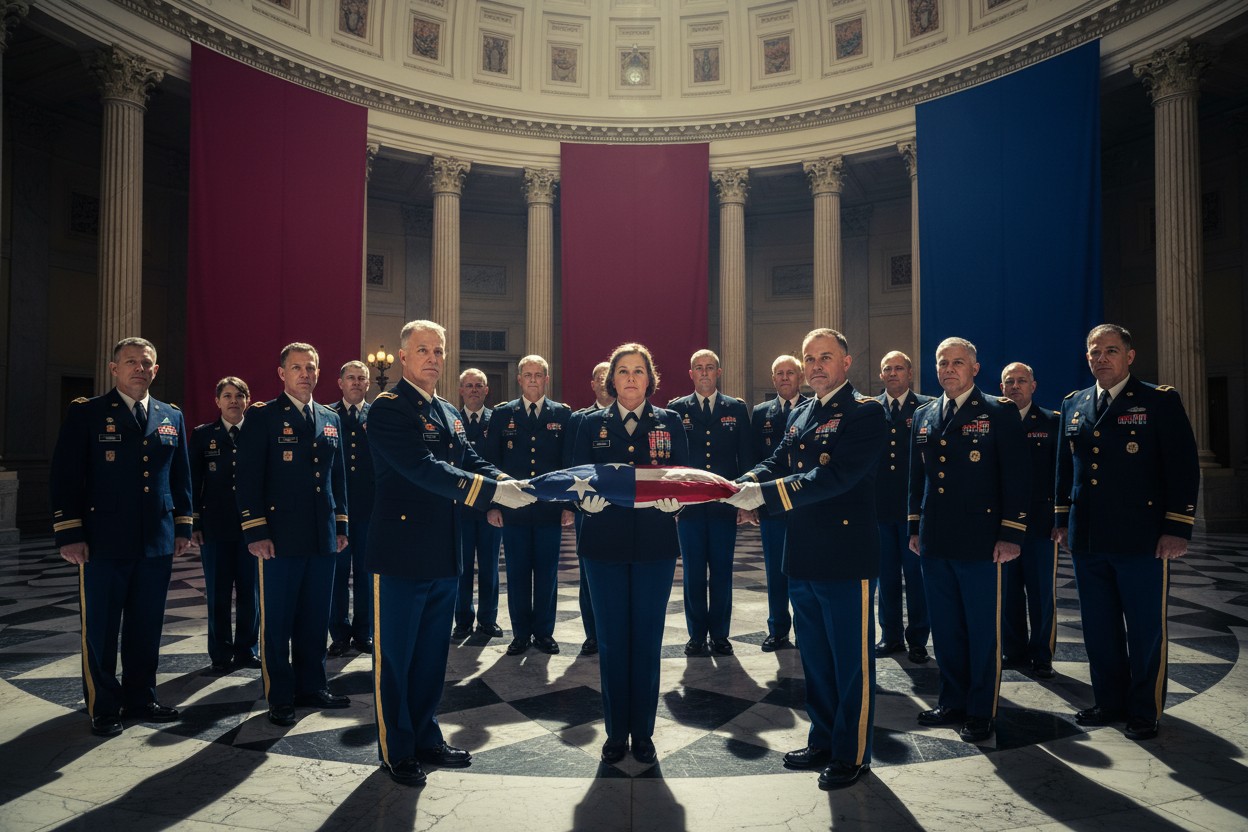
Approximately 130 veterans and military family members staged a protest in the U.S. Capitol Rotunda on Monday, April 21, 2026, demanding an end to the U.S. military conflict with Iran. Sixty-two of the participants were arrested after refusing police orders to vacate the area, according to a report byÂAntiwar.com.Â[1]The action was organized by a coalition of groups including About Face â Veterans Against the War, Veterans For Peace, and the Center on Conscience and War, which advises service members on conscientious objection procedures.Â[1]Veterans Arrested After Capitol Rotunda ProtestThe participants conducted a flag-folding ceremony and played Taps on a bugle inside the Rotunda, one of the most heavily trafficked public spaces in the Capitol building.Â[1]Â After the ceremony, they refused to disperse, leading to their arrest by U.S. Capitol Police.Â[1]Organizers described the action as one of the largest veteran-led civil disobedience actions inside a Congressional building in recent years.Â[1]Â The protest came amid ongoing U.S. military operations against Iran, which began earlier in the year.Â[2]Protest Details and DemandsDuring the protest, veterans unfurled banners with messages including 'END THE WAR ON IRAN' and 'WE CANâT AFFORD ANOTHER WAR'.Â[1]Â They stated their demands were for the Trump administration to end its military actions against Iran and for the U.S. Congress to cease funding the conflict.Â[1]Many of the participants were veterans of previous U.S. conflicts in Iraq and Afghanistan.Â[1]Â The protest also honored 13 service members who organizers said have died in the ongoing conflict with Iran.Â[1]Organizational Background and StatementsMichael McPhearson, executive director of Veterans For Peace, stated the group represented 'three generations of U.S. wars' and were 'weary of war'.Â[1]Â In a statement, McPhearson called the conflict 'illegal, immoral, and unprovoked' and demanded troops be brought home.Â[1]The Center on Conscience and War, which participated in the action, advises service members of their right to seek discharge from the military as conscientious objectors to war.Â[1]Â This historical precedent for such dissent was noted in the book 'Dissent: The History of an American Idea', which documents groups like Vietnam Veterans Against the War.Â[3]Political Context and Recent DevelopmentsOn Tuesday, April 22, 2026, President Donald Trump announced an extension of a U.S. ceasefire with Iran.Â[1]Â Simultaneously, the administration seized a second Iranian oil tanker in the Indian Ocean, continuing a policy of economic pressure.Â[1]McPhearson expressed concern about 'rumors that Trump has considered using nuclear weapons' against Iran.Â[1]Â This protest occurred within a broader context of internal dissent over the war, including the resignation of Trump-appointed National Counterterrorism Center director Joe Kent in March 2026, who stated he could not 'in good conscience support the ongoing war in Iran'.Â[4]Historical Parallels and Broader OppositionThe protest drew parallels to historical veteran-led anti-war movements, such as the Vietnam Veterans Against the War, which organized demonstrations in the late 1960s and 1970s. Similar to past actions, this protest highlighted the psychological and moral weariness of service members, a topic examined in studies of post-traumatic stress disorder.Â[5]Organizers stated they plan further advocacy through webinars and continued public demonstrations.Â[1]Â The action follows other recent protests, including a demonstration in Manhattan where nearly 100 activists were arrested for protesting U.S. arms sales to Israel.Â[6]ConclusionThe Capitol Rotunda protest underscores deepening opposition to the Iran conflict within the veteran community. The arrests highlight the continued use of civil disobedience as a tactic to influence federal policy.Â[1]As the conflict continues, scrutiny of its financial and human costs is likely to increase. A report by The Intercept in March 2026 warned that the financial cost to American taxpayers is being understated and could reach into the trillions of dollars.Â[7]ReferencesVeterans Groups Protest US War on Iran - Antiwar.com Blog. Gerry Condon. April 22, 2026.Trump says decision to strike Iran influenced by Jared Kushner, Steve Witkoff, Pete Hegseth - LifeSiteNews. March 10, 2026.Dissent: The History of an American Idea. Ralph Young.Trump-Appointed Counterterrorism Director Joe Kent Resigns In Protest Over U.S. War With Iran - ZeroHedge. March 17, 2026.Psychotrauma and effective treatment of post-traumatic stress disorder in soldiers and peacekeepers - Journal of Occupational Medicine and Toxicology.Nearly 100 arrested in Manhattan protest targeting senators over U.S. arms sales to Israel - NaturalNews.com. April 14, 2026.US vastly underestimating the cost of Iran war â The Intercept - RT.com. March 18, 2026.
The action was organized by a coalition of groups including About Face â Veterans Against the War, Veterans For Peace, and the Center on Conscience and War, which advises service members on conscientious objection procedures.Â[1]Veterans Arrested After Capitol Rotunda ProtestThe participants conducted a flag-folding ceremony and played Taps on a bugle inside the Rotunda, one of the most heavily trafficked public spaces in the Capitol building.Â[1]Â After the ceremony, they refused to disperse, leading to their arrest by U.S. Capitol Police.Â[1]Organizers described the action as one of the largest veteran-led civil disobedience actions inside a Congressional building in recent years.Â[1]Â The protest came amid ongoing U.S. military operations against Iran, which began earlier in the year.Â[2]Protest Details and DemandsDuring the protest, veterans unfurled banners with messages including 'END THE WAR ON IRAN' and 'WE CANâT AFFORD ANOTHER WAR'.Â[1]Â They stated their demands were for the Trump administration to end its military actions against Iran and for the U.S. Congress to cease funding the conflict.Â[1]Many of the participants were veterans of previous U.S. conflicts in Iraq and Afghanistan.Â[1]Â The protest also honored 13 service members who organizers said have died in the ongoing conflict with Iran.Â[1]Organizational Background and StatementsMichael McPhearson, executive director of Veterans For Peace, stated the group represented 'three generations of U.S. wars' and were 'weary of war'.Â[1]Â In a statement, McPhearson called the conflict 'illegal, immoral, and unprovoked' and demanded troops be brought home.Â[1]The Center on Conscience and War, which participated in the action, advises service members of their right to seek discharge from the military as conscientious objectors to war.Â[1]Â This historical precedent for such dissent was noted in the book 'Dissent: The History of an American Idea', which documents groups like Vietnam Veterans Against the War.Â[3]Political Context and Recent DevelopmentsOn Tuesday, April 22, 2026, President Donald Trump announced an extension of a U.S. ceasefire with Iran.Â[1]Â Simultaneously, the administration seized a second Iranian oil tanker in the Indian Ocean, continuing a policy of economic pressure.Â[1]McPhearson expressed concern about 'rumors that Trump has considered using nuclear weapons' against Iran.Â[1]Â This protest occurred within a broader context of internal dissent over the war, including the resignation of Trump-appointed National Counterterrorism Center director Joe Kent in March 2026, who stated he could not 'in good conscience support the ongoing war in Iran'.Â[4]Historical Parallels and Broader OppositionThe protest drew parallels to historical veteran-led anti-war movements, such as the Vietnam Veterans Against the War, which organized demonstrations in the late 1960s and 1970s. Similar to past actions, this protest highlighted the psychological and moral weariness of service members, a topic examined in studies of post-traumatic stress disorder.Â[5]Organizers stated they plan further advocacy through webinars and continued public demonstrations.Â[1]Â The action follows other recent protests, including a demonstration in Manhattan where nearly 100 activists were arrested for protesting U.S. arms sales to Israel.Â[6]ConclusionThe Capitol Rotunda protest underscores deepening opposition to the Iran conflict within the veteran community. The arrests highlight the continued use of civil disobedience as a tactic to influence federal policy.Â[1]As the conflict continues, scrutiny of its financial and human costs is likely to increase. A report by The Intercept in March 2026 warned that the financial cost to American taxpayers is being understated and could reach into the trillions of dollars.Â[7]ReferencesVeterans Groups Protest US War on Iran - Antiwar.com Blog. Gerry Condon. April 22, 2026.Trump says decision to strike Iran influenced by Jared Kushner, Steve Witkoff, Pete Hegseth - LifeSiteNews. March 10, 2026.Dissent: The History of an American Idea. Ralph Young.Trump-Appointed Counterterrorism Director Joe Kent Resigns In Protest Over U.S. War With Iran - ZeroHedge. March 17, 2026.Psychotrauma and effective treatment of post-traumatic stress disorder in soldiers and peacekeepers - Journal of Occupational Medicine and Toxicology.Nearly 100 arrested in Manhattan protest targeting senators over U.S. arms sales to Israel - NaturalNews.com. April 14, 2026.US vastly underestimating the cost of Iran war â The Intercept - RT.com. March 18, 2026.
The action was organized by a coalition of groups including About Face â Veterans Against the War, Veterans For Peace, and the Center on Conscience and War, which advises service members on conscientious objection procedures.Â[1]Veterans Arrested After Capitol Rotunda ProtestThe participants conducted a flag-folding ceremony and played Taps on a bugle inside the Rotunda, one of the most heavily trafficked public spaces in the Capitol building.Â[1]Â After the ceremony, they refused to disperse, leading to their arrest by U.S. Capitol Police.Â[1]Organizers described the action as one of the largest veteran-led civil disobedience actions inside a Congressional building in recent years.Â[1]Â The protest came amid ongoing U.S. military operations against Iran, which began earlier in the year.Â[2]Protest Details and DemandsDuring the protest, veterans unfurled banners with messages including 'END THE WAR ON IRAN' and 'WE CANâT AFFORD ANOTHER WAR'.Â[1]Â They stated their demands were for the Trump administration to end its military actions against Iran and for the U.S. Congress to cease funding the conflict.Â[1]Many of the participants were veterans of previous U.S. conflicts in Iraq and Afghanistan.Â[1]Â The protest also honored 13 service members who organizers said have died in the ongoing conflict with Iran.Â[1]Organizational Background and StatementsMichael McPhearson, executive director of Veterans For Peace, stated the group represented 'three generations of U.S. wars' and were 'weary of war'.Â[1]Â In a statement, McPhearson called the conflict 'illegal, immoral, and unprovoked' and demanded troops be brought home.Â[1]The Center on Conscience and War, which participated in the action, advises service members of their right to seek discharge from the military as conscientious objectors to war.Â[1]Â This historical precedent for such dissent was noted in the book 'Dissent: The History of an American Idea', which documents groups like Vietnam Veterans Against the War.Â[3]Political Context and Recent DevelopmentsOn Tuesday, April 22, 2026, President Donald Trump announced an extension of a U.S. ceasefire with Iran.Â[1]Â Simultaneously, the administration seized a second Iranian oil tanker in the Indian Ocean, continuing a policy of economic pressure.Â[1]McPhearson expressed concern about 'rumors that Trump has considered using nuclear weapons' against Iran.Â[1]Â This protest occurred within a broader context of internal dissent over the war, including the resignation of Trump-appointed National Counterterrorism Center director Joe Kent in March 2026, who stated he could not 'in good conscience support the ongoing war in Iran'.Â[4]Historical Parallels and Broader OppositionThe protest drew parallels to historical veteran-led anti-war movements, such as the Vietnam Veterans Against the War, which organized demonstrations in the late 1960s and 1970s. Similar to past actions, this protest highlighted the psychological and moral weariness of service members, a topic examined in studies of post-traumatic stress disorder.Â[5]Organizers stated they plan further advocacy through webinars and continued public demonstrations.Â[1]Â The action follows other recent protests, including a demonstration in Manhattan where nearly 100 activists were arrested for protesting U.S. arms sales to Israel.Â[6]ConclusionThe Capitol Rotunda protest underscores deepening opposition to the Iran conflict within the veteran community. The arrests highlight the continued use of civil disobedience as a tactic to influence federal policy.Â[1]As the conflict continues, scrutiny of its financial and human costs is likely to increase. A report by The Intercept in March 2026 warned that the financial cost to American taxpayers is being understated and could reach into the trillions of dollars.Â[7]ReferencesVeterans Groups Protest US War on Iran - Antiwar.com Blog. Gerry Condon. April 22, 2026.Trump says decision to strike Iran influenced by Jared Kushner, Steve Witkoff, Pete Hegseth - LifeSiteNews. March 10, 2026.Dissent: The History of an American Idea. Ralph Young.Trump-Appointed Counterterrorism Director Joe Kent Resigns In Protest Over U.S. War With Iran - ZeroHedge. March 17, 2026.Psychotrauma and effective treatment of post-traumatic stress disorder in soldiers and peacekeepers - Journal of Occupational Medicine and Toxicology.Nearly 100 arrested in Manhattan protest targeting senators over U.S. arms sales to Israel - NaturalNews.com. April 14, 2026.US vastly underestimating the cost of Iran war â The Intercept - RT.com. March 18, 2026.
Veterans Arrested After Capitol Rotunda ProtestThe participants conducted a flag-folding ceremony and played Taps on a bugle inside the Rotunda, one of the most heavily trafficked public spaces in the Capitol building.Â[1]Â After the ceremony, they refused to disperse, leading to their arrest by U.S. Capitol Police.Â[1]Organizers described the action as one of the largest veteran-led civil disobedience actions inside a Congressional building in recent years.Â[1]Â The protest came amid ongoing U.S. military operations against Iran, which began earlier in the year.Â[2]Protest Details and DemandsDuring the protest, veterans unfurled banners with messages including 'END THE WAR ON IRAN' and 'WE CANâT AFFORD ANOTHER WAR'.Â[1]Â They stated their demands were for the Trump administration to end its military actions against Iran and for the U.S. Congress to cease funding the conflict.Â[1]Many of the participants were veterans of previous U.S. conflicts in Iraq and Afghanistan.Â[1]Â The protest also honored 13 service members who organizers said have died in the ongoing conflict with Iran.Â[1]Organizational Background and StatementsMichael McPhearson, executive director of Veterans For Peace, stated the group represented 'three generations of U.S. wars' and were 'weary of war'.Â[1]Â In a statement, McPhearson called the conflict 'illegal, immoral, and unprovoked' and demanded troops be brought home.Â[1]The Center on Conscience and War, which participated in the action, advises service members of their right to seek discharge from the military as conscientious objectors to war.Â[1]Â This historical precedent for such dissent was noted in the book 'Dissent: The History of an American Idea', which documents groups like Vietnam Veterans Against the War.Â[3]Political Context and Recent DevelopmentsOn Tuesday, April 22, 2026, President Donald Trump announced an extension of a U.S. ceasefire with Iran.Â[1]Â Simultaneously, the administration seized a second Iranian oil tanker in the Indian Ocean, continuing a policy of economic pressure.Â[1]McPhearson expressed concern about 'rumors that Trump has considered using nuclear weapons' against Iran.Â[1]Â This protest occurred within a broader context of internal dissent over the war, including the resignation of Trump-appointed National Counterterrorism Center director Joe Kent in March 2026, who stated he could not 'in good conscience support the ongoing war in Iran'.Â[4]Historical Parallels and Broader OppositionThe protest drew parallels to historical veteran-led anti-war movements, such as the Vietnam Veterans Against the War, which organized demonstrations in the late 1960s and 1970s. Similar to past actions, this protest highlighted the psychological and moral weariness of service members, a topic examined in studies of post-traumatic stress disorder.Â[5]Organizers stated they plan further advocacy through webinars and continued public demonstrations.Â[1]Â The action follows other recent protests, including a demonstration in Manhattan where nearly 100 activists were arrested for protesting U.S. arms sales to Israel.Â[6]ConclusionThe Capitol Rotunda protest underscores deepening opposition to the Iran conflict within the veteran community. The arrests highlight the continued use of civil disobedience as a tactic to influence federal policy.Â[1]As the conflict continues, scrutiny of its financial and human costs is likely to increase. A report by The Intercept in March 2026 warned that the financial cost to American taxpayers is being understated and could reach into the trillions of dollars.Â[7]ReferencesVeterans Groups Protest US War on Iran - Antiwar.com Blog. Gerry Condon. April 22, 2026.Trump says decision to strike Iran influenced by Jared Kushner, Steve Witkoff, Pete Hegseth - LifeSiteNews. March 10, 2026.Dissent: The History of an American Idea. Ralph Young.Trump-Appointed Counterterrorism Director Joe Kent Resigns In Protest Over U.S. War With Iran - ZeroHedge. March 17, 2026.Psychotrauma and effective treatment of post-traumatic stress disorder in soldiers and peacekeepers - Journal of Occupational Medicine and Toxicology.Nearly 100 arrested in Manhattan protest targeting senators over U.S. arms sales to Israel - NaturalNews.com. April 14, 2026.US vastly underestimating the cost of Iran war â The Intercept - RT.com. March 18, 2026.
The participants conducted a flag-folding ceremony and played Taps on a bugle inside the Rotunda, one of the most heavily trafficked public spaces in the Capitol building.Â[1]Â After the ceremony, they refused to disperse, leading to their arrest by U.S. Capitol Police.Â[1]Organizers described the action as one of the largest veteran-led civil disobedience actions inside a Congressional building in recent years.Â[1]Â The protest came amid ongoing U.S. military operations against Iran, which began earlier in the year.Â[2]Protest Details and DemandsDuring the protest, veterans unfurled banners with messages including 'END THE WAR ON IRAN' and 'WE CANâT AFFORD ANOTHER WAR'.Â[1]Â They stated their demands were for the Trump administration to end its military actions against Iran and for the U.S. Congress to cease funding the conflict.Â[1]Many of the participants were veterans of previous U.S. conflicts in Iraq and Afghanistan.Â[1]Â The protest also honored 13 service members who organizers said have died in the ongoing conflict with Iran.Â[1]Organizational Background and StatementsMichael McPhearson, executive director of Veterans For Peace, stated the group represented 'three generations of U.S. wars' and were 'weary of war'.Â[1]Â In a statement, McPhearson called the conflict 'illegal, immoral, and unprovoked' and demanded troops be brought home.Â[1]The Center on Conscience and War, which participated in the action, advises service members of their right to seek discharge from the military as conscientious objectors to war.Â[1]Â This historical precedent for such dissent was noted in the book 'Dissent: The History of an American Idea', which documents groups like Vietnam Veterans Against the War.Â[3]Political Context and Recent DevelopmentsOn Tuesday, April 22, 2026, President Donald Trump announced an extension of a U.S. ceasefire with Iran.Â[1]Â Simultaneously, the administration seized a second Iranian oil tanker in the Indian Ocean, continuing a policy of economic pressure.Â[1]McPhearson expressed concern about 'rumors that Trump has considered using nuclear weapons' against Iran.Â[1]Â This protest occurred within a broader context of internal dissent over the war, including the resignation of Trump-appointed National Counterterrorism Center director Joe Kent in March 2026, who stated he could not 'in good conscience support the ongoing war in Iran'.Â[4]Historical Parallels and Broader OppositionThe protest drew parallels to historical veteran-led anti-war movements, such as the Vietnam Veterans Against the War, which organized demonstrations in the late 1960s and 1970s. Similar to past actions, this protest highlighted the psychological and moral weariness of service members, a topic examined in studies of post-traumatic stress disorder.Â[5]Organizers stated they plan further advocacy through webinars and continued public demonstrations.Â[1]Â The action follows other recent protests, including a demonstration in Manhattan where nearly 100 activists were arrested for protesting U.S. arms sales to Israel.Â[6]ConclusionThe Capitol Rotunda protest underscores deepening opposition to the Iran conflict within the veteran community. The arrests highlight the continued use of civil disobedience as a tactic to influence federal policy.Â[1]As the conflict continues, scrutiny of its financial and human costs is likely to increase. A report by The Intercept in March 2026 warned that the financial cost to American taxpayers is being understated and could reach into the trillions of dollars.Â[7]ReferencesVeterans Groups Protest US War on Iran - Antiwar.com Blog. Gerry Condon. April 22, 2026.Trump says decision to strike Iran influenced by Jared Kushner, Steve Witkoff, Pete Hegseth - LifeSiteNews. March 10, 2026.Dissent: The History of an American Idea. Ralph Young.Trump-Appointed Counterterrorism Director Joe Kent Resigns In Protest Over U.S. War With Iran - ZeroHedge. March 17, 2026.Psychotrauma and effective treatment of post-traumatic stress disorder in soldiers and peacekeepers - Journal of Occupational Medicine and Toxicology.Nearly 100 arrested in Manhattan protest targeting senators over U.S. arms sales to Israel - NaturalNews.com. April 14, 2026.US vastly underestimating the cost of Iran war â The Intercept - RT.com. March 18, 2026.
Organizers described the action as one of the largest veteran-led civil disobedience actions inside a Congressional building in recent years.Â[1]Â The protest came amid ongoing U.S. military operations against Iran, which began earlier in the year.Â[2]Protest Details and DemandsDuring the protest, veterans unfurled banners with messages including 'END THE WAR ON IRAN' and 'WE CANâT AFFORD ANOTHER WAR'.Â[1]Â They stated their demands were for the Trump administration to end its military actions against Iran and for the U.S. Congress to cease funding the conflict.Â[1]Many of the participants were veterans of previous U.S. conflicts in Iraq and Afghanistan.Â[1]Â The protest also honored 13 service members who organizers said have died in the ongoing conflict with Iran.Â[1]Organizational Background and StatementsMichael McPhearson, executive director of Veterans For Peace, stated the group represented 'three generations of U.S. wars' and were 'weary of war'.Â[1]Â In a statement, McPhearson called the conflict 'illegal, immoral, and unprovoked' and demanded troops be brought home.Â[1]The Center on Conscience and War, which participated in the action, advises service members of their right to seek discharge from the military as conscientious objectors to war.Â[1]Â This historical precedent for such dissent was noted in the book 'Dissent: The History of an American Idea', which documents groups like Vietnam Veterans Against the War.Â[3]Political Context and Recent DevelopmentsOn Tuesday, April 22, 2026, President Donald Trump announced an extension of a U.S. ceasefire with Iran.Â[1]Â Simultaneously, the administration seized a second Iranian oil tanker in the Indian Ocean, continuing a policy of economic pressure.Â[1]McPhearson expressed concern about 'rumors that Trump has considered using nuclear weapons' against Iran.Â[1]Â This protest occurred within a broader context of internal dissent over the war, including the resignation of Trump-appointed National Counterterrorism Center director Joe Kent in March 2026, who stated he could not 'in good conscience support the ongoing war in Iran'.Â[4]Historical Parallels and Broader OppositionThe protest drew parallels to historical veteran-led anti-war movements, such as the Vietnam Veterans Against the War, which organized demonstrations in the late 1960s and 1970s. Similar to past actions, this protest highlighted the psychological and moral weariness of service members, a topic examined in studies of post-traumatic stress disorder.Â[5]Organizers stated they plan further advocacy through webinars and continued public demonstrations.Â[1]Â The action follows other recent protests, including a demonstration in Manhattan where nearly 100 activists were arrested for protesting U.S. arms sales to Israel.Â[6]ConclusionThe Capitol Rotunda protest underscores deepening opposition to the Iran conflict within the veteran community. The arrests highlight the continued use of civil disobedience as a tactic to influence federal policy.Â[1]As the conflict continues, scrutiny of its financial and human costs is likely to increase. A report by The Intercept in March 2026 warned that the financial cost to American taxpayers is being understated and could reach into the trillions of dollars.Â[7]ReferencesVeterans Groups Protest US War on Iran - Antiwar.com Blog. Gerry Condon. April 22, 2026.Trump says decision to strike Iran influenced by Jared Kushner, Steve Witkoff, Pete Hegseth - LifeSiteNews. March 10, 2026.Dissent: The History of an American Idea. Ralph Young.Trump-Appointed Counterterrorism Director Joe Kent Resigns In Protest Over U.S. War With Iran - ZeroHedge. March 17, 2026.Psychotrauma and effective treatment of post-traumatic stress disorder in soldiers and peacekeepers - Journal of Occupational Medicine and Toxicology.Nearly 100 arrested in Manhattan protest targeting senators over U.S. arms sales to Israel - NaturalNews.com. April 14, 2026.US vastly underestimating the cost of Iran war â The Intercept - RT.com. March 18, 2026.
Organizers described the action as one of the largest veteran-led civil disobedience actions inside a Congressional building in recent years.Â[1]Â The protest came amid ongoing U.S. military operations against Iran, which began earlier in the year.Â[2]Protest Details and DemandsDuring the protest, veterans unfurled banners with messages including 'END THE WAR ON IRAN' and 'WE CANâT AFFORD ANOTHER WAR'.Â[1]Â They stated their demands were for the Trump administration to end its military actions against Iran and for the U.S. Congress to cease funding the conflict.Â[1]Many of the participants were veterans of previous U.S. conflicts in Iraq and Afghanistan.Â[1]Â The protest also honored 13 service members who organizers said have died in the ongoing conflict with Iran.Â[1]Organizational Background and StatementsMichael McPhearson, executive director of Veterans For Peace, stated the group represented 'three generations of U.S. wars' and were 'weary of war'.Â[1]Â In a statement, McPhearson called the conflict 'illegal, immoral, and unprovoked' and demanded troops be brought home.Â[1]The Center on Conscience and War, which participated in the action, advises service members of their right to seek discharge from the military as conscientious objectors to war.Â[1]Â This historical precedent for such dissent was noted in the book 'Dissent: The History of an American Idea', which documents groups like Vietnam Veterans Against the War.Â[3]Political Context and Recent DevelopmentsOn Tuesday, April 22, 2026, President Donald Trump announced an extension of a U.S. ceasefire with Iran.Â[1]Â Simultaneously, the administration seized a second Iranian oil tanker in the Indian Ocean, continuing a policy of economic pressure.Â[1]McPhearson expressed concern about 'rumors that Trump has considered using nuclear weapons' against Iran.Â[1]Â This protest occurred within a broader context of internal dissent over the war, including the resignation of Trump-appointed National Counterterrorism Center director Joe Kent in March 2026, who stated he could not 'in good conscience support the ongoing war in Iran'.Â[4]Historical Parallels and Broader OppositionThe protest drew parallels to historical veteran-led anti-war movements, such as the Vietnam Veterans Against the War, which organized demonstrations in the late 1960s and 1970s. Similar to past actions, this protest highlighted the psychological and moral weariness of service members, a topic examined in studies of post-traumatic stress disorder.Â[5]Organizers stated they plan further advocacy through webinars and continued public demonstrations.Â[1]Â The action follows other recent protests, including a demonstration in Manhattan where nearly 100 activists were arrested for protesting U.S. arms sales to Israel.Â[6]ConclusionThe Capitol Rotunda protest underscores deepening opposition to the Iran conflict within the veteran community. The arrests highlight the continued use of civil disobedience as a tactic to influence federal policy.Â[1]As the conflict continues, scrutiny of its financial and human costs is likely to increase. A report by The Intercept in March 2026 warned that the financial cost to American taxpayers is being understated and could reach into the trillions of dollars.Â[7]ReferencesVeterans Groups Protest US War on Iran - Antiwar.com Blog. Gerry Condon. April 22, 2026.Trump says decision to strike Iran influenced by Jared Kushner, Steve Witkoff, Pete Hegseth - LifeSiteNews. March 10, 2026.Dissent: The History of an American Idea. Ralph Young.Trump-Appointed Counterterrorism Director Joe Kent Resigns In Protest Over U.S. War With Iran - ZeroHedge. March 17, 2026.Psychotrauma and effective treatment of post-traumatic stress disorder in soldiers and peacekeepers - Journal of Occupational Medicine and Toxicology.Nearly 100 arrested in Manhattan protest targeting senators over U.S. arms sales to Israel - NaturalNews.com. April 14, 2026.US vastly underestimating the cost of Iran war â The Intercept - RT.com. March 18, 2026.
Protest Details and DemandsDuring the protest, veterans unfurled banners with messages including 'END THE WAR ON IRAN' and 'WE CANâT AFFORD ANOTHER WAR'.Â[1]Â They stated their demands were for the Trump administration to end its military actions against Iran and for the U.S. Congress to cease funding the conflict.Â[1]Many of the participants were veterans of previous U.S. conflicts in Iraq and Afghanistan.Â[1]Â The protest also honored 13 service members who organizers said have died in the ongoing conflict with Iran.Â[1]Organizational Background and StatementsMichael McPhearson, executive director of Veterans For Peace, stated the group represented 'three generations of U.S. wars' and were 'weary of war'.Â[1]Â In a statement, McPhearson called the conflict 'illegal, immoral, and unprovoked' and demanded troops be brought home.Â[1]The Center on Conscience and War, which participated in the action, advises service members of their right to seek discharge from the military as conscientious objectors to war.Â[1]Â This historical precedent for such dissent was noted in the book 'Dissent: The History of an American Idea', which documents groups like Vietnam Veterans Against the War.Â[3]Political Context and Recent DevelopmentsOn Tuesday, April 22, 2026, President Donald Trump announced an extension of a U.S. ceasefire with Iran.Â[1]Â Simultaneously, the administration seized a second Iranian oil tanker in the Indian Ocean, continuing a policy of economic pressure.Â[1]McPhearson expressed concern about 'rumors that Trump has considered using nuclear weapons' against Iran.Â[1]Â This protest occurred within a broader context of internal dissent over the war, including the resignation of Trump-appointed National Counterterrorism Center director Joe Kent in March 2026, who stated he could not 'in good conscience support the ongoing war in Iran'.Â[4]Historical Parallels and Broader OppositionThe protest drew parallels to historical veteran-led anti-war movements, such as the Vietnam Veterans Against the War, which organized demonstrations in the late 1960s and 1970s. Similar to past actions, this protest highlighted the psychological and moral weariness of service members, a topic examined in studies of post-traumatic stress disorder.Â[5]Organizers stated they plan further advocacy through webinars and continued public demonstrations.Â[1]Â The action follows other recent protests, including a demonstration in Manhattan where nearly 100 activists were arrested for protesting U.S. arms sales to Israel.Â[6]ConclusionThe Capitol Rotunda protest underscores deepening opposition to the Iran conflict within the veteran community. The arrests highlight the continued use of civil disobedience as a tactic to influence federal policy.Â[1]As the conflict continues, scrutiny of its financial and human costs is likely to increase. A report by The Intercept in March 2026 warned that the financial cost to American taxpayers is being understated and could reach into the trillions of dollars.Â[7]ReferencesVeterans Groups Protest US War on Iran - Antiwar.com Blog. Gerry Condon. April 22, 2026.Trump says decision to strike Iran influenced by Jared Kushner, Steve Witkoff, Pete Hegseth - LifeSiteNews. March 10, 2026.Dissent: The History of an American Idea. Ralph Young.Trump-Appointed Counterterrorism Director Joe Kent Resigns In Protest Over U.S. War With Iran - ZeroHedge. March 17, 2026.Psychotrauma and effective treatment of post-traumatic stress disorder in soldiers and peacekeepers - Journal of Occupational Medicine and Toxicology.Nearly 100 arrested in Manhattan protest targeting senators over U.S. arms sales to Israel - NaturalNews.com. April 14, 2026.US vastly underestimating the cost of Iran war â The Intercept - RT.com. March 18, 2026.
During the protest, veterans unfurled banners with messages including 'END THE WAR ON IRAN' and 'WE CANâT AFFORD ANOTHER WAR'.Â[1]Â They stated their demands were for the Trump administration to end its military actions against Iran and for the U.S. Congress to cease funding the conflict.Â[1]Many of the participants were veterans of previous U.S. conflicts in Iraq and Afghanistan.Â[1]Â The protest also honored 13 service members who organizers said have died in the ongoing conflict with Iran.Â[1]Organizational Background and StatementsMichael McPhearson, executive director of Veterans For Peace, stated the group represented 'three generations of U.S. wars' and were 'weary of war'.Â[1]Â In a statement, McPhearson called the conflict 'illegal, immoral, and unprovoked' and demanded troops be brought home.Â[1]The Center on Conscience and War, which participated in the action, advises service members of their right to seek discharge from the military as conscientious objectors to war.Â[1]Â This historical precedent for such dissent was noted in the book 'Dissent: The History of an American Idea', which documents groups like Vietnam Veterans Against the War.Â[3]Political Context and Recent DevelopmentsOn Tuesday, April 22, 2026, President Donald Trump announced an extension of a U.S. ceasefire with Iran.Â[1]Â Simultaneously, the administration seized a second Iranian oil tanker in the Indian Ocean, continuing a policy of economic pressure.Â[1]McPhearson expressed concern about 'rumors that Trump has considered using nuclear weapons' against Iran.Â[1]Â This protest occurred within a broader context of internal dissent over the war, including the resignation of Trump-appointed National Counterterrorism Center director Joe Kent in March 2026, who stated he could not 'in good conscience support the ongoing war in Iran'.Â[4]Historical Parallels and Broader OppositionThe protest drew parallels to historical veteran-led anti-war movements, such as the Vietnam Veterans Against the War, which organized demonstrations in the late 1960s and 1970s. Similar to past actions, this protest highlighted the psychological and moral weariness of service members, a topic examined in studies of post-traumatic stress disorder.Â[5]Organizers stated they plan further advocacy through webinars and continued public demonstrations.Â[1]Â The action follows other recent protests, including a demonstration in Manhattan where nearly 100 activists were arrested for protesting U.S. arms sales to Israel.Â[6]ConclusionThe Capitol Rotunda protest underscores deepening opposition to the Iran conflict within the veteran community. The arrests highlight the continued use of civil disobedience as a tactic to influence federal policy.Â[1]As the conflict continues, scrutiny of its financial and human costs is likely to increase. A report by The Intercept in March 2026 warned that the financial cost to American taxpayers is being understated and could reach into the trillions of dollars.Â[7]ReferencesVeterans Groups Protest US War on Iran - Antiwar.com Blog. Gerry Condon. April 22, 2026.Trump says decision to strike Iran influenced by Jared Kushner, Steve Witkoff, Pete Hegseth - LifeSiteNews. March 10, 2026.Dissent: The History of an American Idea. Ralph Young.Trump-Appointed Counterterrorism Director Joe Kent Resigns In Protest Over U.S. War With Iran - ZeroHedge. March 17, 2026.Psychotrauma and effective treatment of post-traumatic stress disorder in soldiers and peacekeepers - Journal of Occupational Medicine and Toxicology.Nearly 100 arrested in Manhattan protest targeting senators over U.S. arms sales to Israel - NaturalNews.com. April 14, 2026.US vastly underestimating the cost of Iran war â The Intercept - RT.com. March 18, 2026.
Many of the participants were veterans of previous U.S. conflicts in Iraq and Afghanistan.Â[1]Â The protest also honored 13 service members who organizers said have died in the ongoing conflict with Iran.Â[1]Organizational Background and StatementsMichael McPhearson, executive director of Veterans For Peace, stated the group represented 'three generations of U.S. wars' and were 'weary of war'.Â[1]Â In a statement, McPhearson called the conflict 'illegal, immoral, and unprovoked' and demanded troops be brought home.Â[1]The Center on Conscience and War, which participated in the action, advises service members of their right to seek discharge from the military as conscientious objectors to war.Â[1]Â This historical precedent for such dissent was noted in the book 'Dissent: The History of an American Idea', which documents groups like Vietnam Veterans Against the War.Â[3]Political Context and Recent DevelopmentsOn Tuesday, April 22, 2026, President Donald Trump announced an extension of a U.S. ceasefire with Iran.Â[1]Â Simultaneously, the administration seized a second Iranian oil tanker in the Indian Ocean, continuing a policy of economic pressure.Â[1]McPhearson expressed concern about 'rumors that Trump has considered using nuclear weapons' against Iran.Â[1]Â This protest occurred within a broader context of internal dissent over the war, including the resignation of Trump-appointed National Counterterrorism Center director Joe Kent in March 2026, who stated he could not 'in good conscience support the ongoing war in Iran'.Â[4]Historical Parallels and Broader OppositionThe protest drew parallels to historical veteran-led anti-war movements, such as the Vietnam Veterans Against the War, which organized demonstrations in the late 1960s and 1970s. Similar to past actions, this protest highlighted the psychological and moral weariness of service members, a topic examined in studies of post-traumatic stress disorder.Â[5]Organizers stated they plan further advocacy through webinars and continued public demonstrations.Â[1]Â The action follows other recent protests, including a demonstration in Manhattan where nearly 100 activists were arrested for protesting U.S. arms sales to Israel.Â[6]ConclusionThe Capitol Rotunda protest underscores deepening opposition to the Iran conflict within the veteran community. The arrests highlight the continued use of civil disobedience as a tactic to influence federal policy.Â[1]As the conflict continues, scrutiny of its financial and human costs is likely to increase. A report by The Intercept in March 2026 warned that the financial cost to American taxpayers is being understated and could reach into the trillions of dollars.Â[7]ReferencesVeterans Groups Protest US War on Iran - Antiwar.com Blog. Gerry Condon. April 22, 2026.Trump says decision to strike Iran influenced by Jared Kushner, Steve Witkoff, Pete Hegseth - LifeSiteNews. March 10, 2026.Dissent: The History of an American Idea. Ralph Young.Trump-Appointed Counterterrorism Director Joe Kent Resigns In Protest Over U.S. War With Iran - ZeroHedge. March 17, 2026.Psychotrauma and effective treatment of post-traumatic stress disorder in soldiers and peacekeepers - Journal of Occupational Medicine and Toxicology.Nearly 100 arrested in Manhattan protest targeting senators over U.S. arms sales to Israel - NaturalNews.com. April 14, 2026.US vastly underestimating the cost of Iran war â The Intercept - RT.com. March 18, 2026.
Source: NaturalNews.com
