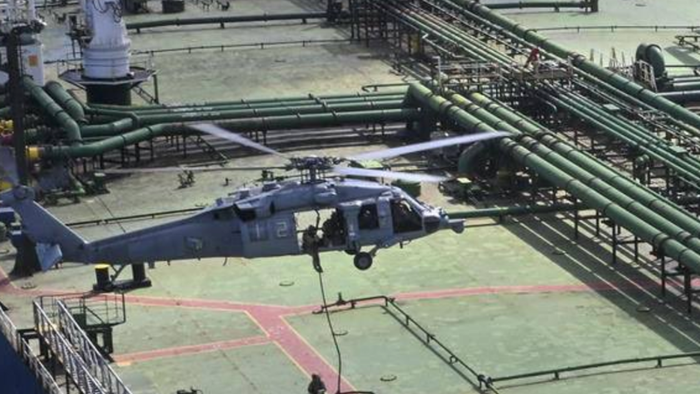
TheHormuz chokepoint standoffbetween Tehran and the US military has become the center of the nearly two-month conflict. This standoff marks the next phase following an extended ceasefire with Iran after a second round of peace talks was canceled in Pakistan earlier this week.
On Wednesday, White House Press Secretary Karoline Leavitt said President Donald Trump is allowing Iran more time to respond to US demands, but expects Tehran to present a "unified proposal."
"So, again, the president's offering them a little bit of flexibility because we want to see a unified proposal to the president's very strong proposal. And he's made his red lines very clear," Leavitt said.
Iran has stated that it will not resume negotiations with US officials while a US naval blockade on its ports remains in place, and theUS military said it intercepted two Iranian oil supertankers that tried to evade the blockade.
This comes after Iranian forces seized two ships on Wednesday.
MOMENT masked Iran special forces STORM bridge of Epaminondas1 of ships that 'endangered maritime safety by operating without necessary permits and tampering with navigation systems'https://t.co/nlLhdY4i9Mpic.twitter.com/JssF4aYK5Q
In response to Trump's ceasefire extension, Iran's state TV cited the foreign ministry as saying it is monitoring developments and that the armed forces are ready for any threat.
With Hormuz effectively shut this week, roughly a fifth of global oil and LNG flows remain highly disrupted as the energy shock ripples from the Middle East to Asia, Africa, Europe, and finally the West Coast of the US.
A new Department of War assessment cited by The Washington Post said it would take US forces six months to clear the maritime chokepoint of mines deployed by Iranian naval forces.
Other overnight news includes Pentagon spokesperson Sean Parnell announcing that Secretary John C. Phelan will be stepping down.
Source: ZeroHedge News
