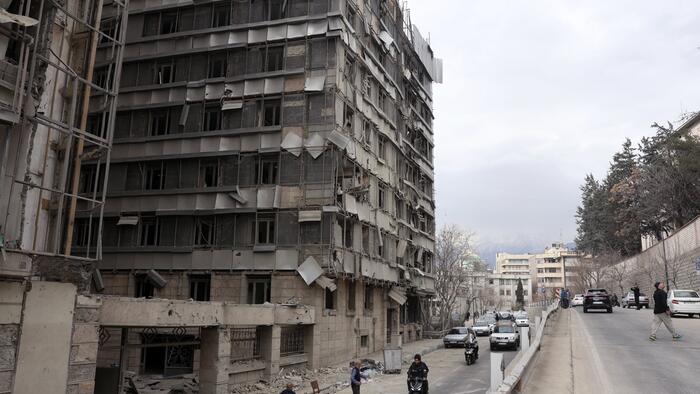
After more than a month of conflict, a fragile ceasefire has allowed people in Tehran to begin assessing the scale of destruction, according to a newBloombergreport.
The city, home to around nine million people, now bears widespread signs of damage, from shattered buildings to entire blocks reduced to rubble.
Although the truce has been extended for now, talks between the US and Iran have stalled, with major disagreements still unresolved around nuclear activity, regional control, and military influence.
TheBloomberg piece notesthat the toll has been severe. At least 3,300 people have been killed across Iran, including civilians, and the physical damage is extensive. Because of restrictions on imagery and reporting, the full picture is still unclear, but satellite-based analysis suggests more than 7,600 buildings nationwide have been damaged or destroyed.
In Tehran alone, roughly 2,800 structures were hit. These include not just military or industrial sites, but also homes, businesses, and public facilities, reflecting how tightly intertwined different parts of the city are.
Experts note that even when strikes are intended to be precise, the reality in a dense urban environment is far messier. In Tehran, residential neighborhoods, commercial areas, and government facilities are often located side by side, making it difficult to isolate targets. As a result, the impact of attacks spreads beyond their intended focus, affecting civilian life in ways that are hard to contain.
The war has also deepened Iran’s existing economic and social pressures. Even before the conflict, the country was dealing with high inflation, environmental strain, and ongoing sanctions. Now, reconstruction costs are estimated at roughly $270 billion—close to the size of Iran’s entire economy—and inflation could climb above 70%.
Many businesses have shut down or are operating at reduced capacity, housing damage is widespread, and unemployment is expected to rise, increasing the risk of broader poverty.
Outside the capital, strikes have hit key industrial and energy hubs, disrupting supply chains and production. Damage to major steel plants and petrochemical facilities is already affecting other industries, from manufacturing to food packaging. These knock-on effects are likely to compound the economic strain in the months ahead.
Even if the ceasefire holds, rebuilding will take years, and the path forward remains uncertain as the country grapples with both physical destruction and deep structural challenges.
Source: ZeroHedge News
