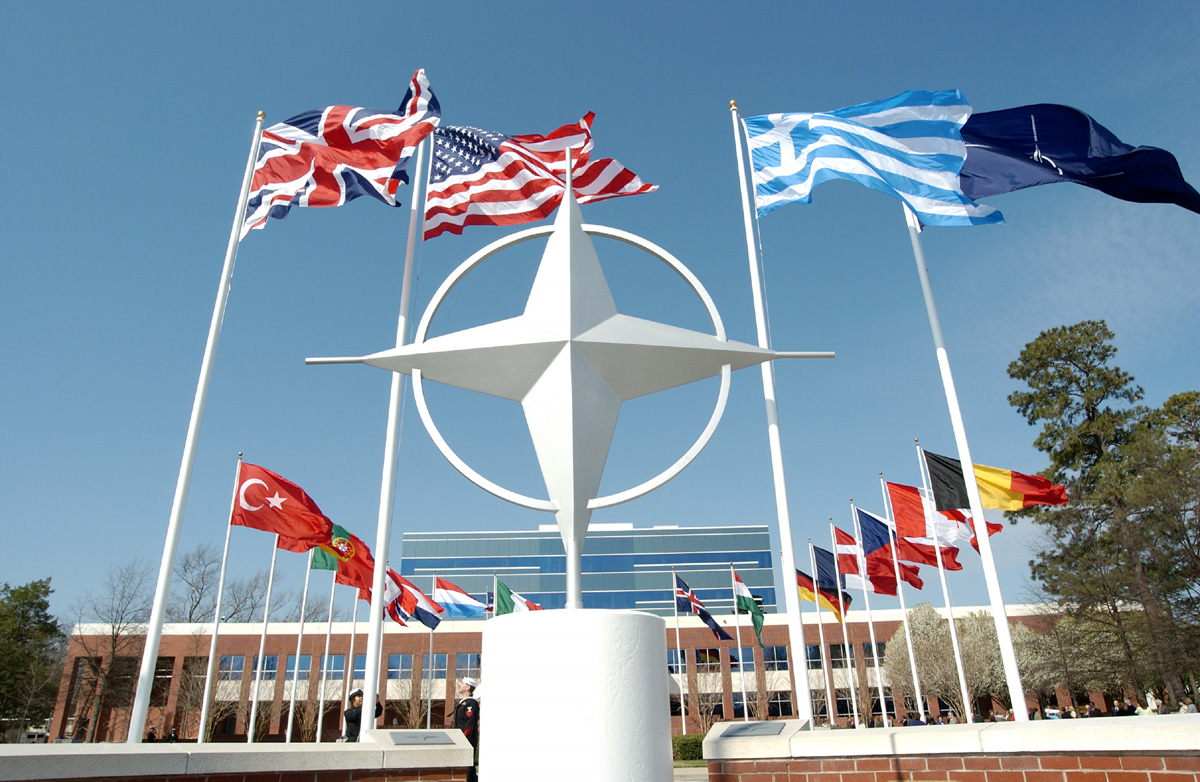
A movement is growing to withdraw the U.S. from NATO, calling it a costly relic.Proponents argue the alliance drains finances and drags America into unnecessary foreign wars.They advocate for a "fortress America" strategy, relying on geography and nuclear deterrence instead.Legislation to exit NATO has been introduced in both the House and the Senate.The debate questions whether NATO is essential for security or a burdensome artifact.
Proponents argue the alliance drains finances and drags America into unnecessary foreign wars.They advocate for a "fortress America" strategy, relying on geography and nuclear deterrence instead.Legislation to exit NATO has been introduced in both the House and the Senate.The debate questions whether NATO is essential for security or a burdensome artifact.
They advocate for a "fortress America" strategy, relying on geography and nuclear deterrence instead.Legislation to exit NATO has been introduced in both the House and the Senate.The debate questions whether NATO is essential for security or a burdensome artifact.
Legislation to exit NATO has been introduced in both the House and the Senate.The debate questions whether NATO is essential for security or a burdensome artifact.
The debate questions whether NATO is essential for security or a burdensome artifact.
NATO's evolution into a "roaming mandate"Critics of the alliance argue it has dangerously strayed from its original, narrow purpose of deterring a Soviet invasion of Western Europe. Writer John Mac Ghlionn calls NATO today an "unaccountable" institution that "no longer prevents war but manages it." He points to interventions in Afghanistan and Libya, which he says left behind ruin, as evidence of a "roaming mandate" that creates dependency and conflict.Stockman offers a scathing historical review, labeling every major U.S. military intervention since NATO's founding â from Korea and Vietnam to Iraq and Afghanistan â as "pointless" and "tantamount to criminal undertakings" that did nothing to enhance American security. The alliance, he argues, transformed Washington into the "War Capital of the World."The political path for withdrawal remains steep. The legislation faces strong opposition within both parties, and the Trump administration has not endorsed it. However, the debate underscores a persistent undercurrent of skepticism about America's role as global policeman and the financial burdens it entails. As the national debt climbs and political polarization grows, calls to reevaluate seven-decade-old commitments are finding a renewed audience.The question at the heart of the debate is profound: Is NATO the indispensable bedrock of global stability and American security, or is it a bureaucratic relic that bankrupts the treasury and embroils the nation in endless, fruitless wars? For a growing faction, the answer is clear, and the time to leave is now.Sources for this article include:Original.AntiWar.comTheHill.comNewsweek.com
Critics of the alliance argue it has dangerously strayed from its original, narrow purpose of deterring a Soviet invasion of Western Europe. Writer John Mac Ghlionn calls NATO today an "unaccountable" institution that "no longer prevents war but manages it." He points to interventions in Afghanistan and Libya, which he says left behind ruin, as evidence of a "roaming mandate" that creates dependency and conflict.Stockman offers a scathing historical review, labeling every major U.S. military intervention since NATO's founding â from Korea and Vietnam to Iraq and Afghanistan â as "pointless" and "tantamount to criminal undertakings" that did nothing to enhance American security. The alliance, he argues, transformed Washington into the "War Capital of the World."The political path for withdrawal remains steep. The legislation faces strong opposition within both parties, and the Trump administration has not endorsed it. However, the debate underscores a persistent undercurrent of skepticism about America's role as global policeman and the financial burdens it entails. As the national debt climbs and political polarization grows, calls to reevaluate seven-decade-old commitments are finding a renewed audience.The question at the heart of the debate is profound: Is NATO the indispensable bedrock of global stability and American security, or is it a bureaucratic relic that bankrupts the treasury and embroils the nation in endless, fruitless wars? For a growing faction, the answer is clear, and the time to leave is now.Sources for this article include:Original.AntiWar.comTheHill.comNewsweek.com
Stockman offers a scathing historical review, labeling every major U.S. military intervention since NATO's founding â from Korea and Vietnam to Iraq and Afghanistan â as "pointless" and "tantamount to criminal undertakings" that did nothing to enhance American security. The alliance, he argues, transformed Washington into the "War Capital of the World."The political path for withdrawal remains steep. The legislation faces strong opposition within both parties, and the Trump administration has not endorsed it. However, the debate underscores a persistent undercurrent of skepticism about America's role as global policeman and the financial burdens it entails. As the national debt climbs and political polarization grows, calls to reevaluate seven-decade-old commitments are finding a renewed audience.The question at the heart of the debate is profound: Is NATO the indispensable bedrock of global stability and American security, or is it a bureaucratic relic that bankrupts the treasury and embroils the nation in endless, fruitless wars? For a growing faction, the answer is clear, and the time to leave is now.Sources for this article include:Original.AntiWar.comTheHill.comNewsweek.com
Stockman offers a scathing historical review, labeling every major U.S. military intervention since NATO's founding â from Korea and Vietnam to Iraq and Afghanistan â as "pointless" and "tantamount to criminal undertakings" that did nothing to enhance American security. The alliance, he argues, transformed Washington into the "War Capital of the World."The political path for withdrawal remains steep. The legislation faces strong opposition within both parties, and the Trump administration has not endorsed it. However, the debate underscores a persistent undercurrent of skepticism about America's role as global policeman and the financial burdens it entails. As the national debt climbs and political polarization grows, calls to reevaluate seven-decade-old commitments are finding a renewed audience.The question at the heart of the debate is profound: Is NATO the indispensable bedrock of global stability and American security, or is it a bureaucratic relic that bankrupts the treasury and embroils the nation in endless, fruitless wars? For a growing faction, the answer is clear, and the time to leave is now.Sources for this article include:Original.AntiWar.comTheHill.comNewsweek.com
The political path for withdrawal remains steep. The legislation faces strong opposition within both parties, and the Trump administration has not endorsed it. However, the debate underscores a persistent undercurrent of skepticism about America's role as global policeman and the financial burdens it entails. As the national debt climbs and political polarization grows, calls to reevaluate seven-decade-old commitments are finding a renewed audience.The question at the heart of the debate is profound: Is NATO the indispensable bedrock of global stability and American security, or is it a bureaucratic relic that bankrupts the treasury and embroils the nation in endless, fruitless wars? For a growing faction, the answer is clear, and the time to leave is now.Sources for this article include:Original.AntiWar.comTheHill.comNewsweek.com
Source: NaturalNews.com
