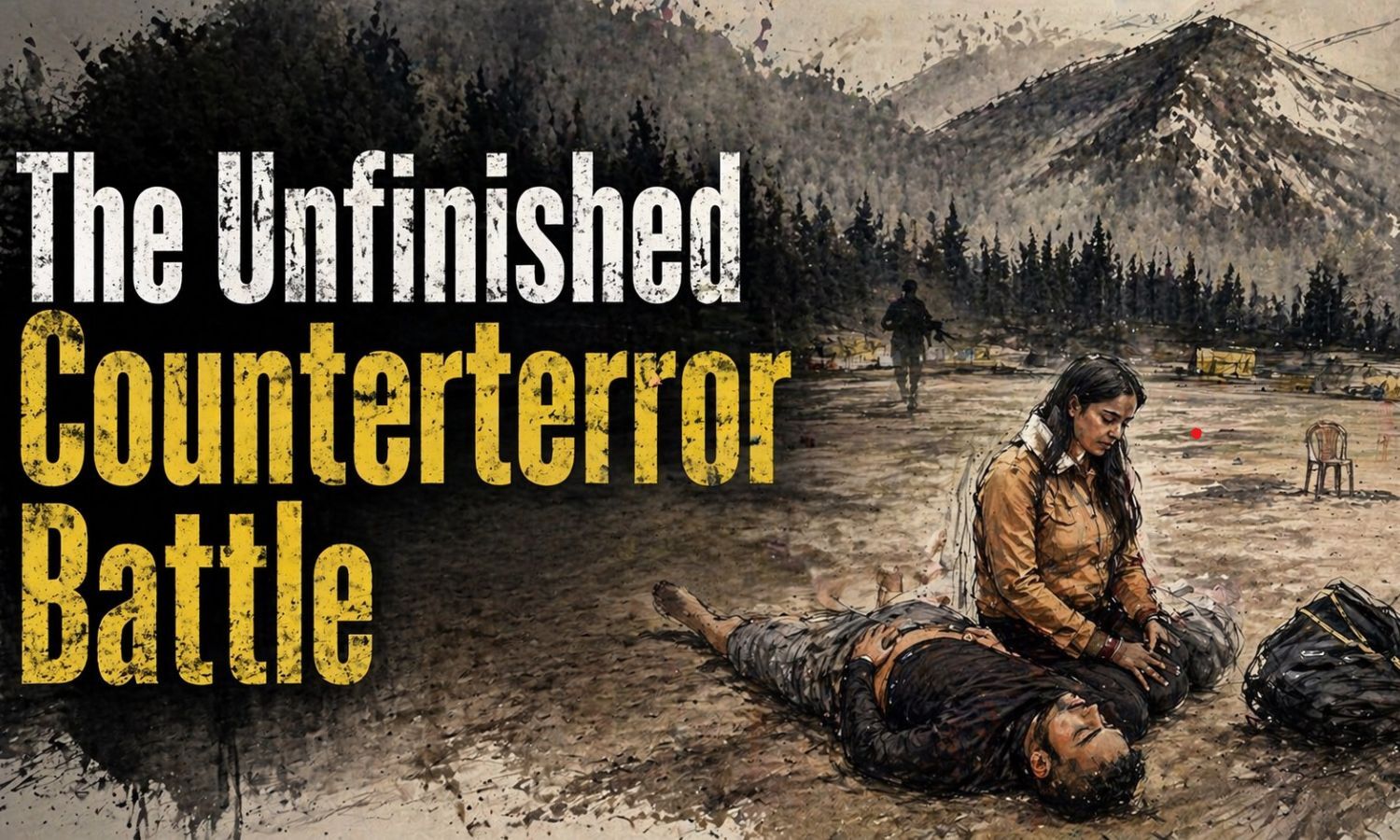
A year ago today, gunmen emerged from the forests fringing the Baisaran Valley nearPahalgamand opened fire on a group of tourists, killing 26 people in what became the deadliest terrorist attack on Indian civilians since the 2008 Mumbai massacre. The April 22, 2025 Pahalgam attacks — carried out by operatives of The Resistance Front (TRF), a proxy outfit of the Pakistan-based Lashkar-e-Taiba — was not merely an act of mass violence. It was a systemic stress test: of intelligence networks, of forward deployment doctrine, and of the assumptions underlying Jammu and Kashmir's counter-terrorism architecture. Twelve months on, some hard lessons have been absorbed. But the harder work — building a counter-terror grid capable of getting ahead of a threat that is evolving faster than the institutions designed to contain it — remains unfinished.
Public interest stories that affect ordinary citizens — especially those without power or voice — requires time, resources, and independence.
Your support — even a modest contribution — allows us to uncover stories that would otherwise remain hidden.
Support The Probeby contributing to projects that resonate with you (Click Here), or Become a Member of The Probe to stand with us (Click Here).
Also Read:Pahalgam Terror: A Chilling Indicator of Kashmir’s Fragile Stability
What the Pahalgam Attacks Changed: Three Shifts in J&K's Security Thinking
The Pahalgam attacks did not just demand a reckoning — they forced one. Over the past year, three concrete shifts have emerged in how security forces approach Jammu and Kashmir's counter-terror architecture, even if the distance between doctrine and ground reality remains wide.
The first is strategic visibility. Forces are now positioned with greater deliberateness, and the establishment of temporary forward operating bases — notably in the upper reaches of Dachigam and adjoining forest belts during Operation Mahadev — reflects a recognition that static deployment cannot cover terrain where battle-hardened militants move through dense forest over hundreds of kilometres.
The second shift is in operational response. Operation Mahadev itself, the 93-day pursuit that ended on July 28, 2025 with the killing of the three LeT operatives responsible for the Pahalgam attacks, demonstrated something that reactive counter-terror rarely does: sustained, intelligence-fused pressure until the job is done.
The third shift is doctrinal. In February 2026, the Ministry of Home Affairs released PRAHAAR — India's first formally codified National Counter-Terrorism Policy — a seven-pillar framework built around prevention, swift response, inter-agency coordination, and the attenuation of radicalisation.
Source: The Probe: Investigative Journalism & In-Depth News Analysis
