Home-Scrap Labs debuts Scrap 1 metal 3D printer at RMRRF 2026
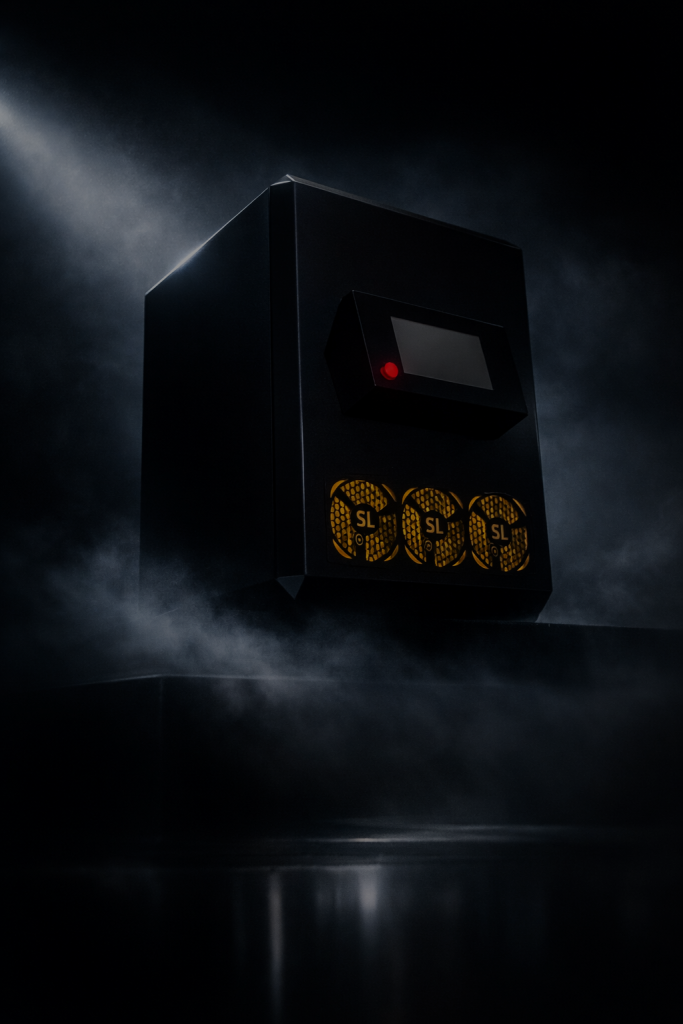
Scrap Labs, a Boulder, Colorado-based developer of metal 3D printing systems, has unveiled its Scrap 1 Laser Powder Bed Fusion (LPBF) 3D printer at theRocky Mountain RepRap Festival 2026in Loveland, Colorado. The system is positioned as a lower-cost metal additive manufacturing solution, with initial kit pricing starting at $9,600 for a limited time.
Scrap Labs states that the Scrap 1 is designed to increase accessibility to metal 3D printing by reducing system cost while maintaining safety and performance. The company adds that its approach focuses on engineering and manufacturing efficiencies rather than simplifying the system through reduced capabilities.
The development strategy is described as based on first principles engineering, aimed at challenging established assumptions in metal additive manufacturing system design. Scrap Labs emphasizes that cost reductions are achieved through incremental improvements that increase efficiency and reduce waste, rather than through major changes to the underlying process.
“I’ve worked on metal printers from nearly every major manufacturer and have been building lower cost metal 3D printing systems for over a decade,” said Matt Woods, Founder and CEO of Scrap Labs. “That experience taught me that there’s a lot of overengineering in the industry. Once you identify where innovation truly needs to happen, and you compound enough small engineering innovations that boost efficiency and cut waste, the numbers finally start to add up.”
The Scrap 1 was demonstrated at RMRRF with sample parts produced on the machine and shown in operation. Initial kit pricing is set at $9,600 as part of a limited-time early offer. After April 30, 2026, the kit price will increase to $14,200, while fully assembled and tested systems will start at $17,990. Pre-orders are currently open, with shipments expected to begin in early 2027.
The Scrap 1 metal 3D printer features a build volume of 100 × 100 × 100 mm (~4 × 4 × 4 in), with overall system dimensions of 43 × 50 × 57 cm and a total weight of 30 kg. The system operates on a 100–240V AC single-phase input, with a maximum power consumption of 500W and an average of approximately 250W.
Operating conditions are specified between 10°C and 30°C. The machine uses argon or nitrogen shielding gas at 5 SCFH (2.4 L/min), with an optional nitrogen generator. Filtration is handled via a HEPA system.
The Scrap 1 is equipped with a 200W laser operating at 915 nm, with a spot size of approximately 135 μm. Maximum scan speed is rated at 1,500 mm/s. Layer thickness ranges from 20 to 100 μm, with reported part densities exceeding 99%.
Cooling is managed through an integrated liquid and air system. The printer runs onKlipperopen-source firmware and supports multiple slicers, including ScrapSlicer,PrusaSlicer, andOrcaSlicer. Connectivity options include a browser-based dashboard, Ethernet, WiFi, and USB.
Source: 3D Printing Industry
