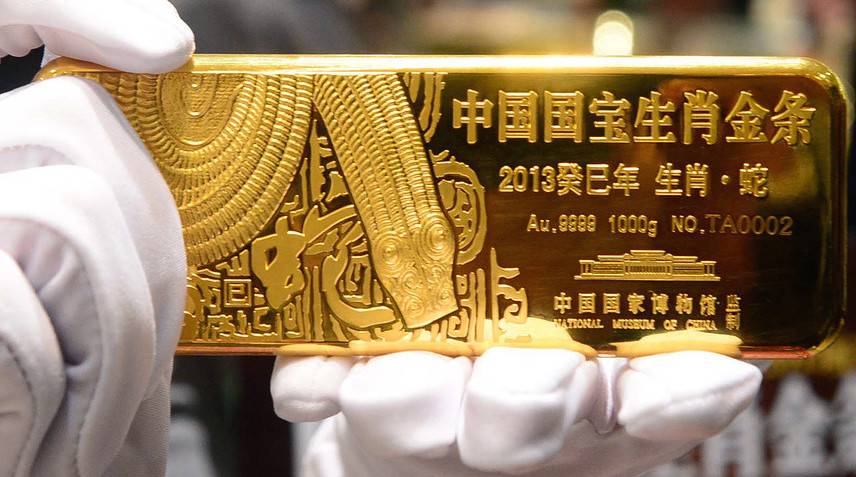
China buying gold for a 17th consecutive month in March 2026 brought the People’s Bank of China’s total holdings to a record 2,313 tonnes, the World Gold Council confirmed. Right now, that kind of steady accumulation says a lot more than just one central bank’s balance sheet. BRICS gold reserves have climbed to 17.4% of global official holdings, up from just 11.2% in 2019, while the US dollar reserve decline has pushed the dollar’s share of global allocated reserves to its lowest point since 1994.
Also Read:Why BRICS Nations Keep Buying Gold as Prices Hit $4,850
Start with the numbers. Russia: 2,336 tonnes. China: 2,298. India: 880. Together that is over 77% of BRICS gold reserves, concentrated in three countries. Brazil has also had a pretty remarkable year, with the Central Bank of Brazil doubling its gold position in 2025 and landing bullion in second place among its reserves, just behind the US dollar. Across the full BRICS+ group, around 663 tonnes worth approximately $91 billion moved into official vaults in just the first nine months of 2025. China buying gold over this stretch also pushed Shanghai futures volumes and volatility higher, with SHFE annualised volatility touching around 80% by March 2026. Gold now sits at over 23% of global official reserve assets, up from under 10% in 2015, and central bank gold accumulation has basically stopped being described as opportunistic by anyone paying close attention.
Michael Harris, technical analyst at EBC Financial Group, stated:
“The shift from dollar reserves to gold is not a prediction but a trend, supported by three years of data, more than 40 participating central banks, and over 3,000 tonnes of metal moved into sovereign vaults since 2022. The dollar remains dominant, but the direction is clear: central banks are building positions in an asset no foreign government can freeze, at a pace not seen in half a century.”
IMF COFER data puts the dollar’s share of global allocated reserves at roughly 57% at the end of 2025, down from 71% in 1999 and the lowest reading since 1994. The euro holds about 20.25% at the time of writing. A 2025 World Gold Council survey also found that 73% of central bankers globally believe the dollar’s share will keep shrinking over the next five years, and 43% also plan to increase their gold holdings, both figures hitting record highs.
The US dollar reserve decline got a very direct push in 2022, when Western governments froze approximately $300 billion in Russian foreign exchange reserves. Annual central bank gold purchases nearly doubled after that, from around 500 tonnes a year to more than 1,000 tonnes in each of the three years since. China buying gold consistently through all of this reinforced the trend, and the China gold buying spree shows no signs of slowing down based on the data right now.
China buying gold in steady, modest monthly increments reflects a deliberate strategy, one that avoids large market-moving purchases and abrupt signals to dollar-denominated trade partners. Gold now makes up around 10% of China’s total foreign exchange reserves. Some analysts also believe that Beijing’s central bank gold accumulation goes well beyond what PBoC figures show, since purchases likely flow through commercial banks and state enterprises rather than only official channels.
Also Read:India to Pitch BRICS Payment System Similar To Brazilian PIX?
Gold at $4,660 per ounce in early April 2026 was already up more than 60% for the year prior, and the big banks see more room to run, with Deutsche Bank at $6,000 and JPMorgan at $6,300.The World Gold Councilexpects central bank gold accumulation to land between 750 and 850 tonnes in 2026, a chunk of demand equal to about 20% of annual mine output that shows up regardless of what the price does. China buying gold on a 17-month streak has been a big part of that.
Source: Watcher Guru
