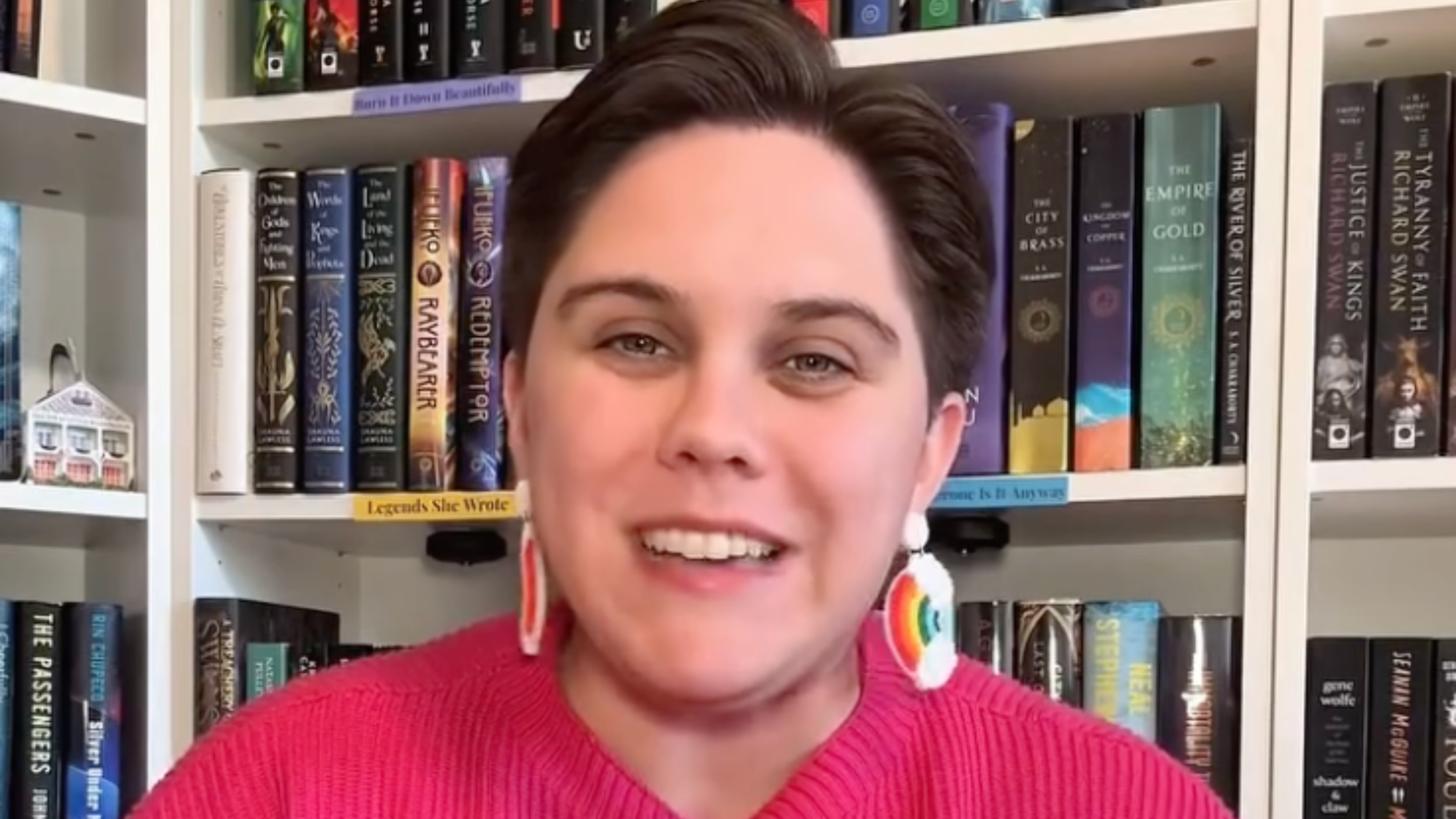
Shawna Flener was at her office desk on 28 June 2024 when $8,786,167.73 (£6.6 million) appeared in her Fidelity Investments brokerage account. Someone she had never met had typed an incorrect account number on amulti-million-dollar wire transfer, and it landed with a 38-year-old book reviewer from TikTok.
'I called Fidelity pretty much immediately. It was just my gut instinct,' she toldPEOPLE.
She sat in shock for a few minutes before quietly excusing herself to make the call. The representative on the other end was stunned. He asked whether she was sure the money was not hers. 'I assured him I did not have $8 million nor did I know anyone who had $8 million,' she said. She even asked, half-joking, whether she could invest it. He politely asked her not to.
Seven hours later, the money vanished from her account. Fidelity confirmed days afterwards that the sender had entered an incorrect account number. The error had not originated from within Fidelity's system. She never found out who was on the other end of the wire.
That might have been the end of it. On 21 February 2026, Flener - who normally posts book reviews under the handle @shawnainchapterland - uploaded a TikTok about the experience.
'Biggest regret of my life,' she wrote. 'I could be watching this mess from a beach in the Seychelles right now, for real for real.' The video pulled in more than 2.5 million views. Thousands of comments said the same thing: they would never have made that call.
A post shared by ShawnaInChapterland (@shawnainchapterland)
The fantasy is tempting. The law is brutal. Finance expert Michael Ryan toldNewsweekthat Flener had 'zero legal right' to the funds. Under the Uniform Commercial Code's Article 4A, the sender retains an absolute right to recover money wired in error. Banks typically move within hours, issuing reversal requests or demand letters. If the money has been spent, the institution can freeze accounts, garnish wages and pursue liens.
Ryan called Flener's phone call 'the luckiest break of her financial life.' Had she spent the money, the result would have been years of repayment, ruined credit and relentless debt collection.
That is not hypothetical. In 2021, Louisiana 911 dispatcher Kelyn Spadoni received $1,205,619 (£911,000) from Charles Schwab after a software glitch. The firm had meant to deposit $82.56 (£62). Spadoni moved the funds, bought a house and a car, and stopped answering calls. The Jefferson Parish Sheriff's Office arrested her on charges includingbank fraud and theft,Inside Editionreported. She lost her job. Authorities recovered roughly 75 per cent of the money.
Source: International Business Times UK
