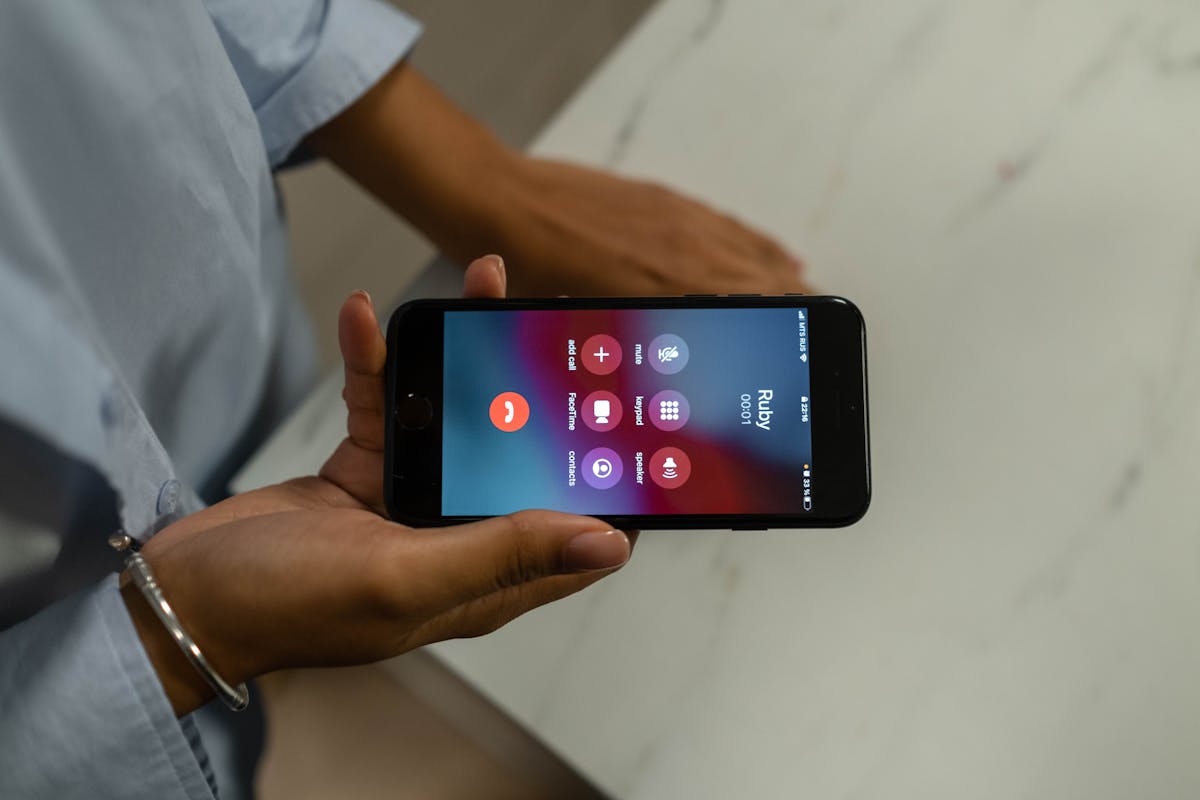
A parent has claimed their child received a FaceTime audio call that appeared to come from them, despite no call being made. According to the account, the call appeared to originate from a saved contact, and a voice matching the father's instructed the child to open the front door.
The parent said the incident took place while the child was in another room using a tablet. After hearing the child respond to the caller, the father said he checked the device and found a recent FaceTime audio call listed under his name, lasting several seconds. However, he said he had not placed the call, and his phone had not been in use at the time.
On further inspection, the contact linked to the call was reportedly associated with an unfamiliar email address. The child said the voice sounded identical to her father's and had asked her to come to the door, prompting concern that the call may have been an attempt to imitate a trusted voice.
The claim was shared in aTikTok postby user 'voycebutler3' and has not been independently verified. However, it has circulated widely online and has been cited in discussions about thepotential misuse of voice-cloning technology.
My daughter answered a FaceTime audio call from “me”… but I never called her. The voice sounded exactly like mine and told her to come to the door. This wasn’t normal. Set a code word with your kids.#storytime#scary#fyp#parenting#awareness
Advances in artificial intelligence have made it possible to replicate human voices using short audio samples. Tools developed for legitimate purposes, such as media production and accessibility, can also be used to imitate speech patterns with increasing accuracy.
TheNational Cyber Security Centrehas warned that criminals may use impersonation techniques to gain trust, particularly in situations that create urgency. These tactics are commonly associated with fraud, but may also involve attempts to prompt immediate action, such as responding to unexpected requests.
While the details of the reported FaceTime incident cannot be confirmed, authorities say the scenario is consistent withknown forms of social engineering, which often rely on impersonation and urgency. They advise verifying unexpected requests through a separate, trusted form of communication.
Security guidance in the UKhas increasingly focused on practical steps to help families respond to suspicious communication. One commonly recommended measure is the use of a pre-agreed 'code word' that can be used to confirm identity during unusual situations.
The Metropolitan Police Service advises that children should be encouraged to question unexpected instructions, even when they appear to come from a familiar voice. If a request cannot be confirmed, they should end the call and contact a parent or guardian directly using a known number.
Source: International Business Times UK
