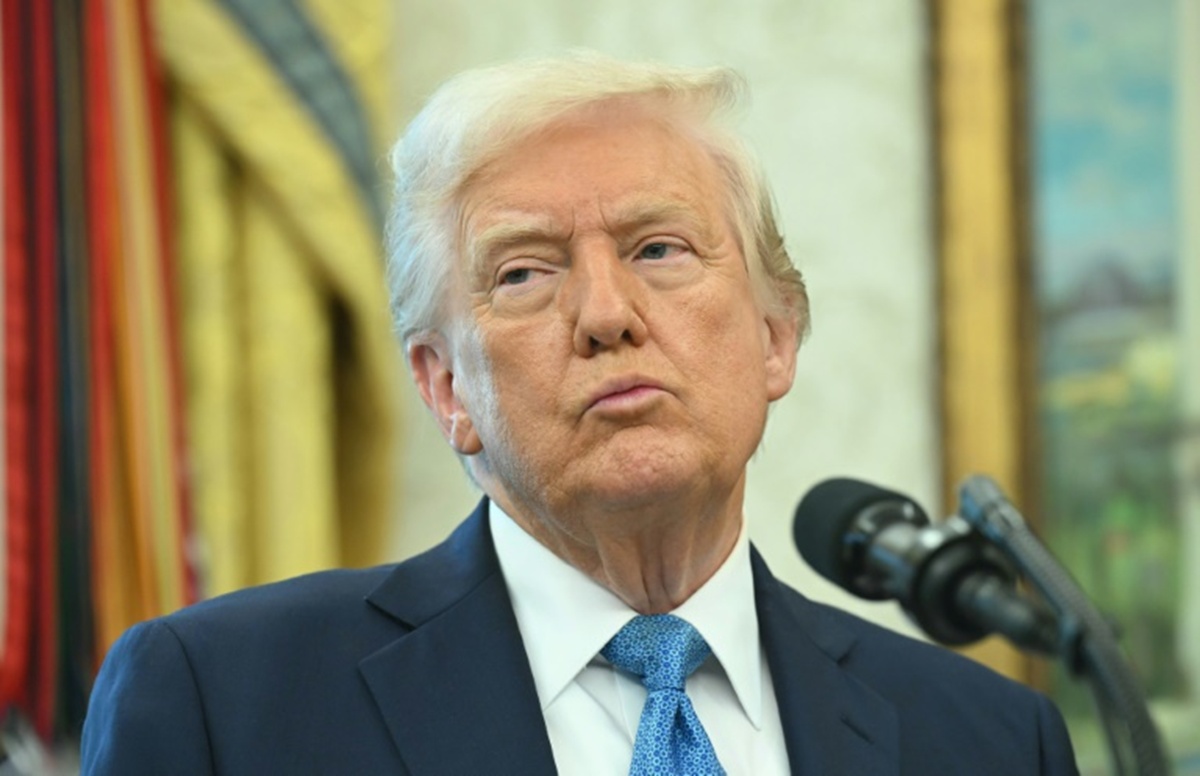
Donald Trumphas delivered a series ofconfused and contradictory statementsin Washington about the fragile ceasefire with Iran and upcoming peace talks in Pakistan, prompting fresh questions over whether the 79 year old president is showingsigns of cognitive declineas Tehran dismisses his claims of an Iranian 'surrender' as fantasy.
The US and Iran are in fragile talks over a two week ceasefire, with Pakistan expected to host the next round and Vice President J.D. Vance set to play a central role. Against that already volatile backdrop, Trump has offered shifting accounts of who is travelling, what has been agreed and how close the two sides are to a deal, fuelling fresh scrutiny of his judgement even as any claim of cognitive decline remains medically unproven and politically charged.
In an interview with the New York Post on Monday 20 April,Trump said Vance was already on his way to Pakistan to lead the US delegation. Within hours, US officials clarified that the team, which reportedly also includes Jared Kushner and Steve Witkoff, had not yet left Washington and was only expected to depart soon.
The confusion did not begin there. In an earlier ABC News interview, Trump had suggested Vance would not head the next round of talks at all, despite repeated signals from senior officials that the vice president would make the trip. Asked about the apparent change, Trump told ABC it was 'only because of security', suggesting threat assessments had altered the plan.
Soon after, he returned to the Post and said Vance was travelling to Islamabad after all, alongside Kushner and Witkoff. For anyone trying to follow who was actually leading US diplomacy, it was a bewildering sequence. For critics, it was another example of a president struggling to keep his own account straight.
The substance of the talks has been no clearer. On Truth Social, Trump claimed that 'almost all various points of past contention' with Iran had been resolved, including what would amount to an extraordinary concession from Tehran, the handover of its enriched uranium.
Iran's Foreign Ministry flatly denied that version of events. Spokespeople said there were 'no plans' for the next round of negotiations and called Trump's claims 'false and baseless', with some officials reportedly dismissing his rhetoric as 'table of surrender' fantasy. In Tehran's telling, there has been no such breakthrough.
At the same time, the US has accused Iran of repeatedly breaching the two week ceasefire by attacking commercial shipping. Trump has said the truce is likely to expire on Wednesday evening and insists it is 'highly unlikely' he will extend it without what he describes as a definitive deal.
Yet even as he talks up the chances of an agreement, he has made clear that the naval blockade of Iranian ports will remain in place until a final settlement is reached. Iran, for its part, says that blockade, along with the recent US seizure of an Iranian flagged cargo vessel, already amounts to a breach of the ceasefire terms.
Layered over the policy confusion is a growing argument about Trump's state of mind. Some observers and lawmakers are now openly discussing possible cognitive decline, with a number of voices again raising the 25th Amendment, the constitutional mechanism for removing a president deemed unable to carry out the duties of office.
Source: International Business Times UK
