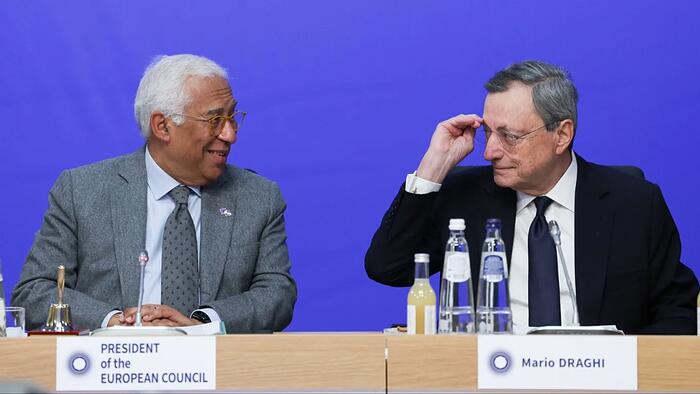
As the 27 EU heads of government convene with EU Commission President Ursula von der Leyen on Thursday, the stakes are high from a fiscal perspective. A decisive item on theagenda at Belgium’s Alden Biesen Castleis the so-called Draghi Plan.
The question hovering above it all is as simple as it is explosive:How can the obvious productivity and growth weakness of the Eurozone economy be overcome?For years, economic dynamism has lagged behind other major economies, with structural barriers stifling investment and innovation. Over-indebtedness and bureaucratic weight press down like lead on EU economies.
For former ECB President and former Italian Prime Minister Mario Draghi, the answer is clear.He calls for a massive, debt-financed stimulus program to give Europe’s economy a new jolt. The scale and financing of this initiative mark a profound turning point in European financial policy.
It is the hour of the central planners and Euro-bureaucrats. In Alden Biesen, the European Union’s course will be determined – and how it responds to its economic weakness.
Two years ago, Draghi laid out his strategy to strengthen the EU’s competitiveness. In short, Eurozone countries would raise €800 billion annually in joint debt and invest these funds strategically in renewable energy, digitalization, and coordinated European industrial policy. This, he argues, would close the massive competitiveness gap with the US and China. Simply put – EU intellectual processes usually operate on modest ambition.
The Draghi Plan represents a profound paradigm shift. It implies the completion of the Capital Markets Union and the creation of an EU-wide debt pool – precisely the instrument that former Chancellor Helmut Kohl had deemed an absolute red line for abandoning the Deutsche Mark and introducing the euro.
Kohl’s skepticism was not unfounded. For those familiar with the fiscal behavior of countries such as France, Greece, Italy, or Spain, such a step would be nothing short of a sacrilege. It is evident that any national budget politician would rely without hesitation on Germany’s fiscal solidity – which, as we know, has been effectively crucified by Chancellor Friedrich Merz in the past year.
The openly discussed fiscal hubris in the Draghi vein is accompanied by cautiously inserted bureaucratic verbosity. Progressivism and populist appearances aside, it is clear that the EU’s bureaucratic apparatus and its national branches cannot be circumvented – this construct has become the actual power base of politics, its bureaucracy serving as an extended arm and visible presence in the provinces.
The number of regulations issued and interventions in market processes almost defines political power within this structure. Meanwhile, the Union, in the mode of green-transformation central planning, is heading toward economic disaster without the bureaucratic apparatus being in the least affected.
Among the loud proponents of this policy is French President Emmanuel Macron. On Tuesday, he explicitly called for permanent joint borrowing capacities at the EU level.
Source: ZeroHedge News
