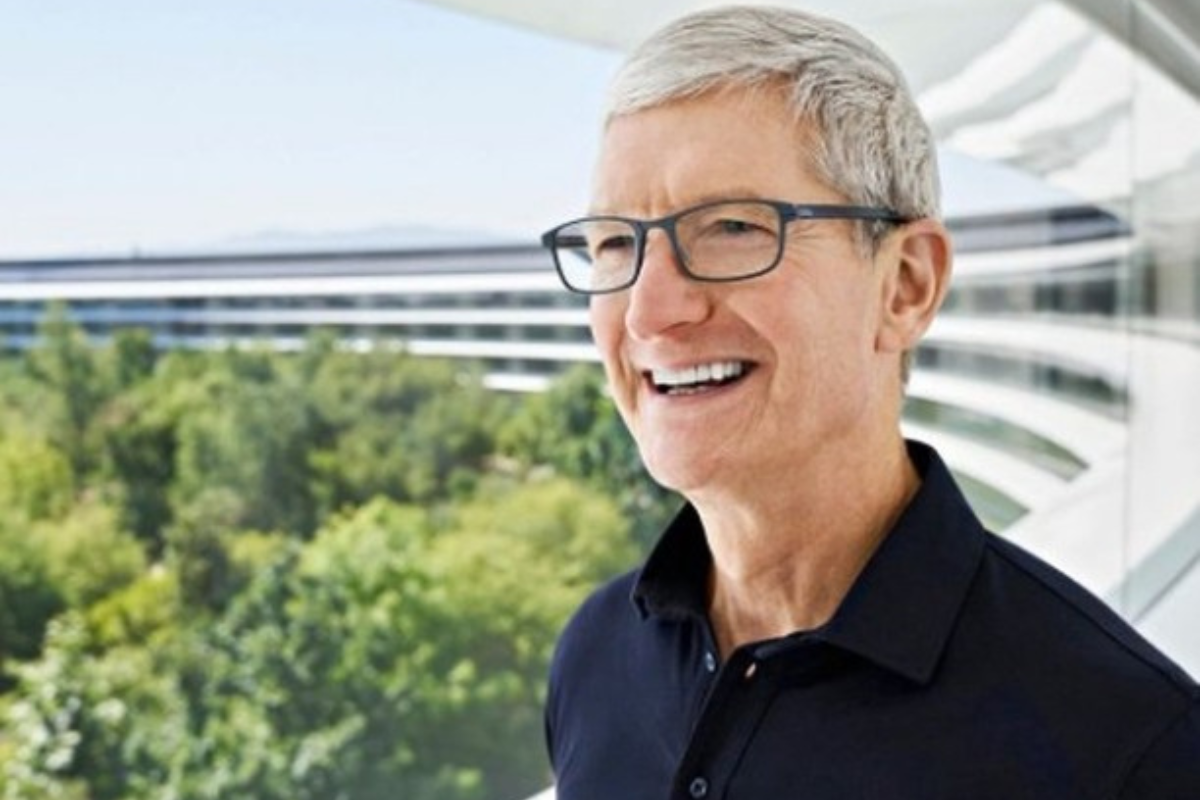
Tim Cook's leadership at Apple has transformed the company from a tech pioneer into a financial giant, marking a period of unprecedented growth and innovation. His tenure has been defined by a steady shift from product-centric hype to consistent financial achievement, culminating in his recent decision tostep down as head of the company.
Apple has announced that Tim Cook will step down as chief executive and become executive chairman of its board.John Ternus, currently in charge of hardware engineering, will take over as CEOfrom 1 September 2026.
The decision was agreed by the board after long-term planning. Cook will remain CEO until the summer, working closely with Ternus to ensure a smooth handover. In his new role, he will still support the company, including dealing with governments and policymakers around the world.
Thisdecision to step downsignals the end of an era that began in the shadow of Steve Jobs but carved out its own legacy through strategic expansion and technological diversification. Here's a look back at what Cook achieved throughout his tenure.
Cooktook the helm in August 2011, shortly before the death of Steve Jobs. When he assumed control, Apple's market value was approximately £250 billion (around $350 billion). Critics questioned whether an operations expert could replicate Jobs' visionary product sense, but Cook demonstrated that his skills could lead the company to new heights. By 2018, Apple became the first publicly traded US company to reach a market cap of £850 billion (roughly $1.2 trillion).
In the years that followed, Apple saw its value grow rapidly again. By 2020, it was worth more than £1.7 trillion ($2.3 trillion). In 2023, it passed £2.2 trillion ($2.97 trillion) and then climbed to over £2.6 trillion ($3.51 trillion). By 2025 and 2026, its value was estimated at around £3.2 trillion ($4.32 trillion).
Under Tim Cook's leadership, the company's yearly profits also grew sharply, reaching more than £90 billion ($121.54 billion). This marked a period of strong financial success for the business.
When Cook took control in 2011, Apple was primarily known for its flagship smartphones and computers. Between 2011 and 2014, the company focused on consolidating its foundation. That period saw the introduction of the iPhone 5 in 2012, the first entirely developed during Cook's watch, alongside the debut of the iPad Mini. In 2014, Cook publicly came out as gay, becoming the first and only openly gay CEO of a Fortune 500 company at that time.
From 2015 onwards, Apple's strategy shifted towards diversification and new product categories. The launch of the Apple Watch in 2015 marked a significant pivot into wearables and healthcare. Initially met with scepticism, the device quickly became the dominant global leader in wearable technology. The following year, Apple introduced its first-generation AirPods, igniting a multi-billion pound (roughly $1.5 billion) wireless audio industry.
Between 2015 and 2019, Cook's focus on digital services gained momentum. Apple launched streaming service Apple TV+, alongside Apple Arcade and Apple Card. These moves aimed to diversify revenue streams beyond hardware sales. The company's push into services proved successful, helping maintain revenue growth even as hardware markets experienced fluctuations.
Source: International Business Times UK
