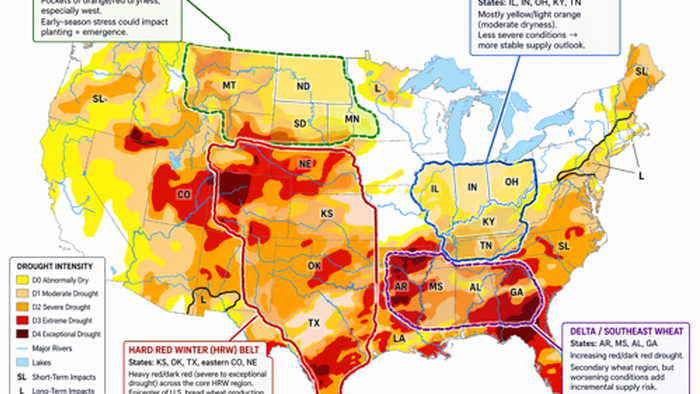
Hard red winter wheat (HRW) futures widened to their largest premium over soft red wheat (SRW) in more than two years as severe drought intensified across key breadbasket regions in the Great Plains and Midwest. This means traders are pricing in weather impacts and tightening expectations for higher-protein wheat supplies.
The blowout in the HRW-SRW spread, the biggest premium in two years, is mainly due to weather stress as drought grips the central U.S. The market is currently pricing in possible supply imbalances and quality concerns for HRW.
As of mid-April, 61% of the Lower 48 is in drought as the Northern Hemisphere growing season begins and farmers start plantings, according to NOAA. This equates to nearly 149 million people across the Lower 48 affected by drought. About 45 states were experiencing moderate drought conditions as of last week.
The drought alsocomplicates matters for ranchers, as the nation's cattle herd is already at its lowest level since the 1950s. As a result, some ranchers may further reduce their herds, which would only push USDA ground beef prices to new record highs.
Meteorologists Warn About Super El Nino Event
Washington, D.C. Will Feel Like June. Cue MSM Climate Doom Propaganda
Drought Engulfs 60% Of U.S. As Farmers Begin Spring Planting
The drought spreading across America's breadbasket is colliding with a secondary effect sparked by the disruption of energy flows through the Strait of Hormuz, raising the risk of fertilizer shortages that could translate into lower crop yields later this year. Reuters has reported that the UN's food agency warned a prolonged Hormuz crisis could destabilize fertilizer shipments and drive food inflation higher.Time to hedge with a backyard garden.
Source: ZeroHedge News
