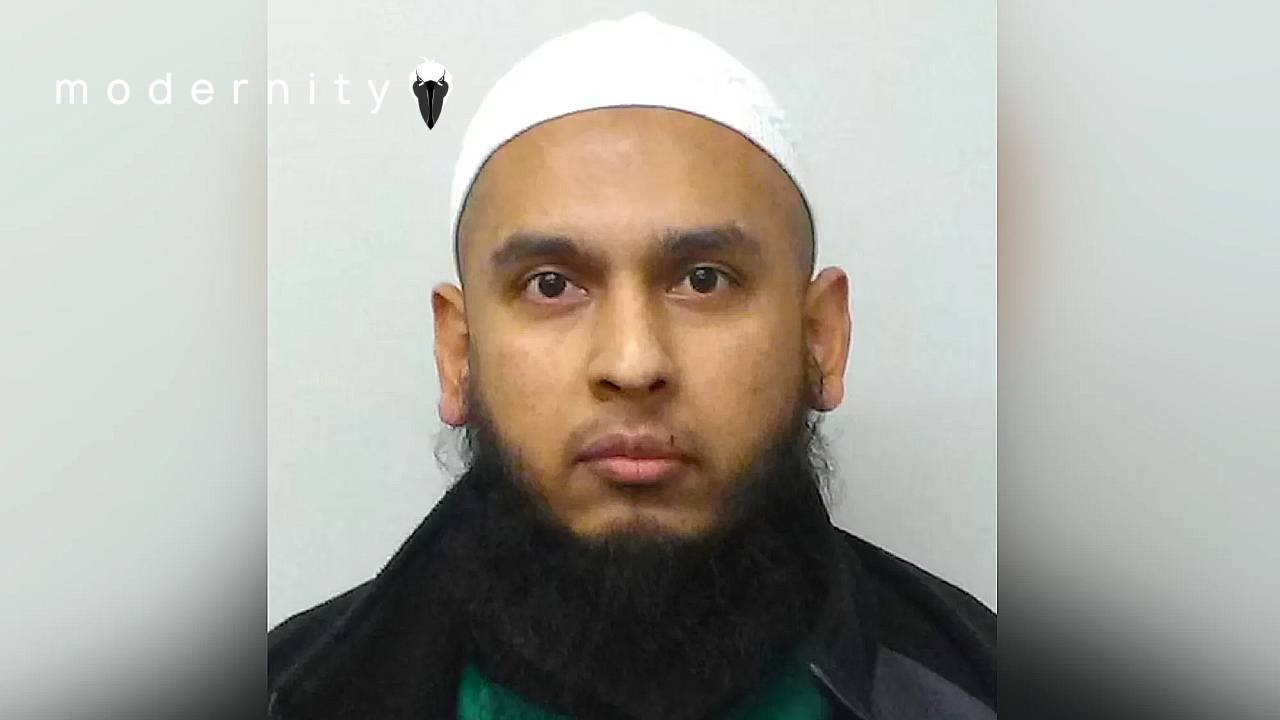
Britain’s immigration system has hit a new low. A convicted Islamist terrorist who helped plot a bombing at the London Stock Exchange remains free to live in the UK, protected by human rights laws despite his asylum application being thrown out years ago.
The case of Shah Rahman exposes exactly how foreign terror offenders exploit loopholes that put British citizens at risk while officials tie themselves in knots over “rights.” As the migrant crisis spirals and taxpayers foot the bill for endless monitoring, this is not justice – it’s institutional surrender.
Rahman was jailed in 2012 alongside three other extremists inspired by Al-Qaeda over the plot to plant an improvised explosive device. He was released onto Britain’s streets just five years later in 2017, only to be recalled to prison in 2022 for breaches of his licence conditions.
This guy plotted to blow up the London Stock Exchange, went to prison twice and married a woman who was banned from Britain for life for having ISIS material, yet he gets to stay in the country because it would 'violate his rights' to deport him.https://t.co/MlKnUBupjs
After his initial release he lodged an asylum claim. It was rejected under Article 51 of the Refugee Convention, which bars refugee status for those convicted of “war crimes, crimes against humanity, terrorist acts or other serious criminal offences.”
Yet despite that rejection, an immigration judge ruled he could not be deported to Bangladesh. The judgement stated: “He was granted restricted leave to remain in the United Kingdom on the basis that he could not be removed to Bangladesh without breach of his rights under Article 3 of the Human Rights Convention.”
Article 3 guarantees the absolute right to be free from torture, inhuman or degrading treatment. In practice, it has become a get-out-of-deportation-free card for some of the most dangerous individuals on British soil.
Details of Rahman’s continued presence emerged during a separate legal battle involving his wife, Mauritian national Parveen Purbhoo. The pair married in an Islamic ceremony at East London Mosque in 2019 while he was on licence. Purbhoo was later barred from Britain for life by then-Home Secretary Suella Braverman after officers at Heathrow discovered Isis-related material on her phone.
A recent judgement in her case confirmed Rahman’s situation and delivered a damning assessment of her own conduct: “The applicant was complicit in Mr Rahman’s unlawful breach of notification requirements; and she has not provided either the police or SIAC with an explanation of how Islamist material came to be on her phone. Her willingness to place her own interests over and above legal or administrative processes is troubling and risky.” The court found she had been “reasonably assessed as a national security risk” and upheld the ban.
This is the same pattern of weakness we have highlighted before. In February we reported how the UK released another dangerous bomb-plot terrorist from prison early.
Source: modernity
