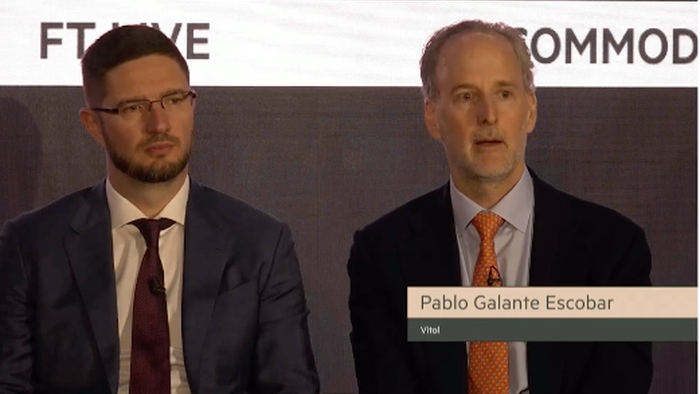
Pablo Galante Escobar, the head of liquefied natural gas (LNG) at Vitol, warned the audience at theFT Commodities Summitearlier today that the "world is on borrowed time" and that theGulf energy shockwilldevelop into a food crisisunless LNG flows resume through the Hormuz chokepoint.
"We are on borrowed time. Every day this trade remains closed and every day production does not come back, we are building a problem for the future, and we are building a problem that, as I said,will be transferred from the energy side into many different sectors, with thefood sector being a very important one," Escobar said, who works world's biggest independent energy trader.
Escobar continued, "This is not sustainable, or the energy crisiswill become a food crisis. Only gas can supply the feed for fertilizers. We are building a problem for the future."
He added that even if the Hormuz chokepoint reopened today, it could still take three to five months for undamaged LNG production to fully recover.
Longer term, the Gulf market could lose about 20 million tons per year of global LNG supply growth in 2027 and2028 because of damage to Qatari capacityand delays to new regional projects.
Escobar is correct that the second- and third-order effects of Gulf-related LNG supply disruptions are already rippling through the global fertilizer chain, sending prices sharply higher and triggering shortages across critical agricultural belts.
The downstream risk has been very clear: reduced fertilizer availability and higher input costs threaten to dent crop harvest yields later this year. In other words, this potentially sets the stage for a food price inflation spike:
Fertilizer Crisis Worse Than Goldman Forecasted, Sees Two Clear Winners
Why The Fertilizer Crisis May Spark Record Inflows Into Agri ETFs
70% Of US Farmers Say That They Won't Be Able To Buy All The Fertilizer They Need In 2026
Source: ZeroHedge News
