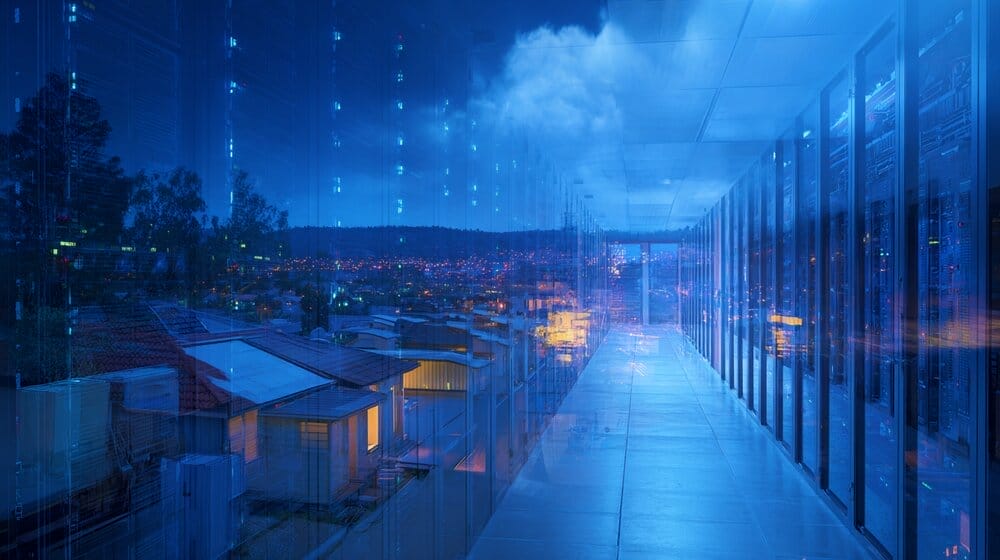
The explosive growth of artificial intelligence is driving a nationwide surge in massive data centers—power-hungry facilities that consume vast amounts of electricity and water. But communities across the United States are increasingly rising up in bipartisan resistance. The grassroots backlash has turned once-quiet server farms into a flashpoint for “not in my backyard” activism, as Scott Thuman reports.
The following is a transcript of a report from “Full Measure with Sharyl Attkisson.”Watch the video by clicking the link at the end of the page.
You might have passed by one of these giant windowless buildings, but it is rare to get an invitation to go inside. Entering through tight security, my camera crew and I want to find out what makes data centers both essential and so controversial that they’re dominating council meetings across the country.
Woman: I don’t even know if I have the accurate words to convey how mad I am, how upset I am for the future of this town if this goes through. I can’t, I’m done.
Woman: These AI data centers are stealing resources. We live in the desert, we can’t waste water. They will waste water.
Man: Data centers are needed, I won’t deny that. Again, I use them every day, as do you. I also use the bathroom every day, but I don’t want a waste treatment plant in my backyard.
First, though, we explore this 112,000-square-foot facility, owned and operated by NTT Data, a Japanese company that’s one of the global leaders in data center development. This place, one of seven the company has built in Northern Virginia.
Behind more locked doors, inside secure cages, we find the vaults, where they house data servers from both private companies and government entities, helping store and process everything from your smartphone videos to medical records, and the vast language models used by generative AI.
Bruno Bertí is head of product management and strategic alliances for NTT Global Data Centers.
Bruno Berti: So inside of here, we’ve got multiple clients that share the space, and you can see the physical security. We separate them all by these physical cages, and we give them access to be inside that space where they can install whatever they need. And like I said, we provide them that power, security, cooling, and connectivity that they need in order to operate their data center.
Source: Sharyl Attkisson
